Before going to Jamaica, my aim was to suspend any previous beliefs that I had about it. I’d get there and allow all the new stimulus to wash over me. I’d accept it as a completely new experience. But to suspend beliefs about an unknown country is almost an impossible task. Without choice, we start to have imaginations of cultures, landscapes, ways of life and outlooks. We start to piece together a dream that is based on pictures, stories and other previous experiences. At some point, the day comes around and we are finally faced with the reality of the situation. One of two things can happen. The first possibility is that we may continue to believe our previous dream in spite of the fact that it doesn’t represent the reality. We may look for things within the new place that validate our previously held ideas of it. We may even come to ignore elements which conflict with how we want the place to be. The second possibility is that we may be forced to reanalyse our dream. We come to admit that we only had a sliver of information and we open our minds to the new information.

But that last stage, although the most honest and humble, can be very difficult. This is especially true if the country in question is that of our ancestors. So much of our identity can become dependent on this history. The lives of our ancestors may have been hugely influential on our current outlook or place in the world. From the sociological or anthropological perspective, the tracing of this history becomes very important. But how much can we internalise a false image of a place?
Throughout my life, I had been told about Jamaica by family members and friends. Most people talked about the beauty of the country but they also talked about the harsh lives that people had to live. Some people I knew had had traumatic experiences there. Therefore I understood that the image of Jamaica as a land of happy people by the beach was just naïve romanticism. I couldn’t believe that life in Jamaica would be all about peace and taking it easy (as so many people still believe). I knew it was a poor country with a high murder rate. But at the same time, I didn’t buy into the narrative which was so often portrayed about poor countries; that they were full of poor savages who needed both money and to be taught how to behave civilly. I understood that this picture was a result of people’s ignorance and how western media had dehumanised people from all around the world. Therefore without choosing, I had developed an idea of Jamaica that fell somewhere in the middle of these two extremes.
I knew, for example, that whilst some poor countries could be dangerous, there could also be a greater sense of community than in Britain. So although there might be a high murder rate in Jamaica, I felt that most of the killings would be gang-related and that the everyday person would be protected through their ties to the community. Despite the political and economic problems, Jamaica would be a pan-African place of coöperation. Furthermore I felt that this more communal lifestyle and emphasis on coöperation would lead to a higher level of fulfilment within society. It would be unlike London where individualism and a lack of community contributed to people’s feelings of social and status anxiety, paranoia and emptiness. Although the citizens of Jamaica couldn’t escape the capitalist game, they would have a better way of dealing with it. Money would be a means and not an end. But through this theory, I had created a dream. It was my dream and deep hope that money was not, in fact, what made the world go round. I felt that although Jamaica was not rich in wealth, it would be rich in new philosophies and outlooks that outweighed the importance of financial gain.
I was setting out on a journey to peel back the layers of misconceptions and find a lost piece of my history. Being part of the Jamaican diaspora in the UK, I felt that we had inevitably lost some of our important cultural elements through the process of integration and assimilation into British society. We had adapted to the European way of life so much so that we had lost something. Therefore, it made sense that if I retraced the steps of my recent ancestors, I’d uncover what those lost elements were.
Over the course of the journey, I made two important realisations that shook my previously held views. The first was that Jamaica was not the pan-African centre of coöperation that I had imagined. It was not the home of a people that had thrown off the shackles of slavery and decolonised their minds. In fact, it was almost nothing like the image that Jamaica had portrayed to the world. Jamaica was as much about ‘one love’ as America was about being ‘the land of the free’.
The second realisation that I made was about my own mind and how dependent I had been on a world where the masses of poor people were somehow psychologically better off than their counterparts in rich countries. Finding that the opposite seemed to be the case in Jamaica, it threw me into a deep sadness.
1.
With regards to my first realisation, it’s understandable that I imagined Jamaica to be more pan-African and communal than it was. My thoughts were heavily influenced by the narratives of other colonised nations. I had likened Jamaica’s history to that of certain African and Asian countries. That of a people who had been colonised, oppressed and brainwashed but could now retrace some of their lost past and regain some of their original cultures. So in the case of Jamaica, the black Jamaicans would be able to search for their lost history in Africa and implement these elements back into society. This theory was influenced by discussions that I had had with friends who had gone to the countries of their ancestors in Kenya, Sri Lanka and Ghana respectively. They could tell me about their countries prior to European involvement and some had even learned the languages of their family. So whilst colonialism did considerable damage to African and Asian cultures, it was unable to completely wipe out the elements and languages that were previously there. I thought this was the same with Jamaica. But what I didn’t take into consideration was how different our history was.
Jamaica’s history is a story of the extermination of the indigenous people and a displacement and slavery of stolen Africans. Though this sounds like it would give birth to a merging of cultures, I found that much of the indigenous and African elements had been heavily diluted, erased or washed out. In its place, I found that much of the culture was heavily influenced by the British or was a direct result of slavery. It was the same story as the Africans who had been taken as slaves to the United States. It was the same stripping of history, language and customs. The people were still subjugated to hundreds of years of slavery. They also inherited the same psychological burdens that came from the years of mental and physical abuse. The only major difference in Jamaica was that black people made up the majority. I was heartbroken. Despite Jamaica’s image, Jamaican culture was not much closer to its African roots than African American culture. Jamaica had no more ties to African nations and customs than did African Americans. I came to realise that the image of Jamaica as a communal, pan-African place was more related to the dreams of Marcus Garvey, Rastafarians and other afrocentric thinkers than it was to anything tangible.
I searched for this land of my ancestors that would be less European. But what I found was a culture that reflected its dark history of slavery by the same European system from which I was trying to escape. Rather than it being a trip ‘home’, I was to face the reality of how long my ancestors had been oppressed. In a cruel ironic trick by the gods, I was shown more of what Britain had forcibly imposed upon the world. The dream of a mighty Jamaica quickly turned to a reality, Jamaica-The Former British Slave Colony.
Rather than having an emphasis on coöperation, Jamaica turned out to be a country that was heavily divided. The country was in a state of justified despair and paranoia. People could not move easily between different communities and towns. Many lived within their bubble of safety for fear of consequences. Whilst I could go anywhere I pointed to on a map of Britain, a similar move on a map of Jamaica would be very unwise. And whilst there were many other countries in states of unrest, I felt like there was another level of psychological division that existed in Jamaica that was a direct result of slavery.
The psychological division which I’m referring to has to do with how divided people were even within their own communities and families. A lot of people seemed to be extremely concerned with what people thought of them. So much so that they were unable to talk about their angst and worries for fear of being seen as weak. Many seemed to bottle up their feelings and pretend that everything was fine when it wasn’t. This left many presenting a false image of confidence, surety, and in some cases, a lack of emotion.
This was no new idea to me. Even before I went to Jamaica, I had heard many stories of Jamaican parents who had been unable to express their true feelings to their children. They would only criticise the children despite any deeper feelings of love. From the perspective of the child, they had felt like they could do nothing to make this parent or grandparent happy. In this way, the offspring developed feelings of being unwanted and unloved.
Even I was not immune to this cultural norm. I found out early in my experience in Jamaica that I should withhold some of my true feelings. This was very difficult for me because I am generally quite an open person, a characteristic which I love about myself. My approach usually makes people feel comfortable enough to talk about themselves and can create honest, genuine dialogue. It has allowed me to make good, forward-thinking friends from around the world. But in Jamaica, I found the opposite response. Many people felt uncomfortable when I’d attempt to discuss my real feelings. It did not fit in line with society’s ideals of masculinity or toughness. In a strange twist, it could actually create more of a social barrier.
Whilst it’s difficult to talk about how cultural elements get passed down through generations, I have a theory that this psychological division is a result of slavery and Colonialism. That it is a result of the complex history of the slave world.
Firstly, it’s important to realise that the initial slaves who were brought to Jamaica were divided from the beginning. They were a mix of different ethnic groups from a range of different African countries. They spoke different languages and could be from vastly different cultural groups. I state this because it’s important to realise how difficult it would have been to retain culture when there may have only been small cultural similarities between groups to begin with. It was not the simplistic label of ‘Africans’ who were brought to Jamaica. It was many different ethnic and cultural groups who were thrown into the same category by an ignorant outside source. It is because of this simplification and generalisation of different people that many history books can present a problematic image. Many paint a picture of two cultures in the master/slave relationship. But the reality was much more complex.
Once we take into consideration how different the Africans may have been, what united the slaves was not their similar history but their similar oppression. The ties that linked people together was not the result of hundreds of years of communal interaction and family relations that could be found in African villages. It was based on the similar experience of being owned by the same people. Therefore any unity that could be developed from these grounds of mutual suffering would always have been put into question. Most people had a very basic understanding of what was going on and less of an understanding of how to deal with it.
Furthermore, the subsequent offspring of the slaves didn’t even have the memories of a different way of life that could assist them in building another perspective. They were born and raised within a manufactured community that’s sole purpose was to increase the finances of the creator of this community. Therefore, what was imprinted on the minds of the slaves was the hierarchy of the system in which they were living. And like any other society or community, it becomes extremely difficult for the citizens to even question this power structure without education.
Therefore, it’s understandable that the authorities were often informed by other slaves about potential uprisings. Many slaves were more concerned with gaining the immediate rewards that came with good behaviour than dreaming of the long-term gains that came with revolt. Furthermore, the hierarchy of slave positions further divided people. Many would have taken pride in subservient roles if these roles were not considered the worst possible. Here we are reminded of the house and field slave division. Self-preservation was key within the slave world. The fact that the slaves couldn’t fully trust each other was a key element in understanding how a black majority was kept suppressed by a white minority.
This interest in self-preservation was most horrifically illustrated by the history of the Jamaican Maroons. The Maroons were African slaves who were able to escape the plantations and create hybrid cultures in the mountains. They fought the British and were able to retain elements of West African culture and even some of their languages. So in a liberating way, some black children were born free in Jamaica within hybrid African cultures. But the Maroons were forced to sign a treaty with the British. It stated that they were allowed to continue living in their communities on the condition that they caught any escaped slaves. Further, that they had to assist the British to suppress any slave uprisings if they occurred. They did occur. Black on black violence ensued. Therefore, even those self-liberated black people of Jamaica were used by European powers to hunt slaves who only wanted the same liberation.
It makes sense that this division of people continued after slavery and into the further years under colonialism. The people were never given the time or resources to shape their own identity. It was not as if the people of the nation were able to stop and say ‘What’s going on? Let’s work together to figure it out’. My ancestors, with no knowledge of their past, simply flowed with the changing cultural norms. On the one hand, they inevitably retained parts of slave culture and on the other, they adopted more British customs and ideals. These ideals enforced the inferiority of Africaness and blackness and a superiority of Britain. Furthermore, capitalism’s effects on the individual and the race for economic gain replaced physical slavery. This would have been no positive psychological influence on an already divided people. In this way, we can see that the psychological division that formed during slavery would have persisted.
Even if someone were resistant to the Colonial powers, they would still be a product of this system. With no access to cultural traditions outside of those in the immediate environment, one would unknowingly be tied to so much of what is around them. For example, if an individual wanted to broaden their mind and gain a better understanding of the outside world, they would be forced to search for it through Eurocentric educational resources. In this way, the British worldview would start to grow in the consciousness of the individual. The web of Britishness was therefore completely inescapable. For example, despite Marcus Garvey’s revolutionary views on Pan-Africanism, how much of his everyday customs and traditions were based on his internalisation of British culture?
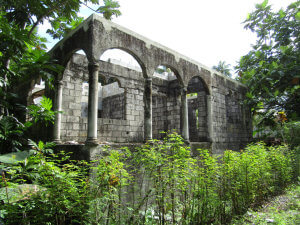
Another major influence that shaped contemporary Jamaica was American media. After independence brought about a rejection of Britain, the United States became the new rich nation from which to draw influence. Many Jamaicans viewed American television shows and movies as if they were real representations of the lives of the citizens. In this way, much of Jamaica was further instilled with desires for the material pleasures that came along with this misinterpretation. Rather than being able to forge a new national philosophy that encompassed a love of themselves, Jamaica’s eyes looked to another Western source. On the social level, this would have added to the high level of status anxiety that already existed. To this day, there are many people spending beyond their means in order to impress those around them.
It’s important to understand that I am not denying the many efforts of individuals and groups who have attempted to reshape and better Jamaica over the years. Jamaica has seen many revolutionary and progressive people grow from its soil. I’m not criticising the country, but merely highlighting the inescapable problems that stem from its tragic history. These problems are psychologically deep-rooted and they need to be discussed. The aim is to illustrate how I had made a mistake in my theory that proposed that Jamaica would be more about coöperation than Britain.
2.
The second major realisation that I made on my journey was about myself. Before I reached Jamaica I had depended on the concept that money had little to do with one’s happiness or place in the world. For me, the only factors that mattered were things like having good friends, a positive mind-set, good morals, time to reflect and an ability to love (among other things). Further, I had felt like the stripped down life, away from technology and expensive clothing would create a more wholesome life.
In this way, I had believed in an image of the poor people of the world as noble sufferers. In this view, Jamaican’s (along with many people from other poor nations) were apparently the real spiritual victors of the contemporary age. They had access to a whole other world of knowledge and happiness that was inaccessible in rich, consumerist countries. A millionaire in Britain could live in a mansion whilst a poor Jamaican could live in a zinc shack, but it didn’t matter since the most important thing was the happiness of the individual. Happiness was not based on wealth, but on the mind-set of the person.
But through this previously held worldview, I had seen a world which was more acceptable. In this view, the extreme economic disparities of the world became less important. I had adopted a rosy perspective that assisted me in dealing with the effects of slavery and colonialism. For someone whose ancestors were directly affected, it became easier to believe in this alternative narrative.
What I hadn’t considered was how a lack of money could have serious tangible effects on people’s lives. Having money brought access to good healthcare, access to travel and an overall general comfort. Many of these things were either difficult to achieve or denied to the average Jamaican. Further, I couldn’t have previously considered the weight that financial angst had on people’s minds and wellbeing. I couldn’t predict the psychological effects of poverty. When I was finally forced to face the world without its makeup, it had a huge emotional impact on me. I was forced to realise that money was not as meaningless as I had hoped…
The world suddenly seemed darker and more twisted. I started to realise that much of what I took for granted were global privileges. For example, in earlier times I could travel to a poor country and say ‘the exchange rate is really good’. Now I looked back and imagined what the average person from this country might think if they came to England with their currency. In this way, I realised that the ease with which I travelled was all based on the global economic hierarchy.
Even my belief system which proposed that money didn’t matter was based off of my global privilege. Although my family was not wealthy, I was able to develop these ideas because I never had to face poverty. I might have had to scrape by for a little while in my late teens, but this was nothing in comparison. My life suddenly seemed much like those middle-class hippies who dropped out of university and preached the unimportance of money in the 60’s. When they were done with this phase, they went home to pursue a real career.
One of the first encounters that I had with this economic disparity came when I visited uptown Kingston. After nearly two months in the poor countryside, I came to Liguanea in uptown and was able to observe the wealthy people of the country. The moralist inside me criticised them for eating in nice restaurants and living in big houses whilst so much of the country suffered. It angered me that they were able to live the high-life whilst some of my friends and relatives in Jamaica were fighting to get by. But how was the lives of these wealthy people different from mine in the UK? The only difference that I could observe was their proximity to poverty. For them, the poverty was always just around the corner. For me in England, it was across seas and oceans in distant lands.
As I analysed Jamaica and understood my place in the world, each learning lesson came as a double-edged sword. I was able to understand my global privilege as a British citizen, but also how colonialism and continued neo-colonialism was the reason for this privilege. On the one hand, I was personally thankful for my privileges, but then I was furious that this was denied to so much of the world.
By a complicated series of events, we Jamaicans in the UK are now given much of the same privileges as our white British counterpart. But this was never the plan. Whilst Britain was gaining its wealth through the exploitation of its colonised nations, they could never have imagined that one day we would live amongst them. One day we would be able to attend their schools and universities, intermarry with their citizens and have access to a good level of global wealth.
I came to realise that my freedom and access to information was infinitely greater than my ancestors in bondage. That my quality of life was undoubtedly better. There was no secret philosophical understanding that was hidden in Jamaica which outweighed the economic situation.
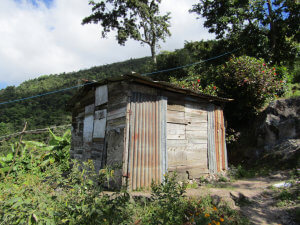
Although I have not made peace with these harsh truths (I don’t know if I ever will), I realise that I am now in an extremely powerful position. I received a wealth of information and life lessons that have made me a more understanding human being. Now I have the missing piece of information that I had searched for. Maybe it didn’t come as comforting or liberating, but it was the truth that I had been digging for. It came as one of the most difficult experiences of my life but it represented my commitment to the search for knowledge.
As I left my comfortable life in London to pursue this journey, I knew that I could lose it all. For months I didn’t even want to discuss what the trip would be like. I only found myself dreading the possibilities. Part of me didn’t even want to go. But I felt that it was my cultural and philosophical obligation.
Now having had the experience of living in Jamaica for 5 months, I have an inside understanding of what Jamaica means. I lived in one of the poorest parishes, side by side with my extended family. I listened to the stories and experiences of the people. All the new information came down on me like an avalanche. Many of my beliefs were shaken. At times I lost myself within the cultural emersion. Sometimes I even looked back on my old life in London as if it were years in the past.
As I did this, I saw this earlier version of myself as young and naïve. But how naively happy! I was content in my romanticised idea of the suffering world. I had internalised a unique interpretation of both pro-black and hippy ideologies. But that version of myself had to die in order for a new version to come to be. And through the strange whirlwind of time, I am now reflecting on this period that I could never have previously conceived of. Now a more mature man writes with a newfound perspective.
Additionally, in spite of my analysis of the social problems, I met good people who I hope will be lifelong friends. These resilient souls showed me the true power of inner strength. They showed me what it meant to push through the negativity and to remain a good and positive person in spite the circumstances. Even though they lived in such harsh conditions, they had not been crushed under the social pressures. I learned much from them and as I come back to Britain I feel like there is no obstacle that can prevent me from reaching my goals.
Realising their oppression and my relative freedom, I understand now that I must take advantage of my position. Unlike these friends and my ancestors, I am able to search deeper into our collective history. I can go to West Africa and research the ethnic groups, cultures and languages. Of course, it would almost be impossible to trace where exactly my ancestry is from but at least it would complete that circle of displacement. After hundreds of years of my ancestor’s slavery, one of their descendants was able to make it back to those lost African shores.
And finally, one of the greatest lessons that I learned from the experience was that I shouldn’t search the world for belonging. As a black person who was born and raised in the West, I longed for a place where I would no longer be a minority and where I would be embraced with open arms. Instead of experiencing the cold of racism, I would feel the warmth of home. Many black Western thinkers have dreamed of such a place. But I think the simpler and more tangible answer is that home is in front of us. Home is in the present and home is in our connections to the reality around us. Home is the whole world, although it might not always seem so. And home is in the love for ourselves and others. So as I further travel, I do so with an understanding that the aim is to learn and not to search for something eternal.

Latest posts by (see all)
- ON STAGE | JULIUS CAESAR REMIXED AT OMNIBUS THEATRE — September 23, 2026
- NAS: LDN SEASON, WHEN TWO ARTISTS COLLABORATE BY SAL FRECKLES — September 16, 2026
- FILMS TO HAVE ON YOUR RADAR AT THE 70TH BFI LONDON FILM FESTIVAL — September 4, 2026
