
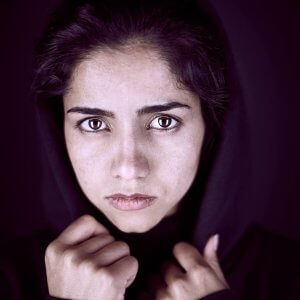
Sonita Alizadeh is an Afghan refugee. She is just 19 years old. But the horrors she has seen have granted her a wisdom that transcends her age. Her youth belies her experiences. These are experiences that no one, particularly children and adolescents, should suffer. She is also an incredible hip hop artist. Hip hop was invented for people like Sonita. The genre is a platform that elevates those marginalised in society. It breaks down boundaries. It was conceived to be a voice for the voiceless and there is no group more marginalised and alienated than refugees. The sad irony is that those who fled from war in their home countries then when reaching freedom in democratic countries such as Britain and then found that they had to fight another kind of war. That is the kind of war that encompasses racism and the realisation that they are not wanted by all in the countries that they ended up.
It is a long road from a war torn Afghanistan to first discovering, and then utilising Hip Hop as a means of speaking out against human rights transgressions. Sonita epitomises the beauty of music as a whole, and in this case hip hop. It is hard to think of anyone who is the complete antithesis of the stereotype that is propagated about, and sometimes by some rappers themselves. Certainly, myself included, we do not conjure up the image of a teenage muslim Afghan refugee when we think of rap. She still wears a hijab. She is currently studying on a scholarship in the US.
In Afghanastan her family tried to sell her for $9,000 into a marriage she did not sanction and did not want. This, an experience that happens to many women in numerous countries across the globe, inspired her track ’Brides for sale’. Certainly her personal experience explains the profound lyrics that give the song such deepness. She begs us to listen to her. Others echo that. This is something we all need to hear if we are to open our eyes to the experiences of such women. This song is harrowing in its words. “My voice shouldn’t be head, for it is against sharia. Women must remain silent. It is the city’s tradition. I scream to make up for a women’s silent. I scream on behalf of the deep wounds on my body”. This is catharsis in its truest form. “I am fifteen from Herat and suitors come, I am confused. Like all other girls I am caged. I am seen only as a sheep to be devoured. Let me scream. I am tired of being silenced.” She wants the world to know the truth; the suffering of women under an oppressive régime. The words are hard. But we must not turn our backs for this is precisely what happened to her in Afghanistan. The world turned their collective backs.
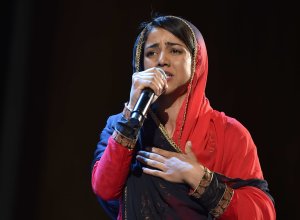
As a practising Muslim, she clearly knows the Quaran back to front, inside out. She wants to share her knowledge because she stresses that she wishes that people knew that it doesn’t say women are for sale. Sonita was put up for sale in order to accrue enough money for her brother to buy a bride. In an interview with the BBC she says that women like her, forced into marriage, view their husbands as rapists. This is because, of course, these men are often virtual strangers, and the act of union is against their wishes and consent. At fifteen, Sonita was still a child for such adult undertakings.
She says that to prevent this from happening repeatedly to other young girls she attends many conferences and events to both speak and raise awareness. She, and other young women like her, speak for people to hear their stories, and, she stresses, will continue to until they are heard by “Officials and governments”.
Sonita helps us to contextualise our problems. Once we see what is happening under such oppressive regimes, some of our own problems may feel a little bit smaller. While politically this country is in disarray, stories such as these help us to remember how lucky we are to be born in a first world democracy, and how where we are born dictates our opportunities, situations, and even lifespan. We may at times detest our government. We more than likely detest Donald Trump and the US government. But we will not be brutalised for that. This indicates that we have a freedom that people like Sonita, at the time of her existence in a state that not only did brutalise people, especially did so to women.
She told the Columbia Tribune that becoming a rapper was never on her agenda. She just wanted to share her experiences. She had never heard rap until working in a gym and realised very quickly that it was a unique forum to get her voice heard. Not only did she recognise it as a tool for social change, but found it to be “one of the most powerful forces to share important messages”.
Sonita wants to be a lawyer for women’s rights and human rights. And she wants people to know that “girls have power, and they can have a future”. Against the backdrop of a dark past, she wants a bright future. Sonita is well on the way to achieving this goal. Compare the fact that she is studying at one of the best universities in the world to the shocking revelation that she was just 10 when her family first tried to sell her and you have a young woman who is already a startling success. She feels that when girls are married at very young ages they are being raped and the world needs to know this.
An Iranian documentary maker, Rokhsareh Ghaem Maghami, filmed her over the period of three years, and documented her story in a remarkable film “Sonita”. She filmed this to escape from the marriage being planned for her. The video for “Brides for Sale” also emerged from this even though it is illegal for women to sing publically in Iran, where she was residing at the time. This turned out to be the key to freedom. Not only was it popular with women in Afghanistan but ultimately altered the path of her life. She was picked up by a charity Strongheart, and was subsequently offered a student visa to study in the United States.
It was Iran where she first discovered rap. She first heard Iranian rapper Yas, while cleaning bathrooms while she taught herself literacy having being declined an education previously. She also heard Eminem, a hip hop act she loved. She started writing her own songs and won a US competition with a song that urged people to vote in elections in Afghanistan. At just 16,after winning the competition, her mother begged her to return home because she has found a potential husband. By selling her own daughter she thought she could raise the $9000 dowry to pay the dowry for her son’s marriage
Sonita now she lives in Utah and attends Wasatch Academy on a full scholarship, and continues to write songs. She is an inspiration for women globally who are in the situation she has been in. Politically and creatively she is a figurehead. But where does she stand with her family? Ironically though, whilst her Mother initially hated her daughter’s choice of expression, the New York Times has said she is now her biggest fan.

Latest posts by (see all)
- NAS: LDN SEASON, WHEN TWO ARTISTS COLLABORATE BY SAL FRECKLES — September 16, 2026
- FILMS TO HAVE ON YOUR RADAR AT THE 70TH BFI LONDON FILM FESTIVAL — September 4, 2026
- REVIEW | DJ JAZZY JEFF AT KOKO LONDON: A MASTERCLASS IN MUSICALITY — August 25, 2026
