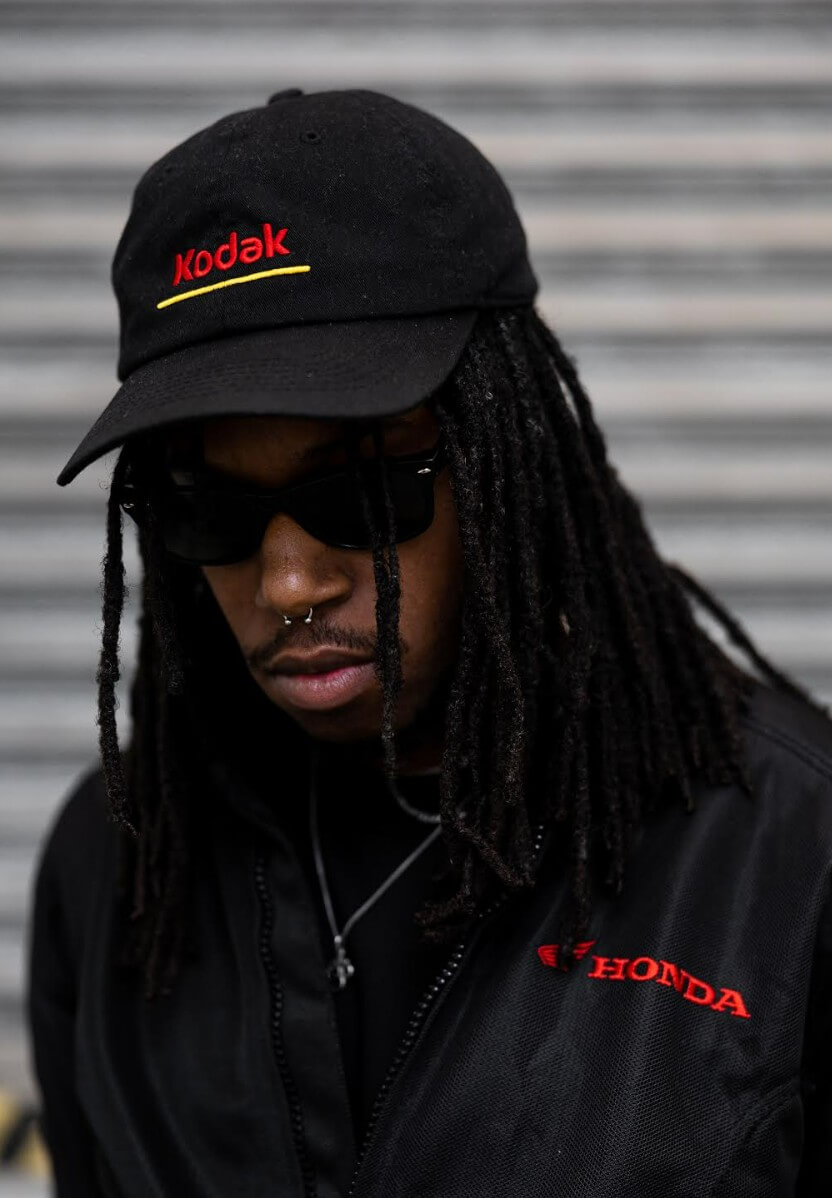
London has always been a breeding ground for innovation in hip hop culture, but few artists have reshaped its boundaries quite like Ivan Michael Blackstock. Moving between theatre, dance, film, and lived experience, his work refuses to sit still or be easily defined. At the centre of that movement is TRAPLORD, a production that began as a deeply personal release in an abandoned East London space and has since evolved into one of the most important statements in contemporary hip hop theatre.
Now, over a decade since its inception, TRAPLORD returns to the stage as a headline production for Breakin’ Convention 2026, the UK’s leading platform for hip hop theatre curated by Jonzi D. Running from 9 May to 6 June 2026, the tour will take in cities across the country including Canterbury, Newcastle, Nottingham, Coventry, Glasgow, Brighton, Poole, Doncaster, and Blackpool. Tickets are available via venue box offices and official listings, with high demand expected as the production continues its cultural impact.
In this conversation Blackstock reflects on the evolution of TRAPLORD, the responsibility of telling honest stories around Black male identity, and why building platforms for the next generation is just as vital as the work itself.
TRAPLORD started as something deeply personal in an abandoned East London space back in 2015. Now it’s headlining Breakin’ Convention 2026. How has your relationship to the work changed as it’s grown from a safe space into a global statement?
When I first created TRAPLORD, it came from a very real place. It was personal, raw, and honestly something I needed for myself more than anything else. At that time, it wasn’t about stages, headlines or recognition. It was about expression, healing, and creating a space where I could be truthful without compromise. It was somewhere I could confront things internally and turn them into something physical.
Now seeing it grow into something that resonates globally, my relationship with it has naturally evolved. It still holds that same honesty, but now I understand it belongs to people beyond me too. Audiences connect with it through their own experiences, their own pain, their own questions around identity, masculinity and freedom. That’s powerful.
So what started as a safe space has become a shared space. That means everything. It reminds me that when you tell the truth deeply enough, it can reach far beyond you.
You’ve described TRAPLORD as sitting between dream and reality. What does that in-between space allow you to express about Black male identity that traditional theatre or dance cannot?
That space between dream and reality is where I feel most free creatively. Reality can come with expectations, stereotypes, limitations. Especially when it comes to Black men, people often decide who you are before you’ve even spoken. You can be reduced to an image before being seen as a full human being.
In that in-between world, I can challenge all of that. I can show softness, fear, power, vulnerability, joy, confusion, love and all the things that make us human. Not just one version of masculinity, not just one emotional register.
Traditional forms can sometimes ask for things to be clear and linear. I’m more interested in emotional truth than neat storytelling. Life isn’t always linear, trauma isn’t linear, healing isn’t linear. That dreamlike space allows me to express what words alone often can’t.
Winning the Laurence Olivier Award for TRAPLORD was a huge cultural moment. Did that recognition shift how the industry engages with hip hop theatre, or do you still feel like you are pushing against the same boundaries?
Winning the Olivier was an important moment, not just for me, but for the culture. It recognised a form that has always had depth, brilliance and value, even when institutions didn’t always acknowledge it. There are communities who have been innovating for years without being given that same spotlight.
Did it shift things? In some ways, yes. It opened conversations and created visibility. It made certain spaces pay attention in a different way. But there’s still work to do. There are still old ideas around what is considered theatre, what is considered art, and who gets access.
So while progress has been made, there are still boundaries to push. I just think now we’re pushing from a stronger place, with more proof that the work belongs at every level.
Masculinity and mental health are central to TRAPLORD. How do you navigate vulnerability on stage without it becoming spectacle or being misunderstood by audiences?
For me, vulnerability has to come from truth. It can’t be performative. It can’t be there just to shock people or make them emotional. If it’s not rooted in something honest, audiences can feel that straight away.
Everything in the work comes from intention and care. Sometimes vulnerability is loud, sometimes it’s quiet. Sometimes it’s in movement, stillness, silence, or tension. It doesn’t always look the way people expect. Sometimes the strongest thing a man can do is be still and present with what he feels.
As for misunderstanding, that can happen with any honest work. People bring their own experiences into the room. But I trust authenticity. If it’s real, it lands where it needs to land.
Your work pulls from street culture, Jamaican heritage, film, and theatre all at once. Do you see TRAPLORD as a fusion of influences, or as something intentionally resisting labels altogether?
I think it’s both. Naturally, my influences come through because they’re part of who I am. London culture, Hip Hop Culture, Jamaican heritage, music, dance, film, theatre, it all lives in me, so it lives in the work too. Nothing is forced. It’s just an honest reflection of the environments and histories that shaped me.
But I’m also not too interested in labels. Labels can be useful for categorising things and creating containers, but they can also limit how people experience them. Once something gets boxed in, people sometimes stop engaging with what it actually is.
TRAPLORD is meant to move freely. It doesn’t need to sit in one box. It can hold multiple languages at once.
You have worked on global projects like Black Is King. How does stepping into mainstream pop culture spaces impact the way you approach more intimate, autobiographical work like TRAPLORD?
Working on large global projects teaches you scale, discipline and collaboration. You learn how to execute vision at the highest level, how to communicate clearly, and how to move with precision inside big systems. Those lessons are valuable.
But intimate work like TRAPLORD asks something completely different. It asks for honesty. It asks for courage. There’s nowhere to hide in personal work because the source material is you.
So in many ways, those bigger spaces sharpen the craft, but they also remind me why intimate storytelling matters so much. Spectacle can impress people, but truth can transform people.
Breakin’ Convention has always been about elevating hip hop theatre. What does it mean for you to bring TRAPLORD into that space now, alongside acts like ILL-Abilities and Femme Fatale?
It means a lot because Breakin’ Convention has always been a real home for the culture and it’s my Hip Hop Theatre roots. It has consistently celebrated hip hop artistry in all its forms, long before many mainstream spaces caught up. It has given artists legitimacy without asking them to dilute themselves.
To bring TRAPLORD there now feels full circle. There’s history there, community there, respect there. Those things matter.
And sharing that space with artists like ILL-Abilities and Femme Fatale just reflects how broad and powerful the culture really is. Different voices, different stories, same spirit of excellence.
You are building ecosystems through ALTRUVIOLET and CRXSS PLATFXRM, not just making work but creating infrastructure. Why is that as important to you as choreography itself?
Because creating one piece of work is important, but creating pathways is legacy.
There are so many talented people with ideas, vision and ability who just lack access, opportunity or support. Infrastructure helps change that. It creates sustainability. It creates ownership. It gives people room to grow and build careers on their own terms.
Art moves people emotionally, but systems can move people forward in real life. Both matter. If we only focus on performance and not opportunity, we leave too much behind.
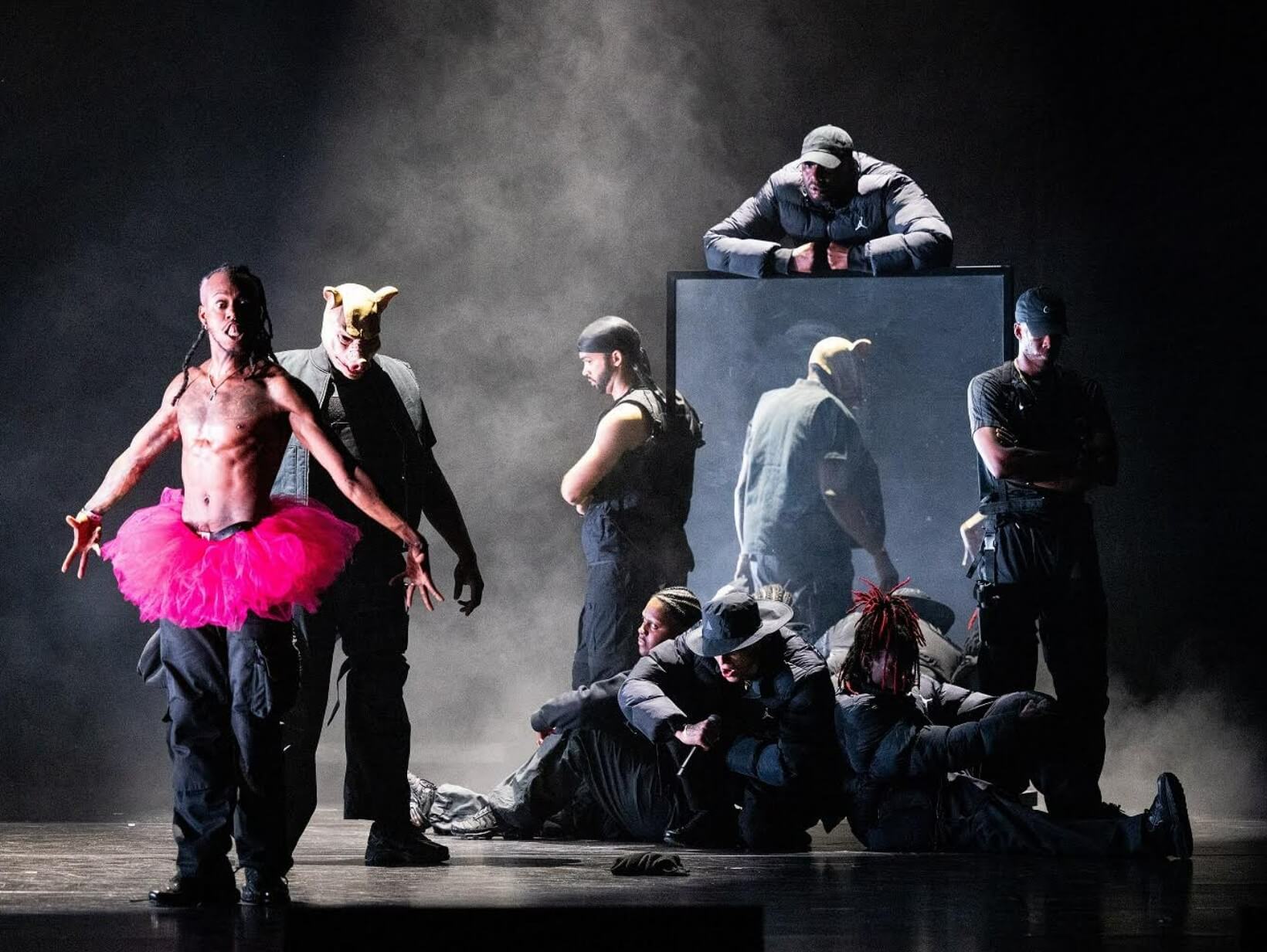
Photo credit: Paul Hampartsoumian
TRAPLORD interrogates being judged or defined before you have fully lived. Do you feel that pressure personally as a Black artist operating at the intersection of underground culture and major institutions?
Of course. There are always assumptions. People often decide who you are based on image, background, success, where you come from or where they think you belong. Sometimes they celebrate you for one thing while misunderstanding everything underneath it.
That pressure is real, but I’ve learned not to live inside other people’s definitions. Growth requires freedom. If you keep performing who others expect you to be, you stop evolving.
My focus is staying truthful, evolving, and not becoming trapped by expectations, whether they come from institutions or the culture itself.
What do you want the audiences to take away from your performance at Breakin’ Convention 2026?
More than anything, I want people to feel something genuine. I want them to experience honesty in motion.
If someone leaves with a deeper understanding of themselves, that’s powerful. If someone rethinks masculinity, identity or vulnerability, that matters too. If they simply feel moved, inspired or seen, that’s enough.
I want people to leave knowing that complexity is human, vulnerability is strength, and transformation is always possible. Sometimes art can open a door in people that conversation alone cannot. If that happens, then the work has done what it needed to do.
Tickets for Breakin’ Convention are HERE


Rishma
Latest posts by Rishma (see all)
- EVENT | PASS THE TORCH FOR TY RETURNS TO BRIXTON FOR ITS SIXTH ANNUAL CELEBRATION — August 13, 2026
- DIASPORA CALLING! REVIEW: LAURYN HILL, ERYKAH BADU AND 35,000 PEOPLE CELEBRATE THE POWER OF BLACK CULTURE — August 13, 2026
- LONDON’S BIGGEST ROOFTOP LAUNCHES NEW DAYTIME SERIES ‘THE BIG BRUNCH’ — August 6, 2026
