Photography by Mohamed Sadek
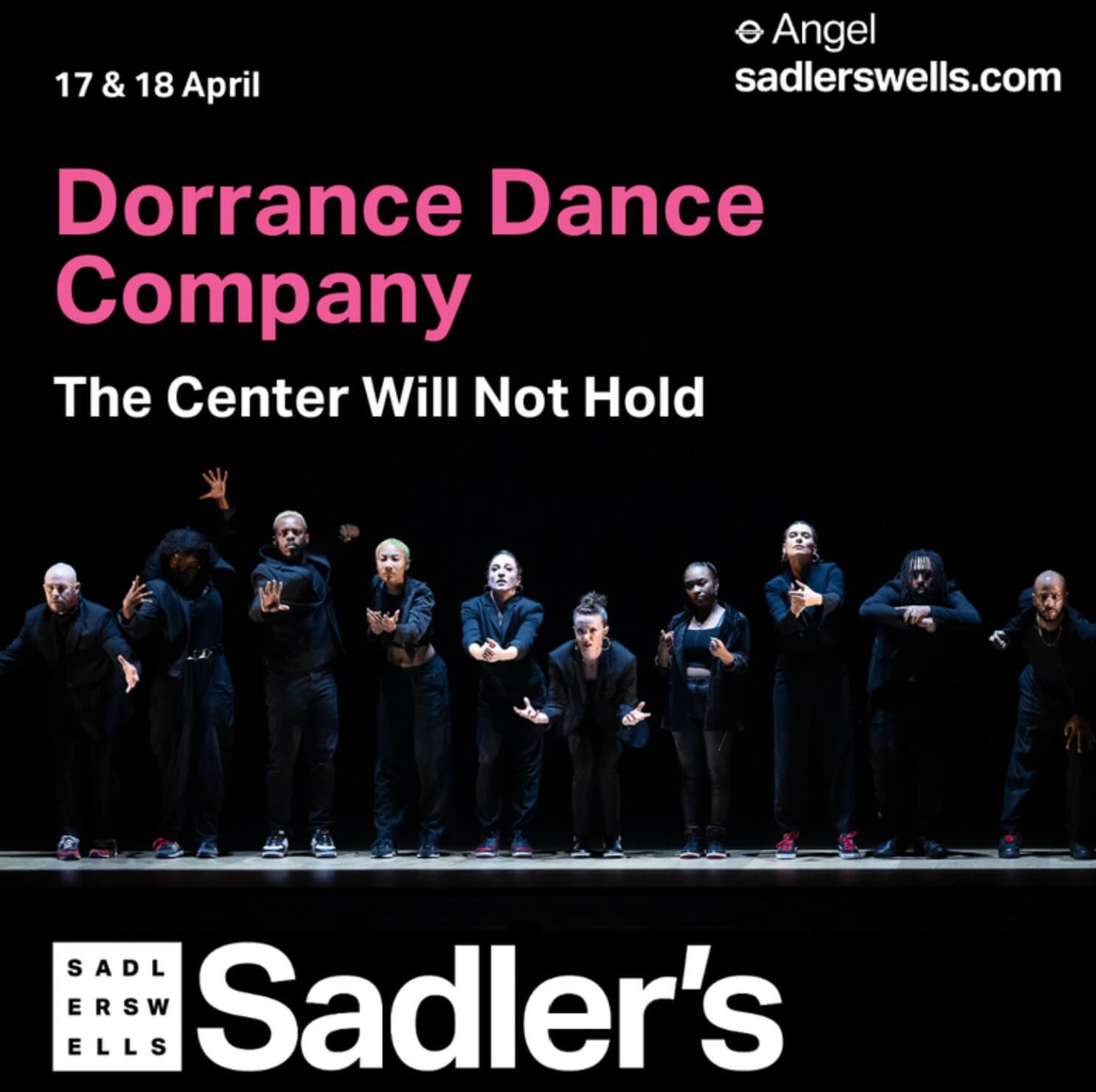
As Hip Hop approaches its sixth decade as a global culture, the theatre stage is increasingly becoming a space where its histories, lineages and communities are reconsidered in new ways. In The Center Will Not Hold, choreographer and b‑girl Ephrat “Bounce” Asherie joins forces with acclaimed tap dancer and choreographer Michelle Dorrance to bring together a constellation of street, club and vernacular dance forms that share roots in the African diaspora. Expanding their intimate 2022 duet a little room into a full ensemble work, the production gathers performers deeply embedded in styles including breaking, house, Chicago footwork, Detroit jit, litefeet, Memphis jookin, tap and body percussion.
Premiering in the UK at Sadler’s Wells, the work unfolds as both a celebration and a reckoning. Its title, drawn from W.B. Yeats’ The Second Coming, evokes a world shaped by instability and upheaval—conditions that echo the social and political environments in which many of these dance forms were born. Against that backdrop, The Center Will Not Hold foregrounds improvisation, live rhythm and collective energy, drawing on the ethos of cyphers, battle spaces and underground club scenes where individuality and community exist side by side.
For Asherie, whose work consistently honours the spirit of New York City’s underground dance culture, the project is also an exploration of lineage and responsibility. Bringing together dancers who are specialists in distinct regional forms, the piece creates space for each artist’s cultural identity and improvisational voice while revealing the deep connections that link these practices across time, geography and diaspora.
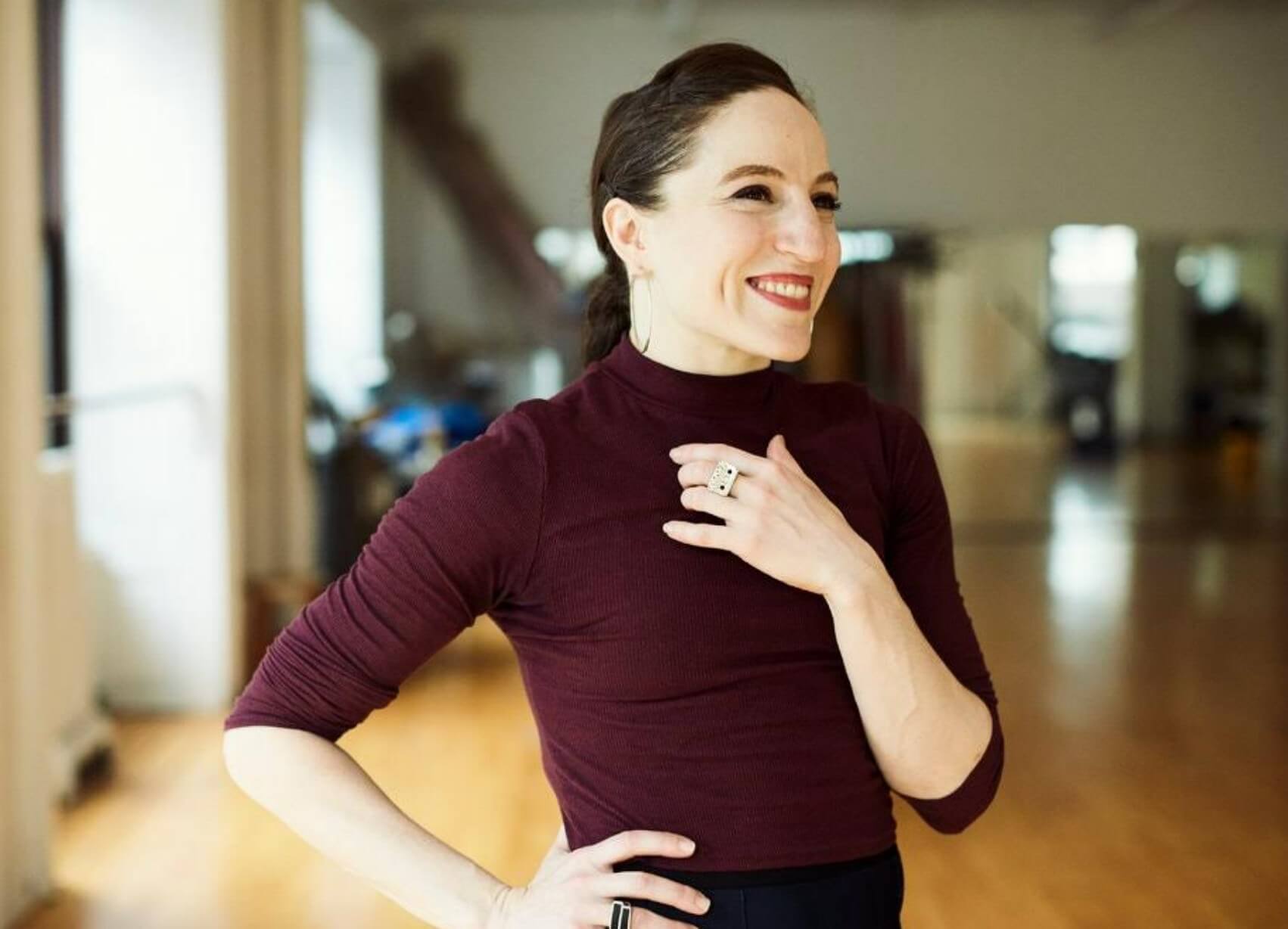
Ahead of the production’s London première, Asherie reflects on collaboration, cultural lineage, improvisation and what it means to carry hip hop’s living traditions onto one of the world’s major theatre stages.
The Center Will Not Hold brings together breaking, house, hip hop, club and social dances alongside tap, all of which are rooted in Black and Latine vernacular traditions. From your perspective, why does it feel important to place these forms in direct dialogue with one another on a major theatre stage right now?
Black and Latine vernacular dances have historically been underrepresented, misrepresented and/or diluted on major theater stages. Every opportunity we have to create — as artists living, breathing and working within these forms — is an essential one. Every performer you’ll see on stage is a co-choreographer in The Center Will Not Hold. The depth of each performer’s craft is undeniable; through this profound level of artistry we see how these dances are at once intrinsically connected inside of the vast continuüm of dances from the African diaspora and also incredibly specific in terms of stylistic, rhythmic and qualitative nuance. This differentiation of each style has everything to do with which part of the country each dance is from and the specific history and socio-political context that birthed each form. We hope that seeing so many of these dances together in one work will leave audiences inspired to ask more questions about each of these dances and their specific histories.
You and Michelle Dorrance first collaborated on a little room as a duet. When expanding that intimate exchange into a full ensemble work, how did your thinking shift around community, collective rhythm and the politics of who gets seen and heard on stage?
Both Michelle and I exist because of our respective dance communities. We were very lucky to learn from elders in each of our forms who never separated the dance from the cultures that birthed them, elders who created, innovated and laid the groundwork for us to do what we do.
As white women working in Afro-diasporic forms we are responsible for amplifying each of our dance lineages. Community is implicit in what we do as humans and artists, but we are of course always in conversation with questions of race and identity, consistently scrutinizing our own positionality in our work and the field at large.
For me, the values and ethos of the NYC underground scene — where the collective consciousness celebrates each individual in the fullness of who they are — shaped me deeply as an artist and as human. The duet Michelle and I created was reflective of a moment when we felt confined by internal and external challenges — the pandemic, injuries, the aging body — when we had the opportunity to expand the work, we were reacting to the political chaos exploding in the U.S. — and it made all the sense in the world to create something with our extended/interconnected dance communities — communities embodying generations of dances from the African diaspora that were birthed and innovated in reaction to oppressive environments, through resilience in response to adversity and in and with community, reflecting culture, place and stories historically hidden, obscured and/or whitewashed.
Your work consistently honours the ethos of New York City’s underground club and battle spaces. How did you translate the values of cyphers, social dance floors and freestyle exchange into a theatrical context without losing their rawness or cultural integrity?
I am a b‑girl and a clubhead. This is with me in whatever I do, in every collaboration and in every creative space. The challenge lies in how to craft a work for the stage that allows the audience to see the fullness and inherent complexity of street and club dances. No longer are we in a packed cypher where the energy is palpable and every person in the mix is ready to jump in and get down. Now we’re in a large space, maybe even in a very formal proscenium, far away from our audience. The stage will never be the club and will never be the battle, but the stage has its own magic. I’m constantly thinking about how to craft space to bring out the fullness and three dimensionality of the dances we do. In this particular work, our beloved lighting designer, Kathy Kaufmann plays a big role in helping us shape the space, creating a world where all these dances can live and breathe fully. Both Michelle and I believe deeply in creating work that is thoughtfully and meticulously structured, but also leaves room for each dancer to freestyle/improvise. This is the core essence of all the dances you’ll see on stage. All of the solos in this work are improvised, unique creations by each performer who shares so generously of themselves on stage, night after night bringing The Center Will Not Hold to life.
The cast is made up of dancers who are deeply specialised in specific forms such as Chicago footwork, Detroit jit, Memphis jookin, litefeet, breaking, house and body percussion. How did you navigate the challenge of creating cohesion while allowing each dancer’s cultural and stylistic identity to remain fully intact?
All the dancers in this work are unique and incredible artists. The way to honor each performer and their dance is to make sure the work is crafted in a way that creates the space for each person to be fully who they are. This can absolutely exist alongside moments of full cohesion. We are each our own special creation, but we are also a squad with a common goal. When the work calls for it, we can move into and through a given section with a deep unison approach — whether rhythmically or qualitatively — we are in it together. This doesn’t erase any one individual, but rather unites all our distinct energies into something bigger than any one of us could have imagined on our own.
The title references W.B. Yeats’ The Second Coming, a poem often associated with collapse and instability. How did that idea resonate with your own experience of the current social and political climate, particularly in relation to hip hop’s role as a voice of resistance and survival?
Chaos is everywhere. We are grateful to be able to share our art with audiences and hope it’s a call to action, to both ourselves and our audiences, that we cannot be divided, that even when the world is in the most unfathomable levels of turmoil, we can always choose care and kindness towards one another. When we think about the beginning of breaking and hip hop culture — we often think of the black and white photos of the Bronx burning down — iconic photos of young Black and Latinx youth literally creating what would become the most all encompassing global culture the world has ever known — out of rubble, broken down pieces of cardboard, discarded linoleum floors, beat-up mattresses. This story will humble anyone with a beating heart. We remember early underground clubs in NYC and that they were safe havens created by and for young black and brown LGBTQIA+ youth at a time in NYC when it was illegal for two people of the same sex to hold hands in public, let alone dance together. It was these communities and their spaces that ushered in what eventually became known as underground dance culture/house dance culture (big shout out to Chicago — birthplace of house music), a culture that is now present in so many corners of the globe. You stop to think about it and it will floor you.
Those of us fortunate to be part of these dance communities, no matter what our background or life experience, have a literal physical reminder every day of our lives and with every step that we rock, that we, as human beings, have limitless potential to be better than we were yesterday, to create, to thrive in community and lead with peace, love and soul.
Music and rhythm are central to both hip hop culture and this production, with live percussion and original composition driving the work. How does the presence of live musicians affect improvisation, listening and power dynamics between dancers and musicians on stage?
John Angeles is one of the most talented percussionists I have ever worked with. He and Michelle toured together in STOMP for years alongside Fritzlyn Hector, an astoundingly brilliant and multi-faceted dancer and body percussionist. The three of them are operating in a dimension of rhythmic complexity rarely seen on theater stages. Their next-level percussiveness inspires all us on stage to constantly push our craft, to show and prove that we can indeed keep leveling-up and when called upon, hold our own, echoing the way many of us train to stay ready for the next battle that might come our way.
You have an academic background researching the vernacular jazz roots of street and club dance, alongside deep lived experience in hip hop communities. How do those two modes of knowledge inform your choreographic choices, and where do you see them intersecting in this piece?
I try not to separate knowledge into modes. Our bodies and minds are fully connected. When I got my MFA I was able to geek out and research/write about the vernacular jazz roots of the street and club dances that we do. This research, however, was absolutely in response to growing up with jazz in my ear (my brother is a beautiful jazz pianist) and having the immense gift of learning from and dancing with Marjory Smarth (Rest in Paradise). A big sister to many dancers of my generation, she was the first person I saw so fully and effortlessly embody a multitude of dances from the African diaspora. In one song at the club, Marj could seamlessly move through various West African dances, vernacular Jazz steps, Charleston, Lindy, Hustle, Hip Hop, House…tracing her lineage and expressing her own unique story. She reminded us to “live true and dance free, “ a way into knowing ourselves more fully and in turn knowing others more completely. In The Center Will Not Hold we grapple with the turmoil that is enveloping the globe. We can think through our feelings, write about them, talk about them — fear, terror, resistance, deep care, frustration — but ultimately moving through it all in this work is what allows us to find our way forward together.
Collaboration is at the heart of this project, particularly your ongoing partnership with Michelle Dorrance. What have you learned from working across dance forms that are often siloed by institutions, and how has this collaboration challenged or expanded your own practice?
It is one of the biggest joys to be able to work with people I deeply admire, respect and love. Michelle and I have been friends for two decades and I have had beautiful opportunities to perform inside many incredible works that Michelle has created for her company. Working with tap dancers — artists who are musicians and dancers at once — inspired me to take sonic responsibility for my movement. What if everyone heard all my steps?? What different choices might I make? How deeply am I really sitting in this pocket? From these niche questions to broader understandings of the way tap dance steps exist inside of vernacular jazz, breaking footwork and house, my work with Michelle over many years has infinitely enriched my journey as a creative being on this planet.
Presenting this work at Sadler’s Wells introduces these forms to international audiences who may not be familiar with their cultural histories. What do you hope UK audiences, especially young hip hop dancers, take away from seeing these styles framed as interconnected rather than separate?
First off, I want to shout out Jonzi D for all his years of making Breakin’ Convention happen and giving opportunities to so many hip hop dance theater artists to share their work. My company was a part of Breakin’ Convention when it was at the Apollo Theater in Harlem, NYC in 2013 and it was beautiful to be part of such a longstanding global hip hop dance theater festival. This makes me curious and think that perhaps Sadler’s audiences have some knowledge and awareness of the many forms that are part of the world of street and club dance. But yes, as I mentioned above you, we are all all our own special creations, yet our stories are absolutely connected because of the dances we do and their shared lineage.
What a beautiful understanding to have; what a deep responsibility and a reminder that there is room for everyone to have a voice AND that we are all in this together.
Hip hop is often described as a living culture rather than a fixed form. After creating The Center Will Not Hold, how has your understanding of preservation, evolution and responsibility within hip hop shifted, and what questions are you carrying forward into your future work?
Exactly. Cultural reflexive forms are living and breathing. In the early 70s, as breaking was first being created, you could literally tell what borough someone was from based on the way they danced. Communities, neighborhoods, cities…they grow and shift. New stories are constantly being created. My breaking mentor, Richard Santiago (aka Break Easy) founded his cru Breaking In Style (B.I.S) in 1979 in Los Sures (South Williamsburg). He taught us that crispy clean breaking technique that has helped me maintain quickness and agility through many years, but also instilled in me, and so many of the other b‑boys and b‑girls that he trained up, to keep the spark of curiosity and innovation alive.
Know your history, know your roots, know why you dance the way you do and keep pushing forward.
Tickets are on sale now for The Center Will Not Hold
Grab yours HERE


Rishma
Latest posts by Rishma (see all)
- GIGGS ANNOUNCES ‘THE CHRONICLES OF’ A LANDMARK LIVE CELEBRATION AT OVO ARENA WEMBLEY — October 16, 2026
- NEW MUSIC | PROLIFIC WONE x MANAGE DROP NEW SINGLE “BANDAIDS” FT. APEX ZERO x MAS LAW (EOW ENGLAND) — October 2, 2026
- NEW MUSIC | MANAGE – CODE OF THE STREETS — October 1, 2026
