From the moment it arrived here from the US, having surge out of the Bronx and transmitting itself across the globe, Hip Hop culture in the UK began to create a unique identity for itself. This identity, our style, our look or sound, is a product of the diverse international musical, artistic and cultural influences existing in Britain, themselves products of the many diaspora and working class communities created by Britains barbaric and inhumane colonial history. Resistance, which was a constant occurrence throughout imperial history, has always been a defining principle of Hip Hop and is a common thread that runs throughout a lot of Hip Hop born in the UK. Like many people of my generation, Hip Hop was the medium through which I became consciously aware of numerous global sociological issues that were already affecting my life. Hip Hop introduced me to some of my greatest inspirations, like Malcolm X and Marcus Garvey, and helped to mould a sense of pride and of identity. As a 15-year-old trying to deal with being ‘mixed race’ and of African descent within the whirlpool of concealed racism and constant discrimination that is growing up in London, my consciousness was greatly enhanced by listening to groups like dead prez and Wu-Tang. Since 9⁄11, a large number of my generation became engaged in learning and researching Marxist or revolutionary theories, and began to question politics and politicians directly because of the music of artists like Immortal Technique, Klashnekkoff and Skinnyman. As a result, there has been a huge sprouting of not only politically and socially aware, but politically and socially engaged Hip Hop growing out of the UK. Groups and emcees like Iron Braydz, Triple Darkness, Caxton Press, Lowkey and Logic (People’s Army) and my own teams, First and Last and The Pantheonz of Zenn-la, are just a few. Artists like these deal with a wide range of issues — social deprivation; exposing the exploitative nature of our social system; encouraging unity and organisation of poorer and oppressed people with the goal of an engaged battle against the establishment; combating the self-destructive violence that African descendants are coerced into by our environments; the treatment of Muslims and Islam in contemporary Britain; retelling and unearthing hidden histories; highlighting oppression around the globe such as the plight and battle of the Palestinian and Tamil people and nations. These are just a few examples.
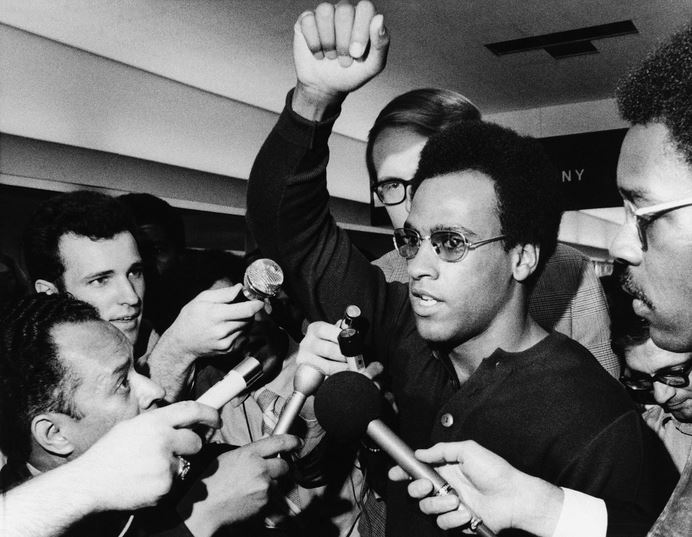
This awareness and engagement depicts what many revolutionary theorist and practitioners, including Huey P. Newton and V.I. Lenin, described as one of the most fundamental and necessary dimensions in creating the shift from people being oppressed and exploited by a capitalist society to genuinely fighting against the establishment responsible for this exploitation; the raising of the consciousness of our people to the reality of and reasons for our present condition. This is something that I can proudly say that Hip Hop in the UK, as a culture, is and has been a part of for decades.
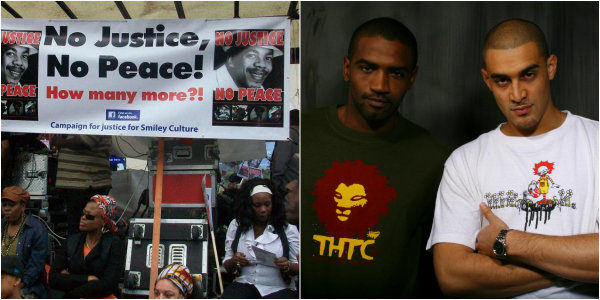
One of the best depictions of Hip Hop becoming engaged in community relations, and giving a platform for this politically expressive Hip Hop is the Speakers Corner movement. Founded by DJ Snuff, DJ and Graffiti Artist Steaz and the emcee Manage among others, and named after the platform for free speech in Hyde Park, Speakers Corner began as a Hip Hop event in Brixton that provided a similar platform for emcees and musicians to express themselves openly. It quickly became the spot to reach to get your art out, to meet like-minded people and to discuss current issues. Speakers Corner has now transcended its roots as a musical platform to become an organisational and promotional tool for community movements. Recent examples of this are the role that activists from Speakers Corner and it’s closely related affiliate The People’s Army (founded by Logic, Lowkey and Big cakes, among others) played in the protests against the murder of Smiley Culture by the police in 2011. The activists, many of them artists, helped Smiley’s family to organise and promote meetings and protests demanding justice. Through the same process they created platforms for debate within the Lambeth Community to try and find answers on how to deal with the problem of constant police brutality within the borough, the city and the country.
These events depict the power of Hip Hop to give a voice to the struggling, to give a weapon to those who are being attacked. This is the reason why many of the people who gave the best analysis of the insurrection sparked by the murder of Mark Duggen by police in 2011 — at least in the mainstream media — where UK Hip Hop artists. Amidst constant talk of ‘wonton destruction’, widespread condemnation and outright racism, with the likes of David Starky claiming the ‘riots’ began because “whites have become like blacks”, it was Reveal, UK Hip Hop emcee, who was on Newsnight exposing the reality of inter-racial, inter-class, intergenerational anger and alienation as the biggest factors for the violence. The most insightful analysis came from a man close to the events, Stafford Scott, whose community work in Tottenham stretches back to the uprisings of the 1980’s. I’m sure that Hip Hop has had at least some influence on his mentality and outlook on social justice, especially as he has since been involved in many public discussions on the events with Hip Hop artists like Akala and Wancee, the latter often performs tracks dedicated to his friend Mark Duggan at public meetings and demonstrations. Stafford Scott was one of the few people given airtime who demanded that people recognised and remembered that the issue that sparked the violence was yet another murder of a person at the hands of the British police, and that they were again of lower/working class and of African descent. He rightly emphasised the connection between the events in Britain and the great chain of anger, discontent and violent uprising that is being felt all over the world. He also exposed the hypocrisy of MP’s to label their own country’s violence as ‘needless thuggery’ while aiding violent uprisings abroad with military support. These sentiments were echoed throughout the underground UK Hip Hop scene, with numerous artists posting tracks, discussions and videos online in the hours, days, weeks and now years after the events took place.
It is this, the local being equated to and defined within the global context which, more than anything, depicts the nature of Hip Hop to me. Hip Hop holds up a mirror to the societies it emerges from. It shows everything — the beauty, the community, the love and creativity, but also the deprivation, the poverty, the crime and the death. Hip Hop depicts the need for an addiction to money within a capitalist society and the immense materialism which that creates, but also amplifies the voice of the powerless, the resistance of the oppressed and the emergence, like Malcolm from his prison cell, of a force that will no longer accept its condition now that its eyes are open to its reality. Just as the UK has its own style of Hip Hop culture, made up of people from all races and backgrounds, it has its place within the global movement of Hip Hop, as does France, Japan, Palestine – anywhere that embraces Hip Hop culture. In just the same way, the struggle of the exploited people of the UK, of all races and backgrounds, which has its own issues and obstacles to overcome, is part of the global struggle for a revolution that consists of multiple battles against injustice, oppression and exploitation; a revolution which if completed successfully will raise the standard of living for humanity as a whole.
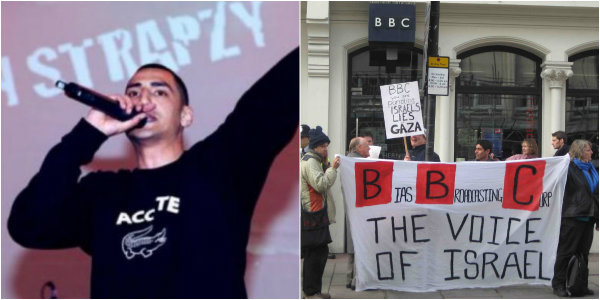
Alongside these many positives, and perhaps because of the power that it can invoke, there are also reasons why I am critical of Hip Hop’s role within this revolution. Firstly, since Hip Hop culture came into contact with the music industry, that same mirroring effect inherent in Hip Hop has often been manipulated into a self-destructive force. As anyone with a history in Hip Hop will know, Hip Hop has (at least on the surface) become gradually split between purposive and productive music and art, and (mostly) music that does little but generate large amounts of money for corporations and a few individuals while contributing to the self-destructive and divisive influences at work on our communities and our people. This split has never been bigger or more obvious. There was a time, at least for me, when many artists would encapsulate both sides of this void, making money from music with a partially self-destructive or materialistic message, but would often combine this with messages of the need for community and for rebellion, if not outright revolution or resistance. Today, there are few who can claim to do this, with the vast majority of powerfully lyrical emcees struggling to make a living or to get their music out to larger audiences, while far less talented but better connected rappers/pop singers, who are perhaps more willing or are coerced into ‘doing what sells’ clean up yet give nothing. From a UK perspective, with music, as with most art, anything clearly and outright anti-establishment is censored and outcaste — despite the media and government’s insistence that freedom of speech is common practice. A massive example of this is the censorship of Mic Righteous on the BBC, who while freestyling had the line ‘Free Palestine’ dubbed over — by a station that constantly allows emcees to talk about murdering their own people, and a corporation who will happily expose little girls to Rihanna and Miley Cyrus’ glorification of fetish sex at 8.30 in the morning on their way to primary school. This is just one example. The political, or rather anti-politcal thread that runs through much of the UK’s underground Hip Hop has either hindered or saved UK Hip Hop from mainstream media — perhaps both. Hindered from creating a US style successful industry, and saved from becoming overly exploited by the mass media machine. To me, this echoes the theory Theodore Adorno who, paraphrasing, said that art is one of the only outlets in contemporary Western society for genuine political expression, and that art forms that truly convey a strong political message opposing the nature of capitalism are those which are the most difficult to commodify and sell.
Secondly, despite Hip Hop’s position as a channel through which people can ignite social change, the shift from self-expression to genuine action is not happening enough, and not just in Hip Hop. Too often in recent times, when people have realised the reasons why there must be a change to the social order, they feel content to only express this realisation through music or art. Art can help, and as I have said, is necessary and important, but nothing will actually change if artistic expression is all we are doing as artists or as people to change our collective situation. In the words of Mao Tse Tung “if you know the theory and methods of revolution, you must take part in revolution”. Many people are using Hip Hop as a platform to label themselves as revolutionaries or freedom fighters while doing nothing else but make tracks or listen to them. They know there’s a problem, they know revolution is the answer, but they don’t then progress to learning or creating theories and methods of creating this solution, never mind actually taking part in the physical process of a social revolution.
I count myself within this criticism; no matter what you are doing, you can always do more. In the UK, like many Western and Westernised countries, we may not be in a position right now to have the necessary full scale revolution that is the only true answer to changing the society we live in. However, paraphrasing Che Guevara (and I am aware of existing issues within ‘vanguardist’ argument) we can act as a catalyst to make the necessary conditions manifest. Music and art can help push towards this goal, but it will not be enough on its own. Being out in the real world, making a change in your community, supporting protests, damaging the establishment – all of these will help. However, one of the most important things we need and are lacking is a new, concrete revolutionary theory of practice; a material outline of the society we wish to create that can replace the decaying corrupt one that is in place right now. Although, as Frantz Fanon writes, the society we wish to make must be created through the act of fighting the struggle, we must strive to create a theoretical basis to work towards, even if it is moulded, edited and shaped as the struggle unfolds. This will give us both a genuine unifying factor for all the squabbling factions within this battle, and will offer a real alternative to life as we live it. And it must be new.
“The concrete problem we find ourselves up against is not that of a choice, cost what it may, between socialism and capitalism…as they have been defined by men of other continents and of other ages”.
Fanon wrote this in the age of decolonisation directly for people of the so-called “third world”. However, it is as true now as it was then, even for the oppressed people within the borders of neo-colonial and/or imperial nations. Although it may look different from place to place, the oppression we face today is global. Therefore, just as the Hip Hop we create to resist and defy it is expressed in different ways depending on location and culture, so too must the drive and methods used to genuinely destroy it. Until we have this material outline, created as we create our art, inspired from the struggle that we experience daily, we must strive to personify the ideals that we want to see in the world, and then strive to create them within the world around us. Hip Hop music and art, like any art form, can be a part of this, but can never replace genuine revolutionary action.
* This article is an edited and updated version of the lecture I (Apex) gave at LSE for the event ‘The Spirituals of Hip Hop’ with Hasan Salaam and Lupa Moretti.
[avatar user=“Apex” size=“thumbnail” /]

Latest posts by (see all)
- NEW MUSIC | PROLIFIC WONE x MANAGE DROP NEW SINGLE “BANDAIDS” FT. APEX ZERO x MAS LAW (EOW ENGLAND) — October 2, 2026
- NEW MUSIC | MANAGE – CODE OF THE STREETS — October 1, 2026
- ON STAGE | JULIUS CAESAR REMIXED AT OMNIBUS THEATRE — September 23, 2026
