
The London Palestine Film Festival is a chance to view documentaries on the Palestinian experience where political topics are explored through the creative means of film. These stories are depicted in such a way that we can walk in the shoes of the protagonists and feel what they feel leading us to a better understanding.
Izkor which in Hebrew means “to remember”, is a film from an Israeli perspective that was produced in 1990, during the first intifada (Palestinian uprising). It is imperative to watch to understand the complex multi-layered constructs of Israeli society and to understand the motivation behind current affairs. It takes a deeper look at the role of indoctrination in Israeli society, and the impact this has on the treatment of the Palestinians.
The question I’ve always had is – why do some Israelis feel no guilt about the current genocide in Gaza? This documentary helped to answer that.
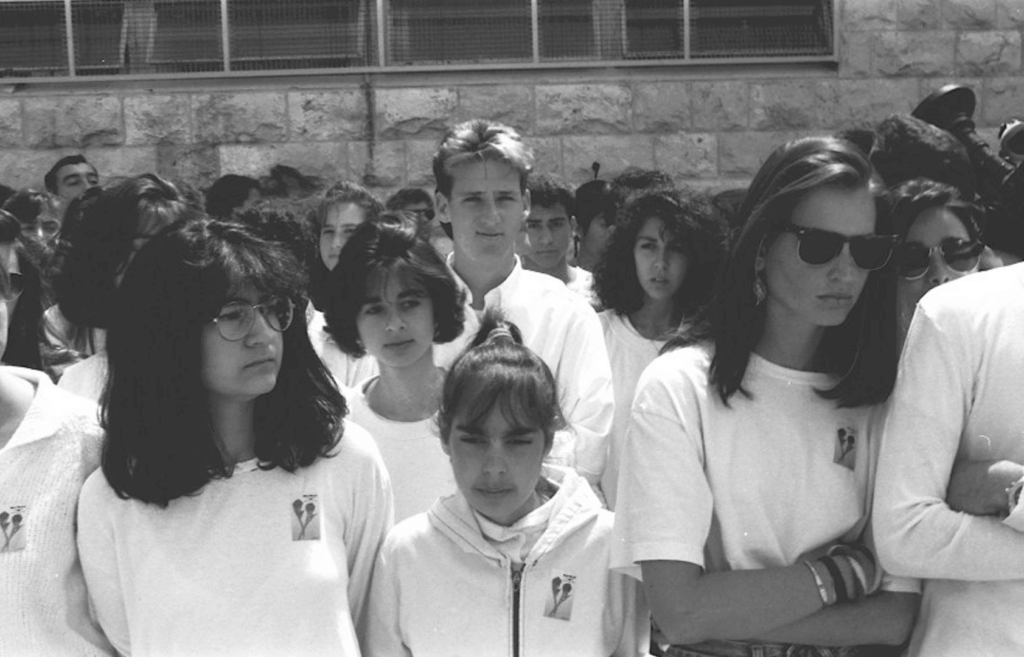
Izkor: Slaves of Memory is a film made by Eyal Sivan in which we follow Israeli school children through several Israeli holidays, (Passover, Holocaust Remembrance Day, Soldiers’ Memorial Day, and Israeli Independence Day). Only negative events are made into national holidays, there are many other Jewish holidays that are not “celebrated” by the State of Israel as they do not align with their political agenda. It highlights the role that schools play in giving these dates a deeper meaning and emphasizes the belief in the promised land by God to the Jews. As these days as commemorated, there is mourning for the Holocaust Day and Memorial Day in which the children can be seen deeply emotional and in tears as if they are the direct victims of these past events.
This film shows us how school children from a very young age in Israel are taught to be hyper-aware of their history and become conditioned to identify with a victim mentality. To embody absolute “innocence”, which then of course by default means that they are fighting absolute “evil”. To believe any action that they take is in self-defence and not as a perpetrator. It depicts how the State of Israel manipulates the painful history of the Jewish people to influence Israelis to feel absolved from any guilt or remorse for the actions they take today.
It highlights the false belief that if Israelis do not create the State of Israel, their people will not be able to fight “future Nazis” without an independent state, and an independent state will never be handed to them, it is something they must fight for and take forcefully. This is their justification for genocide which does not account for any suffering.
The public education system in Israel is a segregated one, which enables propaganda to be instilled in the pages of their history books (much like in any other nation). It raises the wider question of who authors world history. In this film, we can clearly see how Zionism influences young minds. In an interesting scene, a 17-year-old is asked if he is being brainwashed, to which he answers “No, this is not brainwashing, this is tradition”. He wants to fight for his nation, for his future children, the desire has been implanted within him. He is not being told to do it; he wants to do it for his country. This is how manipulation works. Eyal goes on to discuss he does not believe that collective trauma is real but sees it as an excuse to justify perpetrators. Those who are “traumatized”, then claim do not know what they are doing as they are overcome by emotions, and therefore not responsible for their actions. How can people who have suffered do the same to others? The truth is that people today have not suffered directly from past events, but they have been told to embody the feeling of deep suffering as though harm was done directly to them. This is reinforced by public holidays; the children are no longer individuals, but they become part of the nation.
The collective experience of Israelis who are influenced by education, religious rituals, and military ceremonies, creates a collective memory that fuels the function of Israeli society – to colonize. Israeli society is more interested in asking if Israelis are good soldiers, not if they are good people with good values. There is an official collective memory that has led to the formation of Israel, heavily based on national pride and propaganda. Various systems in society deal with memory, such as the media, but this documentary focuses on how education in Israel is used to indoctrinate young minds into a nationalistic state which is a type of slavery of the mind. Excused of reviewing their own actions, Israelis do not have to take any responsibility for their own thoughts, or actions. There is a lack of critical thinking. This collective victim mentality then absolves any thoughts of guilt or responsibility for their actions.
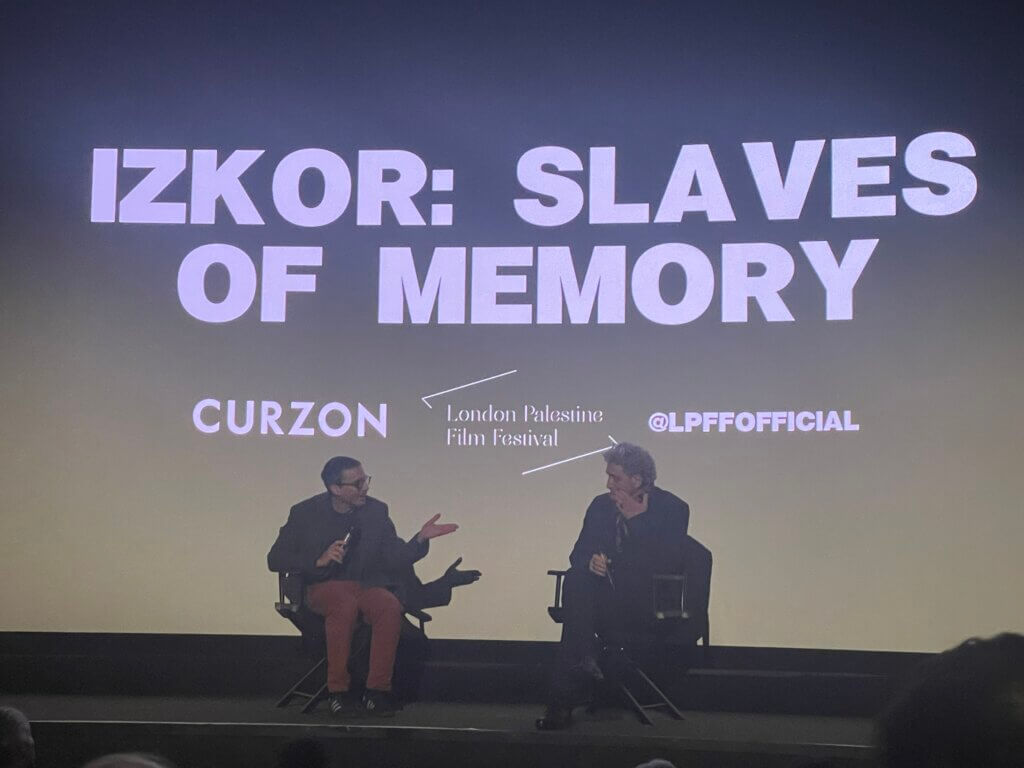
Following the film screening, Prof. Neve Gordon held a panel discussion with Director Eyal Sivan where they discussed how they started questioning their upbringing in Israel as Jews when they saw and spoke to Palestinians in the West Bank and Gaza Strip and saw their perspective. This does not happen in segregated schools as those shown in this film. It highlights one aspect of the non-integrated societies, the apartheid system.
One of the families that appear in the film are Moroccan Jews, who incidentally said like was better in Morocco compared to Israel as they received better treatment there. The reason to follow a non-Ashkenazi Jew was a deliberate one. This raised a striking point “We never hear about Palestinians, but you hear about “Arabs”. The Arabs are seen as the “bad guys”. This doesn’t take into consideration that Arab Jews exist. There is no consideration of the similarities between the suffering of Arab Jews (current genocide) and European Jews (past genocide), but rather the potential consequences of defeat if this nation is not established. Israeli political leaders exploit this by referring to Palestinians as “Arab Nazis” and referring to Hamas as Nazis to link the thoughts in one’s head. The bad things that happened on European soil, were put into the memories of Arab Jews. The whitening of the Arab Jew has caused Arab Jews to become self-hating, feeling ashamed of speaking Arabic at home. We are urged to remember — Zionism is a double colonization, not just physically of Palestine but also of Judaism itself.
Another important fact is that not only was this film banned in Israel after its release, but ALL future filming in schools was also banned. The impact of sharing the truth via such documentaries was revealed, and this is thus something being censored as it would only initiate global discussions that the State of Israel would rather avoid. Izkor is well worth a watch if you want a glimpse into the mind of Israeli society.

Faizah Cyanide
Latest posts by Faizah Cyanide (see all)
- ON SCREEN | THE VOICE OF HIND RAJAB AT THE LONDON PALESTINE FILM FESTIVAL — November 28, 2025
- REVIEW | ‘FROM GROUND ZERO’ CLOSING NIGHT AT THE LONDON PALESTINE FILM FESTIVAL — December 5, 2024
- LONDON PALESTINE FILM FESTIVAL — THE IZKOR: SLAVES OF MEMORY — November 27, 2024
