

Photography Johan Persson
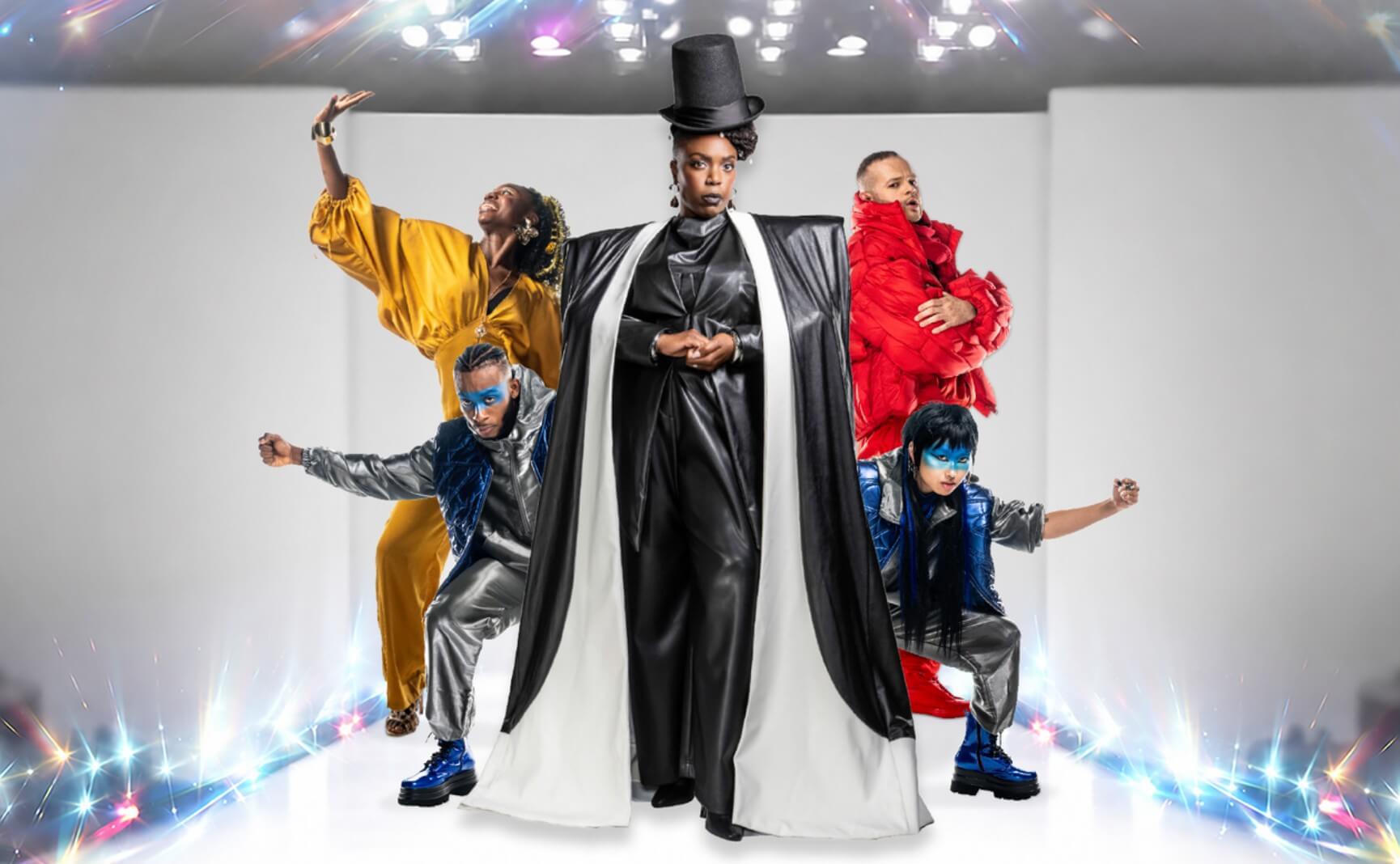
Charles Dickens’ A Christmas Carol has been retold countless times, but what happens when its central character is an ambitious Black British woman navigating the worlds of fashion, business, identity and success?
In Ebony Scrooge, writer, director, choreographer and performer Dannielle ‘Rhimes’ Lecointe takes one of Britain’s most familiar Christmas stories and reimagines it through the cultural experiences that have shaped her own life. Bringing together hip hop, street dance, Caribbean influences, music and fashion, the production at Sadler’s Wells East explores what it means to reconnect with ourselves, our communities and the parts of our identity we may have lost along the way.
For Lecointe, the connection to Dickens’ story began long before her career in theatre.
“I love this story. It is a true classic, and I grew up watching it. I watched every version, apart from the Muppets one, and a lot of that time was with my grandmother,” she recalls.
“When I was approached to make a Christmas show, this was the natural choice. It was the story I connected with most. I watched it every single Christmas. It had to be this one.”
However, revisiting a childhood favourite also presented an opportunity to address something that had been missing from the stories she grew up watching.
“It’s a classic English story, and everyone knows it. But the UK is so diverse. We all grew up on these films, and we all took something different from them. I didn’t grow up with much representation. So I wanted to tell this story through the lens of my own experience.”
At the centre of the production is Ebony, a successful fashion designer, businesswoman and icon whose ambition has become both her greatest strength and a form of protection.
Rather than simply recreating Dickens’ famously miserly protagonist, Lecointe uses Ebony to explore the complexities of Black womanhood, success and survival.
“To me, she represents the ambitious Black woman. That woman is real, but we rarely see her represented, and I wanted to show her.”
Ebony’s emotional journey challenges the familiar stereotypes that often flatten the experiences of Black women, particularly those who occupy positions of power or refuse to make themselves smaller for others.
“She has put her ambition first, and she wears it a little like armour,” Lecointe explains. “When I was growing up, the stereotypes of the strong Black woman and the angry Black woman were everywhere. I wanted to show that, and then go deeper into what’s true. There is always something underneath.”
For Lecointe, these are not simply observations but lived experiences.
“I’ve had those labels spoken over me. They were never labels I related to, but they were given to me anyway. I put that into Ebony.”
In exploring what lies beneath Ebony’s carefully constructed exterior, the production invites audiences to consider the emotional cost of constantly having to be strong.
“She is navigating survival, which is what so many women like her are facing. But there are so many layers to her.”
While Ebony Scrooge is rooted in Dickens’ exploration of redemption and self-discovery, its cultural journey is deeply personal to Lecointe.
“This story is deeply personal. It mirrors a journey I have walked myself. Yes, it’s Dickens’ A Christmas Carol. Yes, Ebony is a fashion designer. Those parts are fantasy. But underneath, it’s about me finding myself, going into Caribbean culture, meeting family and learning traditions.”
Having first travelled to the Caribbean well into adulthood, Lecointe understands the significance of reconnecting with a heritage that can feel both familiar and distant for generations growing up in Britain.
Photography by Pamela Raith
“I didn’t go to the Caribbean until well into adulthood, and I always felt I was missing something. When you finally experience those cultures and traditions, you discover a deeper layer of yourself.”
It is this rediscovery that forms the emotional heart of Ebony’s transformation. Through Caribbean culture, family and tradition, the character begins to uncover the parts of herself that ambition and survival have overshadowed.
“The show does exactly what the original story does, but through the eyes of a Black woman.”
The production also celebrates the richness of Black British Christmas traditions, acknowledging that there is no singular way to experience the festive season.
“As a Black British woman, I grew up with Christmas looking different across different parts of my family. Some were modest and small. Some were really elaborate. Some meant turkey and traditional English food. Some meant West Indian food.”
As Lecointe puts it, “Alongside the turkey, there might be some dumplings and curry mutton too!”
For Lecointe, hip hop is far more than a musical or choreographic influence. It is a language through which complex emotions, identities and experiences can be communicated.
With a background in hip hop theatre, street dance and battling, her approach to movement is rooted in the expressive foundations of the culture.
“My background is in hip hop and street dance. Those styles are built for storytelling. They carry so much emotion and depth,” she says.
“I come from hip hop theatre, but also from battling, where dance is a tool and a form of expression. Using these styles to tell a story comes naturally to me.”
Throughout Ebony Scrooge, different movement styles help establish characters and build the world they inhabit. Rather than treating hip hop as a single aesthetic, Lecointe embraces its diversity and versatility.
“Hip hop is such a wide and varied umbrella. When you create the world of a show, whether it’s Ebony Scrooge or anything else, the movement has to build that world.”
Complementing the choreography is a soundtrack created in collaboration with Michael ‘Mikey J’ Asante, bringing together hip hop, street dance and Caribbean musical influences, with East London firmly embedded in its identity.
“It was important that the music had a tint of East London. That’s where I’m born and bred, and it’s where Mikey is from too.”
Interestingly, the creative process began with Lecointe writing both the script and lyrics before the music had been composed.
“The story was already shaped and formed, and the music came in to lift it. I later learned that’s a very unusual way to work, handing over lyrics with no tracks behind them. Mikey listened into that and built the world of the music around it.”
The result is an eclectic soundscape that moves alongside Ebony’s emotional journey, demonstrating the possibilities of hip hop as a theatrical storytelling medium.
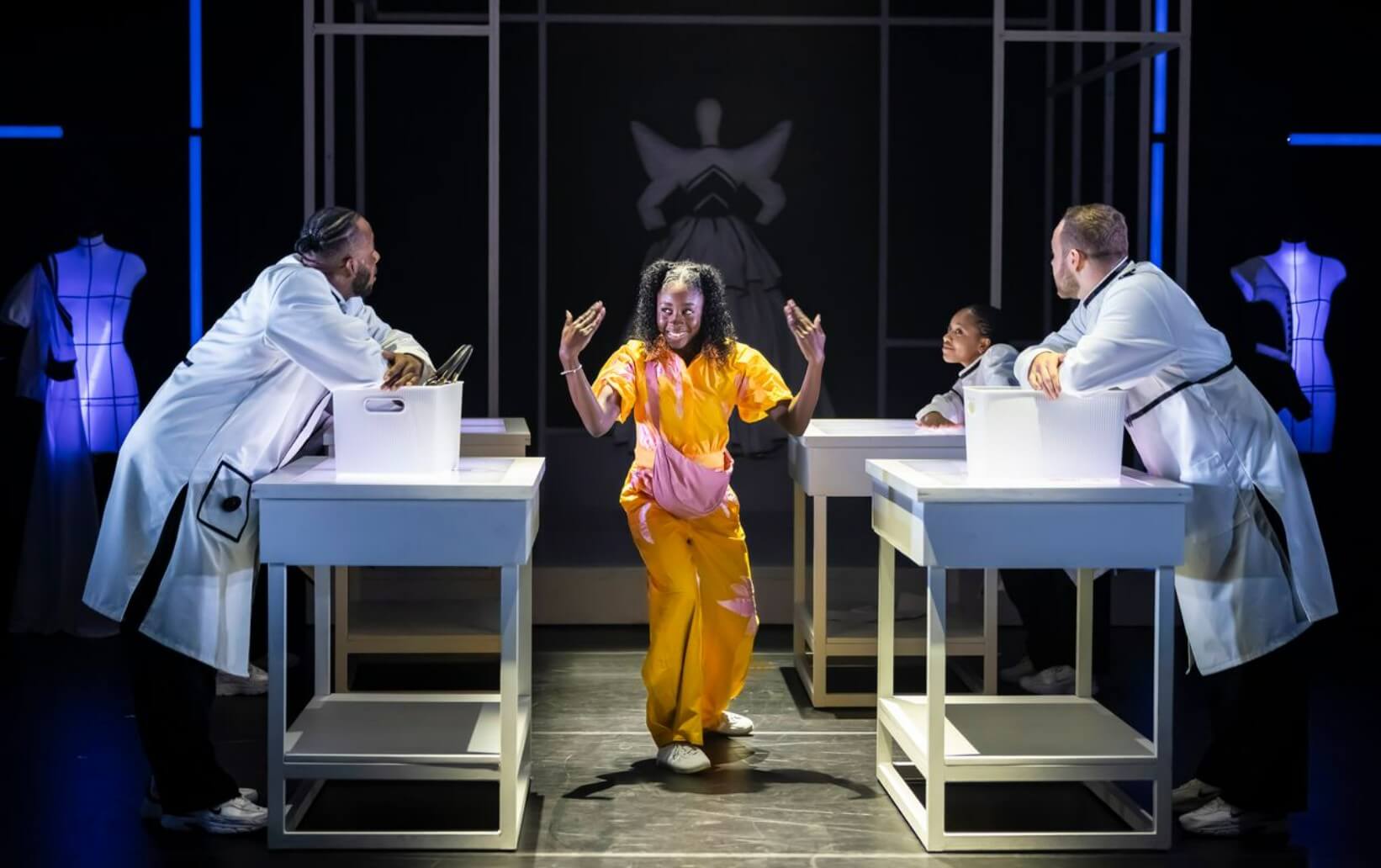
With Ebony positioned at the helm of a fashion house, clothing becomes another important storytelling device within the production.
For Lecointe, it also offers an opportunity to showcase a lesser-known side of her creativity.
“I’ve always been interested in fashion myself. I’ve drawn and designed for years, mostly behind the scenes. It mattered to me that those skills came through.”
The costumes reflect Ebony’s emotional state, evolving as she begins to confront her past and rediscover herself.
“At the start, the costumes reflect Ebony’s rigidness and tightness. Clean lines. Controlled shapes. As the show moves on, everything shifts. The boldness, the colour, all of it.”
Through silhouettes, colour and movement, fashion becomes a visual expression of Ebony’s transformation, communicating what words alone cannot.
Presenting Ebony Scrooge at Sadler’s Wells East carries particular significance for Lecointe, whose personal and creative roots lie in Stratford.
“I’m born and bred here. I grew up in Stratford and went to school in Stratford. I know what this area looked like before Sadler’s Wells East existed.”
Having also performed as part of the Olympic opening ceremony, Lecointe has witnessed the area’s transformation first-hand. Returning to Stratford with a production that reflects her own cultural identity and artistic journey feels especially meaningful.
“I see East London as a creative hub. I want to represent that, and I want to inspire the creative community. When people come here, I want them to feel this is the creative side of London.”
For an artist whose foundations lie in hip hop and street dance, bringing those cultural expressions into a major theatre space in her own community is a powerful statement about whose stories belong on our stages.
Lecointe makes no apologies for challenging audiences’ expectations of what a traditional Christmas production should look or sound like.
“It’s different. That’s what makes it refreshing. Some people might not like it, because they’re attached to what they know, and human beings don’t like change. But that’s exactly why this story was written. We need to experience change. We need to see difference.”
Perhaps the most powerful aspect of Ebony Scrooge is Lecointe’s clarity about who she hopes will connect with it.
“This isn’t for everybody. This is for dreamers like me. It’s for Black British audiences. It’s for imaginative audiences. It’s for the little kids at home who don’t know if they’ll ever get to see a show. I hope they come to this one.”
“It’s for the young people who don’t know how they could do a job like this, or dance on a stage. It’s for the underrepresented and the quieter voices. It’s for those in search of home.”
Her words speak to a wider conversation about representation within theatre and the importance of young people seeing their cultures, communities and creative aspirations reflected on stage.
For Lecointe, difference is not something to dilute in pursuit of universal appeal. It is precisely what makes art capable of inspiring the next generation.
“When I was growing up, not everyone was making things for me. Somehow, I found my way. I’m grateful for the people who made things a little different, the things that inspired me to chase my dreams.”
Beneath the choreography, fashion, music and cultural celebration, Ebony Scrooge ultimately returns to the enduring message at the heart of Dickens’ original story: our capacity to change.
Asked what she hopes audiences take away from the production, Lecointe’s answer is simple.
“Hope. Grace. And a little more love, for each other and for themselves.”
“I want people to look inward and decide to do better. To be better. More than that, to be their best for themselves.”
In a world that often encourages us to protect ourselves, compete and prioritise individual success, Ebony Scrooge offers a reminder of the transformative potential of generosity, vulnerability and community.
And, of course, Lecointe wants audiences to enjoy themselves.
“I want them to have fun. I want them to enjoy it. And I want them to know that not all superheroes wear capes. They can be superheroes for themselves, if they just choose love.”
Ebony Scrooge is a celebration of Black British creativity, Caribbean heritage and the storytelling power of hip hop. It is a reminder that even the most familiar stories can reveal something entirely new when we make space for different voices to tell them.
Catch Ebony Scrooge at Sadler’s Wells East until 3rd January 2027
For tickets and further information, visit www.sadlerswells.com.


Rishma
Latest posts by Rishma (see all)
- INTERVIEW | EBONY SCROOGE: DANNIELLE ‘RHIMES’ LECOINTE REIMAGINES A CHRISTMAS CLASSIC THROUGH HIP HOP AND BLACK BRITISH CULTURE — November 25, 2026
- AFRO-REGGAE TRAILBLAZER WINNY RELEASES INSPIRATIONAL NEW SINGLE ‘ONE DAY’ — November 6, 2026
- LONDON TO STAGE THE DMC WORLD DJ CHAMPIONSHIPS WORLD FINALS 2026 — November 6, 2026
