From Roxanne Shanté to Kendrick Lamar, hip-hop has spent decades turning insults into an art form. But when did a good old-fashioned lyrical disagreement become something to be condemned?
There are few things quite as humiliating as being publicly dismantled by a rival MC. Having your lyrical ability questioned, your credibility demolished and your entire artistic existence reduced to a punchline is unlikely to feature on anybody’s list of career aspirations. But there is one indignity that surely surpasses them all: having your own mother intervene to ask your opponent to stop.
In 2005, British MC Shystie delivered what I consider the greatest comeback diss track of all time, a six-minute demolition of fellow rapper Lady Fury entitled Murderation. The record opened with an apparent voicemail from Fury’s mother, pleading for an end to the hostilities, and concluded with one of the most gloriously humiliating punchlines in British rap history. I’ll return to that particular act of lyrical vandalism shortly, because it deserves considerably more attention than a passing mention. Suffice it to say that when your mother becomes a supporting character in somebody else’s diss track, the situation has rather got away from you.
Hip-hop has always been a competitive business. Before streaming figures, record deals and the modern obsession with chart positions, an MC’s reputation depended substantially on their ability to command a crowd, distinguish themselves from their contemporaries and demonstrate superiority over anyone foolish enough to challenge them. In the culture’s formative years, lyrical competition wasn’t merely tolerated; it was practically an entrance requirement. The roots stretch back further still, through African-American traditions of verbal sparring such as the Dozens and signifying, alongside the competitive call-and-response practices of Jamaican sound-system culture. These traditions were not identical, nor did one simply become the other, but they shared a fundamental understanding: language could be a competitive instrument, and the person who wielded it most inventively commanded respect.
One particularly significant episode occurred in 1981 at Harlem World in New York, when Busy Bee Starski, an accomplished crowd-pleaser, found himself challenged by Kool Moe Dee. Busy Bee’s approach was rooted in party rhymes, audience participation and the ability to keep an atmosphere lively. Kool Moe Dee arrived with something altogether more confrontational, deploying intricate rhymes and direct personal criticism.
The encounter has become a landmark in battle-rap folklore, illustrating a shift towards lyrical complexity and technical superiority. Entertaining a room was no longer necessarily enough. You might also be required to explain, in considerable rhythmic detail, why the other gentleman on the microphone was entirely unqualified to be there.
By 1984, the competitive spirit had migrated decisively onto vinyl, and the Roxanne Wars provided hip-hop with one of its earliest great musical soap operas. It began with U.T.F.O.‘s Roxanne, Roxanne, a song complaining about a woman who had apparently committed the unforgivable offence of declining their romantic advances. Fourteen-year-old Roxanne Shanté responded with Roxanne’s Revenge, turning the premise on its head and delivering her own merciless assessment of the group’s shortcomings. The record became a sensation, spawning an extraordinary succession of answer records involving rival Roxannes, fictional relatives and assorted opportunists eager to insert themselves into the proceedings. Hip-hop had accidentally invented a franchise, albeit one with significantly better dialogue than most Hollywood sequels.
What made Shanté’s response particularly important was the reversal of power. A teenage girl had taken a song in which a woman existed primarily as the object of male frustration and given that woman a voice, an attitude and an impressively sharp tongue. The joke was suddenly on the men. It demonstrated that a diss track could be more than an insult. It could challenge a narrative, reclaim a position and transform someone previously spoken about into the person commanding the conversation.
Shanté would later turn her attention towards other women in hip-hop, most notoriously on Big Mama, where Queen Latifah, MC Lyte, Monie Love and several others found themselves in her crosshairs. Latifah responded on I Can’t Understand, proving that her regal composure did not prevent her from administering a verbal dressing-down when required. Yet these encounters expose a curious double standard that has persisted throughout hip-hop’s history. When male rappers challenge one another, it is frequently described as competitiveness, ambition or an admirable commitment to lyrical excellence. When women do precisely the same thing, the vocabulary has an unfortunate tendency to shift towards jealousy, cattiness and personal bitterness. Apparently, verbal aggression becomes considerably less artistic when performed by someone wearing earrings.
The great recorded feuds of the following decades continued to demonstrate just how sophisticated, vicious and entertaining the format could become. KRS-One and MC Shan’s Bridge Wars turned a dispute over hip-hop geography into a struggle for cultural authority. Ice Cube’s No Vaseline transformed his split from N.W.A into an extraordinarily hostile public reckoning. Jay‑Z and Nas exchanged Takeover and Ether, records that demonstrated how a carefully constructed argument could be every bit as devastating as a barrage of insults. The latter even contributed a new verb to hip-hop’s vocabulary. Most people would consider having their name turned into shorthand for public humiliation a fairly substantial professional achievement. Nas managed it with a song title.
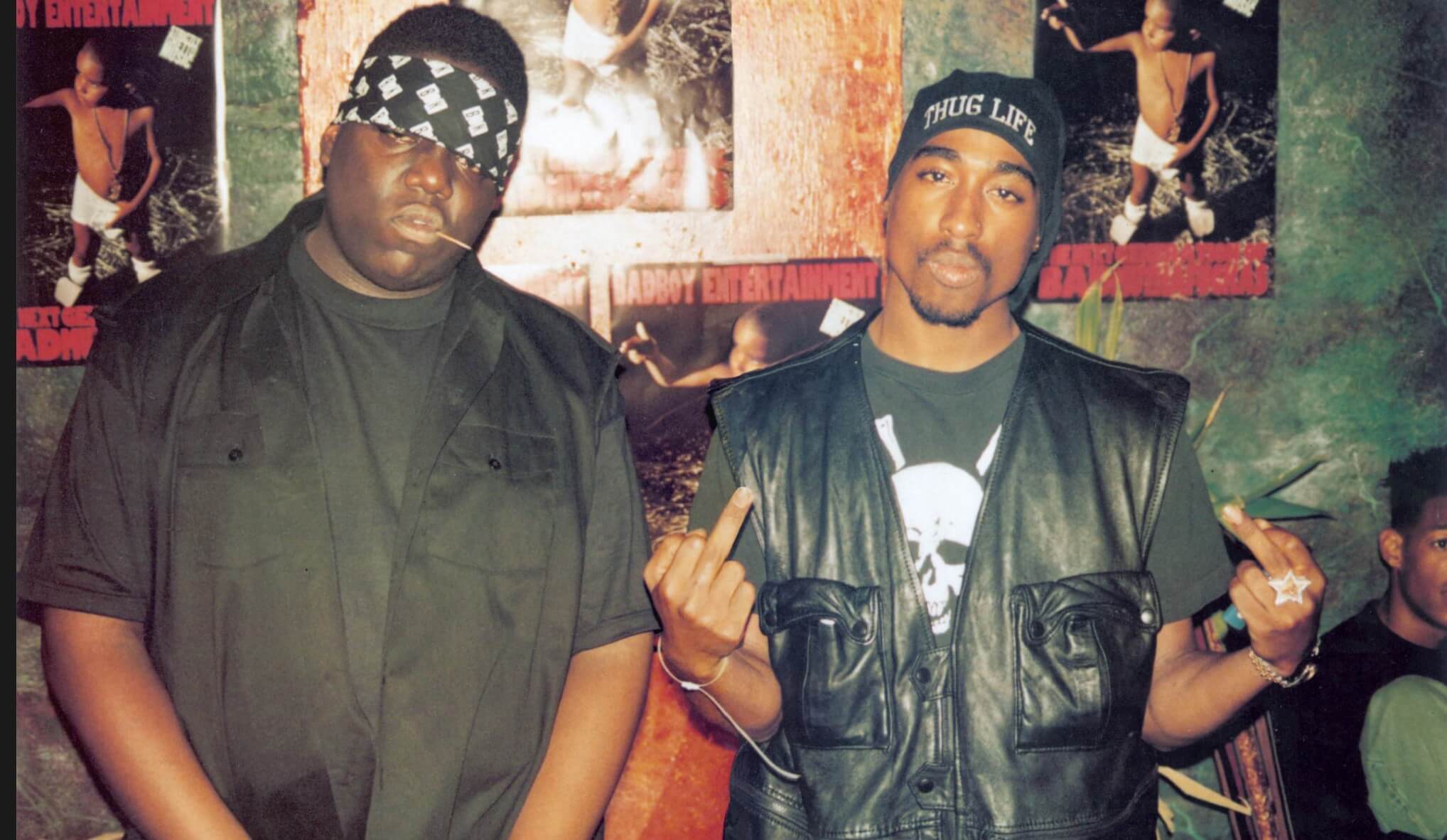
Not every confrontation, however, remained safely confined to the recording studio. The hostility surrounding Tupac Shakur and The Notorious B.I.G., amplified by competing industry interests and media narratives, became entangled with real-world violence and ultimately tragedy. Their deaths were not simply the result of two men exchanging diss tracks, and it would be irresponsible to reduce such complicated histories to that explanation. Nevertheless, they remain a sobering reminder that artistic conflict can become dangerous when the distinction between theatrical aggression and genuine hostility collapses. A bruised ego is one thing. A body is quite another.
Which brings us back to Britain, where grime’s clash culture inherited and transformed the competitive spirit of hip-hop, and where Shystie and Lady Fury gave us a confrontation that still makes most contemporary diss tracks sound like mildly irritated customer-service emails. The two MCs had once been friendly, but disagreements surrounding a proposed collaboration developed into a succession of indirect remarks, freestyles and increasingly personal attacks. Fury had already established herself as a formidable presence in the emerging grime scene, and her contribution to that culture deserves recognition. Nevertheless, her early attempts to send for Shystie have never particularly impressed me. There was hostility, certainly, but not quite the lyrical devastation necessary to justify the confidence.
Shystie, meanwhile, apparently decided that moderation was a virtue best left to other people.
Recorded over the instrumental to 50 Cent’s Candy Shop, Murderation is an extraordinary exercise in sustained lyrical aggression. Where Fury’s attacks felt relatively ordinary to my ears, Shystie’s response was meticulously constructed, relentlessly paced and delivered with the kind of confidence usually associated with people who know something the rest of us don’t. She moved between mockery, storytelling, allegations and personal humiliation, building a portrait of her opponent that was as entertaining as it was vicious. There was little interest in exchanging generic boasts about who possessed the superior flow. Shystie had arrived with a dossier, an exceptionally sharp pen and apparently no intention of leaving anything standing.
And then there was the voicemail. The recording, presented as a message from Fury’s mother attempting to bring the dispute to an end, was a stroke of almost theatrical genius. Before the first proper lyrical assault had even commenced, Shystie had established the central joke: her opponent’s family had supposedly been forced to intervene. The implication was exquisitely cruel. Fury, who had entered the dispute as a combatant, was being recast as someone whose mother needed to negotiate her surrender. It was character assassination before the instrumental had even had an opportunity to settle in.
The closing line completed the performance: “You’re not the queen of the scene, you’re a chief, the first one in history whose mum squashed her beef.”
Legendary. I make no attempt at neutrality here. For me, Shystie had committed absolute lyrical murder. Not because every allegation was demonstrably true, nor because every insult was particularly admirable, but because the record possessed something that distinguishes the finest battle rapping from ordinary abuse: structure, imagination, timing and a brilliantly sustained central conceit. It began with the mother and ended with the mother. A six-minute attack had been transformed into a complete narrative, with a setup, escalating tension and a final punchline that made the entire exercise feel horribly inevitable.
Did it end Lady Fury’s career? That would be too convenient a conclusion, particularly given the wider obstacles faced by women in British urban music and Fury’s continued appearances after the dispute. But did it damage her standing in the public imagination? I would argue emphatically that it did. Sometimes the perception of a defeat can become almost as influential as the music itself.
Of course, portions of Murderation contain language and personal attacks that are uncomfortable to hear today. Some were offensive then, too. But listening to a twenty-one-year-old grime recording as though it were submitted for approval by a contemporary corporate human-resources department seems a rather joyless way to engage with musical history. Context does not automatically excuse everything, nor does admiration require an endorsement of every insult. It should, however, permit us to recognise extraordinary artistry without pretending that acknowledging it constitutes a personal subscription to every opinion expressed. I can admire Shystie’s craftsmanship without nominating her as the next Archbishop of Canterbury.
The influence of hip-hop’s confrontational traditions has also travelled well beyond the genre itself, often with wonderfully improbable results. Consider Mariah Carey versus Eminem, one of the more surreal disputes in modern popular music. Eminem had spent years making public claims about a supposed relationship with Carey, which she disputed. By 2009, the disagreement had escalated sufficiently for him to take further shots on Bagpipes From Baghdad. Carey responded with Obsessed, a polished, irresistible pop record accompanied by a video in which she disguised herself as a suspiciously Eminem-like male admirer.
It was a fascinating disruption of the conventional rap-battle dynamic. Eminem, an artist whose reputation was founded partly upon his extraordinary ability to ridicule opponents, found himself confronting someone whose principal weapons were melody, immaculate grooming and an almost supernatural capacity for looking unbothered. Carey didn’t need to demonstrate that she could outrap him. She simply changed the terms of engagement. Eminem subsequently released The Warning, a far more explicit and personal response, but the broader lesson remains: a diss track does not necessarily require rapping to be effective. Sometimes a devastatingly dismissive chorus can achieve what a hundred furious bars cannot.
And say what you like about Mariah Carey. You might adore her, detest her, or consider the ability to deploy five octaves before breakfast an entirely unnecessary demonstration of one’s talents. But the woman had the audacity to go toe-to-toe with one of the biggest, most formidable battle rappers on the planet, in an arena he had spent his career mastering. She could have issued a carefully worded statement through her publicist, maintained a dignified silence or simply ignored him. Instead, she walked straight into the gladiatorial arena, armed herself with a pop song and took a swing at Eminem. On his territory, but entirely on her own terms. Whatever your opinion of her music, that takes considerable nerve. That’s badass. That’s gangsta. And frankly, anyone who can enter a confrontation with Slim Shady looking quite so magnificently unbothered deserves a certain amount of respect.
Gwen Stefani offered another example with 2005’s Hollaback Girl, widely associated with Courtney Love’s unflattering description of Stefani as a cheerleader. Stefani has never definitively identified the song’s target, and Pharrell Williams has subsequently revealed that Naomi Campbell inspired its central phrase, making the track’s origin more complicated than the familiar feud narrative suggests. Nevertheless, its confrontational spirit is unmistakable. Here was an enormous pop hit built around the idea of refusing to accept somebody else’s dismissive characterisation. It was competitive posturing repackaged as cheerleader chants, playground defiance and one of the most memorable spelling exercises in popular music. An entire generation learned to spell bananas while remaining blissfully unaware that they were participating in an argument.
By 2018, the diss track had developed an altogether more invasive dimension. Pusha T’s The Story of Adidon demonstrated how a lyrical confrontation could become an act of revelation as much as musical competition, drawing attention to Drake’s previously undisclosed son and shifting the emphasis from artistic superiority towards the exposure of an opponent’s private life. The record raised an uncomfortable question about the unwritten rules of battle rap: was revealing sensitive personal information a legitimate weapon, or had the competition ceased to be about music at all? That debate would become increasingly important as the decade progressed, particularly as social media transformed once-private grievances into public spectacles.
Back in Britain, Stormzy and Wiley’s confrontation in 2020 combined generational rivalry, accusations of commercial compromise and a series of increasingly personal recordings, including Eediyat Skengman, Disappointed and Still Disappointed. Wiley questioned Stormzy’s authenticity and his willingness to collaborate with mainstream pop artists, while Stormzy responded with the polished ferocity of someone determined to prove that commercial success had not blunted his ability to clash. The dispute became less comfortable when family members were drawn into the insults. Yet the records themselves demonstrated how the contest could generate compelling performances, transforming grievances that had initially spilled across social media into something musically substantial.
By 2024, the relationship between recorded diss tracks and their accompanying online circus had become almost impossible to untangle. Megan Thee Stallion’s Hiss and Nicki Minaj’s response, Big Foot, provided another reminder that female rappers remain perfectly capable of participating in the tradition, even when the surrounding discourse becomes a particularly unpleasant mixture of stan warfare, personal allegations and relentless online provocation. The format had survived, but the audience was changing. What once played out primarily between artists was now being dissected, amplified and occasionally inflamed by millions of people with smartphones and a frankly alarming amount of free time.
Nothing demonstrated this more vividly than Kendrick Lamar and Drake’s extraordinary confrontation in 2024. Their escalating exchange produced a succession of records, including Push Ups, Euphoria, Family Matters, Meet the Grahams and Not Like Us, turning a long-simmering rivalry into a global cultural event. There were intricate references, competing narratives, accusations of artistic inauthenticity and increasingly grave personal allegations. Some of the music was extraordinary. Some of the discourse surrounding it was considerably less distinguished. At times, the entire internet appeared to have abandoned its ordinary responsibilities to become a particularly excitable amateur detective agency.
Then came the lawyers. Drake sued Universal Music Group over its release and promotion of Not Like Us, arguing that the song spread a defamatory allegation which he denied. The case was dismissed in October 2025, with the judge finding that the statements at issue were not actionable as factual assertions in the context of the rap battle. Drake appealed, with arguments scheduled for December 2026.
Here was a remarkable collision between hip-hop’s traditions of exaggeration, insult and creative confrontation and the legal standards governing reputational harm. The culture that once settled arguments through records was now being asked to consider their meaning in a courtroom.
So where does that leave beef? Is it an essential expression of competitive creativity, or an increasingly problematic tradition that encourages cruelty in the name of entertainment? I suspect the answer depends rather heavily on what we consider the purpose of a battle to be.
There is an important difference between challenging an opponent’s artistry and making unsubstantiated allegations about their private life. Mocking someone’s musical ability is not the same as threatening their family. Nor should accusations of serious criminal conduct acquire immunity from scrutiny simply because they happen to rhyme. The suggestion that there should be no limits whatsoever is difficult to defend when the consequences can extend far beyond the participants. Yet the opposite position, that artists should refrain from confrontation lest somebody take offence, is equally unsatisfactory. It misunderstands not only hip-hop’s history but the valuable role that conflict can play in creative expression.
Indeed, when hostility is channelled through musical invention rather than physical confrontation, there is something rather civilised about the arrangement, however uncivilised the vocabulary. The recording studio becomes a space in which aggression can be converted into artistry, where an argument is decided not by who can inflict the greatest physical harm but by who possesses the stronger imagination, sharper wit and greater command of language. A carefully constructed sixteen bars is preferable to a punch thrown in anger, and considerably more interesting than a forty-seven-part social-media tirade composed at three in the morning. The best diss records demand effort. They require an artist to think, write, revise, perform and persuade an audience. An angry tweet requires a working thumb and an insufficiently developed sense of embarrassment.
Perhaps that is what makes the tradition worth defending. Hip-hop has never been an art form particularly interested in excessive politeness. Its competitive instincts have produced technical innovation, memorable performances, cultural conversations and some of the funniest insults committed to recorded music. There is nothing inherently noble about an argument, but there is something admirable about transforming one into a piece of art. When the emphasis remains on talent, humour, finesse and performance, beef can reveal precisely what makes an MC exceptional.
We needn’t pretend every feud has been worthwhile, every insult justified or every participant admirable. We certainly needn’t appoint ourselves judges of every historical disagreement, awarding victories like an increasingly officious panel of boxing referees. The artists can make their cases, the listeners can decide what resonates, and history can take care of the rest.
Except, of course, for Shystie.
Because when you construct a six-minute lyrical assault that begins with your rival’s mother apparently asking for peace and ends by immortalising that intervention in a punchline, you have achieved something that transcends an ordinary disagreement. You have understood the dramatic possibilities of the diss track so completely that the argument itself becomes almost secondary to the ingenuity of its presentation.
Hip-hop doesn’t need to stop arguing. It needs to remember that the greatest battles are won with talent, not intimidation; with imagination, not injury. The finest diss tracks don’t merely express contempt. They make that contempt musically memorable.
And if somebody is going to come for your crown, you ought at least to have the decency to write your own response.
For heaven’s sake, don’t get your mum to do
BEEF: The Listening Companion
Ten tracks, forty years of lyrical warfare, and some very bruised egos.
1. Roxanne Shanté – Roxanne’s Revenge (1984)
At just fourteen, Shanté turned U.T.F.O.’s complaints about a woman rejecting their advances into a devastating comeback. The spark that ignited the legendary Roxanne Wars.
2. Queen Latifah – I Can’t Understand (1993)
The Queen responds to Roxanne Shanté’s Big Mama, demonstrating that regal composure and lyrical aggression aren’t mutually exclusive. Royalty can throw punches too.
3. Nas – Ether (2001)
A landmark in the Jay‑Z and Nas rivalry. So influential that its title became hip-hop shorthand for lyrical annihilation. Listen alongside Jay‑Z’s Takeover.
4. Shystie – Murderation (2005)
My favourite comeback diss track of all time. Six minutes of spectacular lyrical destruction, beginning with Lady Fury’s mother’s apparent voicemail and ending with a punchline for the history books. Absolute murder.
5. Gwen Stefani – Hollaback Girl (2005)
Widely associated with Courtney Love’s dismissive remarks, this Pharrell-produced pop phenomenon turned confrontation into a playground anthem. Even the spelling lesson comes with attitude.
6. Trina – What’s Beef? (2006)
Miami’s Baddest Bitch takes aim at fellow Florida rapper Khia over Biggie’s What’s Beef? instrumental. Gloriously spiteful, unapologetically personal and entirely uninterested in diplomacy.
7. Mariah Carey – Obsessed (2009)
Mariah enters Eminem’s gladiatorial arena armed with a pop song, a fabulous disguise and nerves of steel. Whatever your musical preferences, that takes guts. That’s gangsta.
8. Pusha T – The Story of Adidon (2018)
A chilling confrontation with Drake that transformed a rap battle into something approaching an exposé. A reminder that lyrical warfare can extend far beyond musical ability.
9. Stormzy – Still Disappointed (2020)
A blistering response to Wiley, proving that commercial success needn’t blunt an MC’s competitive instincts. British grime’s clash culture in full effect.
10. Kendrick Lamar – Not Like Us (2024)
The diss track as global phenomenon. An infectious DJ Mustard production that transformed a deeply personal rivalry into a worldwide anthem, with all the uncomfortable questions that entails.
Some tracks contain explicit language and personal allegations. Their inclusion recognises their cultural significance, not necessarily every sentiment expressed.

Micky Roots
Latest posts by Micky Roots (see all)
- OPINION PIECE | BEEF — November 17, 2026
- OPINION PIECE | FROM BEBOP TO BOOM BAP: JAZZ AND HIP-HOP’S FAMILY RESEMBLANCE — November 17, 2026
- OPINION PIECE | KEEPING HIP-HOP REAL, KEEPING HIP-HOP STILL — November 13, 2026
