
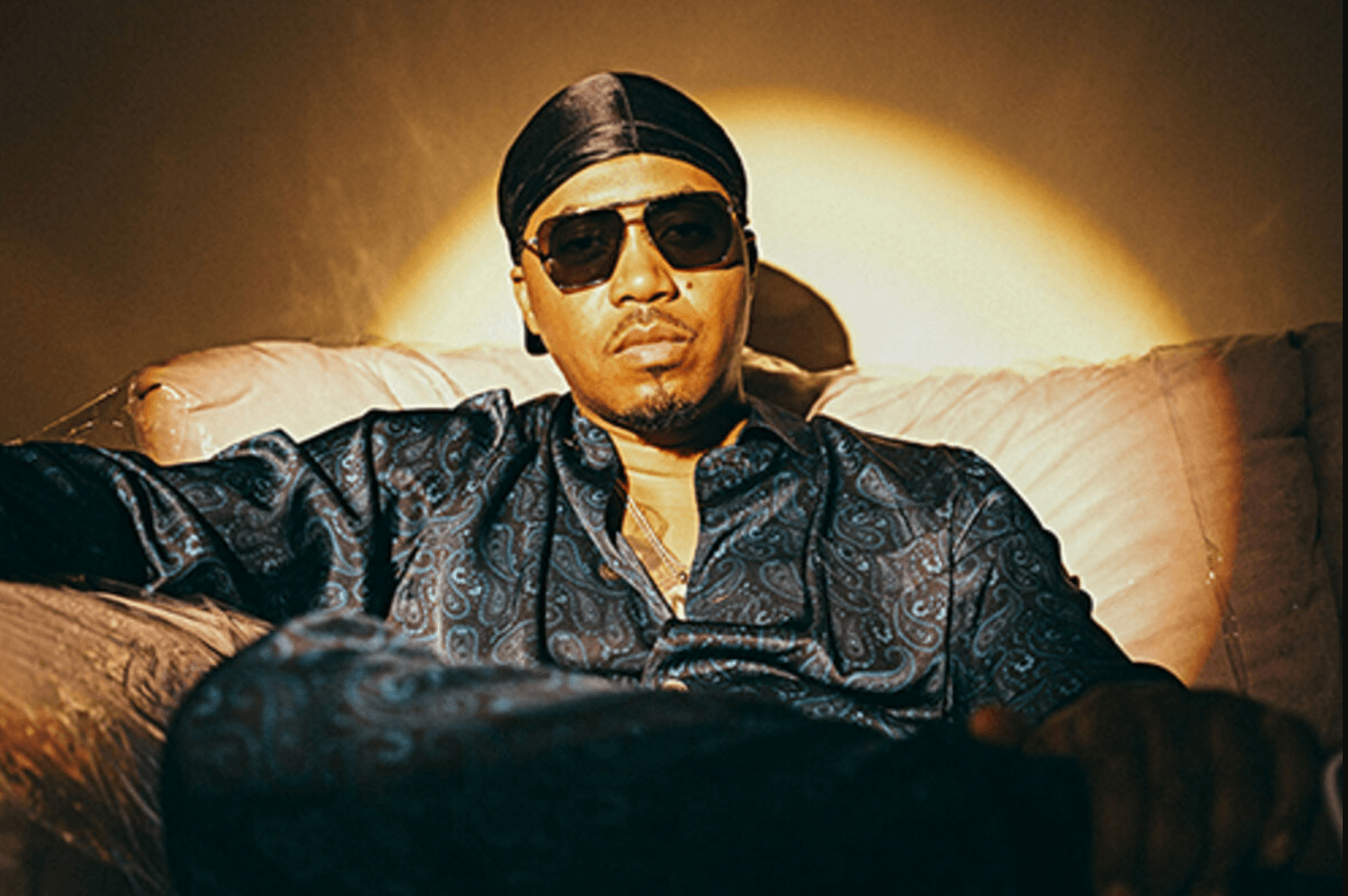
From mumble rap to emo rap, hip-hop has never stopped reinventing itself. So why does a culture built on breaking rules keep arguing about who is allowed to break them?
Hip-hop has been dying for approximately as long as people have been old enough to complain about it. Every generation seems to inherit a culture in its final days, usually because the latest crop of young rappers have committed the unforgivable crime of not sounding like the people who came before them. The beats are wrong, the lyrics are weak, nobody respects the culture, and somebody really ought to remind these children what a proper MC sounds like. Somewhere, inevitably, a man with an extensive vinyl collection is preparing to explain why everything went downhill after 1996.
For much of the 2010s, the preferred evidence of hip-hop’s imminent demise was something called mumble rap. It was a wonderfully economical insult, capable of dismissing an entire musical approach without requiring its user to engage with much of the music. The rapper wasn’t enunciating properly, the lyrics were apparently incomprehensible, and the beat seemed to be doing most of the heavy lifting. Case closed. No need to consider cadence, melody, atmosphere, vocal texture or the possibility that the artist might be attempting something other than a demonstration of their ability to construct multisyllabic rhyme schemes. The defendant was guilty of not being Nas, and the prosecution rested.
Some of the criticism, of course, was justified. There were derivative records, interchangeable vocal deliveries and artists whose creative ambitions appeared to extend no further than discovering which syllables sounded best through Auto-Tune. And hip-hop’s emphasis on lyrical ability is hardly an embarrassing tradition that needs quietly retiring.
The intricate storytelling of Nas, the verbal acrobatics of Black Thought or the precision of Rakim represent extraordinary artistic achievements.
A great verse can reveal a character, construct an entire world or turn language inside out in ways that a catchy chorus simply cannot. The problem begins when those achievements become the only acceptable definition of musical excellence.
Hip-Hop Has Always Had Its Weirdos
Consider how comfortably other genres accommodate wildly different approaches. Pop has synth-pop, art pop and hyperpop; rock has punk, progressive rock and post-rock; soul has psychedelic soul and neo-soul. Nobody expects a punk singer to possess the technical abilities of an opera performer, or a guitarist in a three-chord garage band to demonstrate the virtuosity of Steve Vai. The differences are part of the appeal. Hip-hop has plenty of subgenres of its own, from jazz rap and gangsta rap to trap, cloud rap and emo rap, but the arrival of a new sound can still provoke an argument about whether it deserves to be called hip-hop at all.
Which is rather peculiar for a culture built on taking existing music apart and putting it back together in ways nobody had previously imagined.
Hip-hop’s history is full of artists who have stretched its conventions. Missy Elliott and Timbaland made records that sounded as though they had arrived from a particularly mischievous future. OutKast brought Southern funk, psychedelia and theatricality into the mainstream, while Speech Debelle’s Speech Therapy found space for acoustic instrumentation and introspective songwriting. Even earlier, Biz Markie demonstrated that a technically imperfect singing voice could be a magnificent artistic asset. His performance on Just a Friend would probably have horrified a conventional vocal coach, which is precisely why replacing it with a technically flawless singer would have been an act of cultural vandalism.
Then there was Ol’ Dirty Bastard, whose gloriously unruly delivery sometimes sounded like a man attempting to escape from a moving vehicle while continuing to rap. His timing, phrasing and vocal personality were all unmistakably his own. He was capable of making a record compelling through sheer character, even when conventional lyrical precision was not the principal attraction. Nobody needed ODB to sound like Rakim. We understood that he was offering something else, and hip-hop was richer for it.
The artists later bundled together under the description mumble rap were hardly identical to ODB or Biz Markie, but the principle was familiar. An unconventional voice could be an artistic choice rather than evidence of incompetence. What changed was the technology, the production aesthetic and the speed at which a new sound could travel. Auto-Tune, atmospheric trap production and internet platforms gave young artists opportunities to experiment with melody, cadence and vocal texture, often without waiting for a record label to decide whether their music fitted an established category.
The term mumble rap, meanwhile, became a convenient way of discussing everything from trap to emo rap without having to distinguish between them. A remarkable achievement in linguistic efficiency, if not musical criticism.
When Snoop Became the Establishment
Snoop Dogg was among the veteran artists prepared to voice his dissatisfaction. In 2014, during a conversation with 50 Cent and G‑Unit, he criticised the growing tendency for rappers to sound alike, pointing towards the styles associated with Future and Migos. He and 50 Cent even mimicked the vocal deliveries they were discussing, reducing the new generation’s cadences to a series of exaggerated sounds. The performance was funny, if not particularly charitable, and the underlying criticism had merit. Hip-hop has always valued originality, and the moment a particular sound becomes commercially successful, a queue of imitators tends to form behind it.
A decade later, during the 2024 confrontation between Drake and Kendrick Lamar, Snoop praised the renewed emphasis on lyricism and songwriting, suggesting that the battle had “made you rap again”. Artists, he argued, could no longer “mumble your way and gimmick your way to a song”. It was an interesting observation from someone whose own languid, conversational delivery helped redefine what a rapper could sound like. Snoop was right to celebrate lyrical competition, and the Drake–Kendrick battle demonstrated that verbal dexterity remains one of hip-hop’s great attractions. But its popularity did not prove that melody, atmosphere or unconventional vocal delivery had been keeping the culture from being itself.
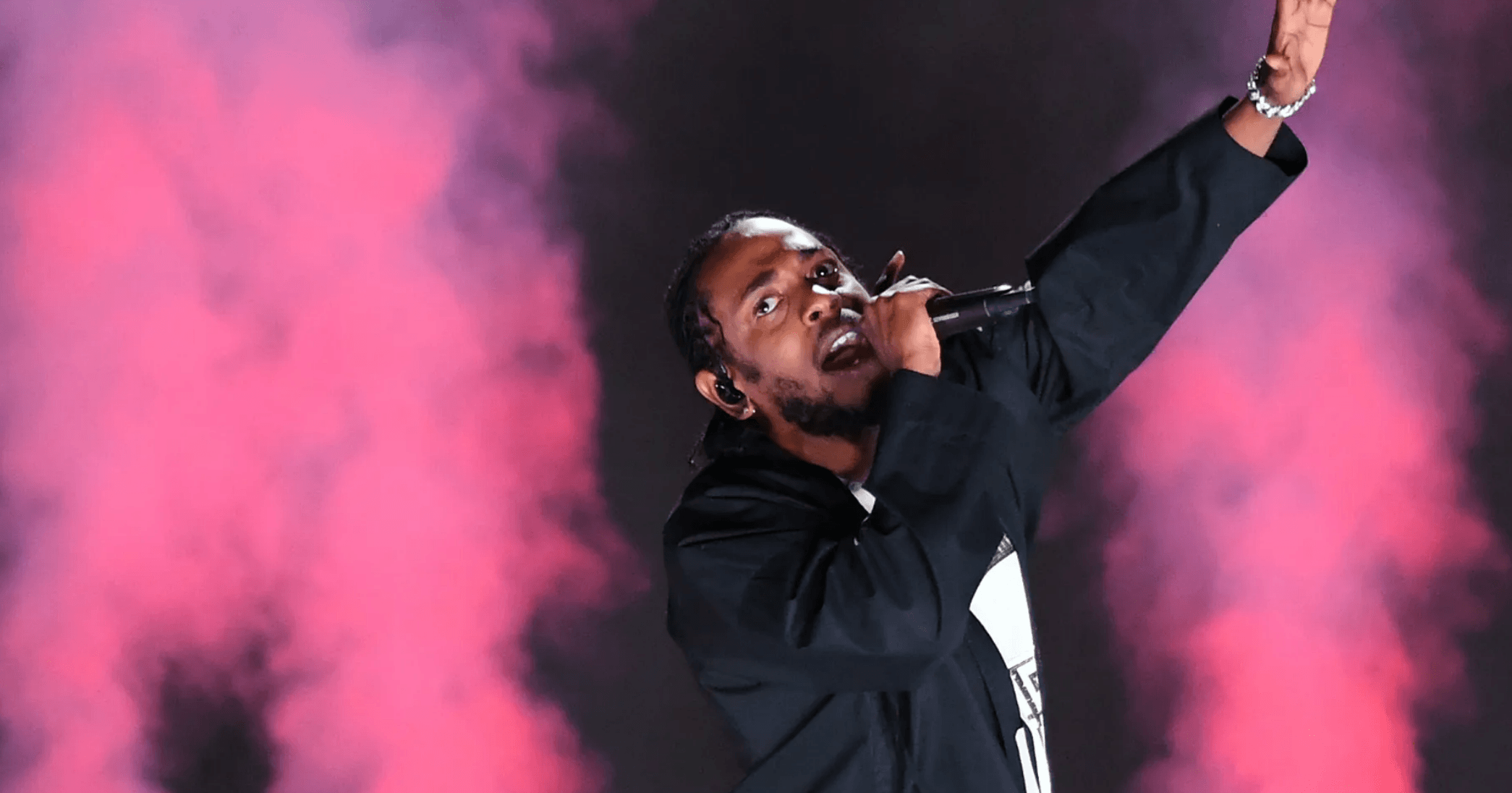
Future and Young Thug, two artists frequently caught in the mumble rap conversation, illustrate the distinction. Their voices often function as musical instruments in their own right. Cadence, inflection, repetition and melodic shape become as important as the literal meaning of the words. Future can make a phrase sound exhausted, menacing or intoxicated, while Young Thug’s elastic delivery sometimes treats language as a collection of sounds to be stretched and rearranged. You might find the results hypnotic or utterly unbearable. Either reaction is perfectly respectable. But to dismiss the approach as failed enunciation is rather like complaining that a saxophonist has neglected to provide the lyrics.
The Kids Are Alright (Even When We Don’t Like Their Music)
Juice WRLD presents an even more awkward problem for the argument that melodic rappers simply lack technical ability. His extended freestyle performances demonstrated an impressive instinct for rhythm, wordplay and improvisation, with some lasting more than an hour. Yet his most recognisable recordings frequently placed melody and emotional immediacy ahead of lyrical complexity. On Lucid Dreams, the familiar guitar figure from Sting’s Shape of My Heart becomes the foundation of a song about heartbreak and romantic obsession. All Girls Are the Same similarly moves between rapping and singing, its repetitive phrasing capturing the circular thinking of somebody unable to escape their own emotional grievances. The writing could be simplistic, sometimes possessive and occasionally rather tiresome, but the musical intention was clear. Juice was using the skills available to him in pursuit of a particular feeling, not attempting to win a freestyle competition.
There is a rather delicious footnote to Lucid Dreams. Its central guitar melody is an interpolation of Sting’s Shape of My Heart, a composition Nas had already drawn upon for The Message in 1996. Yes, Nas. The very rapper whose lyrical standards are so frequently invoked as evidence of everything the younger generation supposedly lacks. Two artists, separated by generations and radically different approaches to their craft, finding inspiration in the same piece of music. Sting, for his part, was delighted with Juice’s interpretation, later describing it as his favourite reworking of the song. Perhaps the most interesting question was never which rapper had used the melody correctly, but how two entirely different artists had heard such different possibilities within it.
Do I like Juice WRLD’s musical output? No. Would I voluntarily sit down and listen to it? Also no. But here’s the thing: he didn’t make it for me. And I suspect the millions of people who found something meaningful in his music would be entirely untroubled to learn that a middle-aged hip-hop enthusiast would rather put on a Jean Grae record. Their connection to his work doesn’t require my approval, any more than my admiration for a beautifully constructed verse obliges them to share it.
XXXTentacion pushed the boundaries further still, moving between abrasive, distorted rap, acoustic balladry, alternative R&B and grunge-influenced sounds with little apparent concern for whether the transitions would satisfy conventional genre expectations. The aggressive energy of Look at Me! existed alongside the sparse, introspective atmosphere of his 2017 album 17, whose brief compositions and exposed vocals seemed almost determined to reject the polish associated with mainstream hip-hop. It was an uneven record, sometimes lyrically limited and occasionally so raw that its unfinished quality became difficult to separate from its intended aesthetic. Yet that fragility was central to the experience it offered.
On Jocelyn Flores, a song responding to the death by suicide of a young woman he knew, XXXTentacion raps over a mournful production built around a Shiloh Dynasty vocal sample. The result is intimate and unsettling, its emotional weight carried as much by the atmosphere as by the words themselves. Yet the story behind the recording is more complicated than the music alone suggests: Flores’s family reportedly learned of the song only after its release. It is a reminder that artistic expression can be deeply personal to its creator while affecting people whose experiences are not theirs to control. Everybody Dies in Their Nightmares similarly uses repetition and subdued delivery to convey emotional claustrophobia, demonstrating how mood and vulnerability can carry as much weight as verbal construction.
None of this requires us to romanticise XXXTentacion or overlook the serious allegations of violence associated with his life. Nor should suffering be treated as a qualification for artistic greatness. The mythology of the tortured artist has excused enough dreadful behaviour over the years without requiring another enthusiastic contribution from music journalism. His work can be examined critically while his actions remain subject to scrutiny. The same principle applies to Juice WRLD, whose emotional openness could be compelling without making every lyric insightful or every romantic grievance sympathetic.
Neither artist invented vulnerability in hip-hop. The genre had been exploring personal pain, insecurity and mental health long before the SoundCloud generation arrived, and it would be an extraordinary disservice to that history to pretend otherwise. What changed was the combination of influences and the way younger audiences embraced music that moved freely between rap, emo, alternative rock and pop. A performer could be an MC, a singer and something resembling a punk frontman within the same three-minute recording, much to the apparent distress of anyone still waiting for a sixteen-bar verse.
When Your Favourite Records Become Ancient History
There is also something rather touching about the way these arguments expose our relationship with the music of our youth. The records we discover as teenagers rarely arrive alone. They come accompanied by friendships, first loves, disastrous fashion decisions and the exhilarating discovery that the world contains people who feel exactly as we do. Music becomes entangled with our sense of identity, and when a younger generation dismisses the sounds we grew up with, it can feel uncomfortably close to being told that we ourselves are becoming obsolete. Naturally, we respond with maturity and perspective by announcing that everything released since our twenty-fifth birthday has been rubbish.
The irony is that younger artists are often doing precisely what their predecessors once did: rejecting the expectations of an older generation and creating something that feels like their own. That doesn’t mean every new development deserves applause, or that criticism from older listeners is automatically invalid. Experience can sharpen judgement as readily as it can harden prejudice. But there is a difference between recognising that a particular musical style leaves us cold and concluding that the culture has lost its way because it no longer sounds like our formative years.
The Peculiar Alchemy of Music
There is a peculiar alchemy between artist and listener that no amount of technical analysis can entirely explain. We can examine rhyme schemes, breath control, originality and production, and we absolutely should. Otherwise, music criticism becomes little more than announcing whether a record made us feel nice. But the emotional impact of a song is a more elusive business.
A musician sends something into the world carrying their own intentions and experiences. The listener receives it through an entirely different collection of memories, expectations and private associations. Somewhere between those two worlds, something happens that neither party can fully control. A technically brilliant verse might leave one person cold while a comparatively simple melody gives another the language for an emotion they have struggled to articulate. One hears a hypnotic vocal performance; another hears somebody who desperately needs to clear their throat.
That doesn’t mean every opinion is equally informed or that poor craftsmanship should escape criticism. It simply means that our personal response, however passionately held, isn’t a universal verdict. Sometimes a record hasn’t failed. Sometimes it just hasn’t found its audience in us.
Keeping the Culture Alive, Not Preserved in Amber
There is, of course, a deeper reason why these arguments become particularly heated in hip-hop. Authenticity has never been a purely aesthetic concern. The culture emerged from specific Black American communities, and its foundations in DJing, MCing, dance, graffiti, competition and community expression are inseparable from its significance. In an industry with a long history of commercialising Black creativity while marginalising its originators, the desire to protect hip-hop’s identity is understandable and often necessary. Its emphasis on lyrical ability, originality and cultural knowledge deserves respect.
But protecting a culture from exploitation and protecting it from change are two very different ambitions. Hip-hop’s foundations were never a promise that the music would remain unchanged indefinitely. Its history is full of artists whose innovations initially unsettled established expectations before becoming part of the accepted tradition. The difficulty begins when the values that once defended a culture become a checklist that every new artist must satisfy, regardless of what they are attempting to create.
Perhaps we have also confused the ability to rap with the ability to make a great rap record. The two are related, certainly, but they are not interchangeable. Some extraordinary lyricists have made rather ordinary albums, while artists with comparatively modest technical abilities have produced records that are sonically inventive, emotionally affecting or simply irresistible. Nobody expects every great singer to possess Whitney Houston’s vocal range, or every guitarist to demonstrate the technical proficiency of Steve Vai. Sometimes restraint, eccentricity or imperfection is precisely what makes a performer compelling.
Hip-hop has spent decades asking whether somebody can rap. Perhaps we should occasionally remember to ask whether they’ve made a record worth listening to.
There will always be bad records, just as there will always be listeners convinced that the best music was released when they were young enough to stay out all night without needing two days to recover. Great lyricism deserves celebrating, and the traditions that made hip-hop culturally significant deserve protecting. But neither requires us to dismiss every artist whose ambitions extend beyond the familiar rules.
After all, a culture that began by taking fragments of existing music and creating something entirely new should be the last place where experimentation requires permission.

Micky Roots
Latest posts by Micky Roots (see all)
- OPINION PIECE | KEEPING HIP-HOP REAL, KEEPING HIP-HOP STILL — November 13, 2026
- OPINION PIECE | SAMPLING: THE BEAUTIFUL ART OF MUSICAL RESURRECTION — November 2, 2026
- OPINION PIECE | AMY WINEHOUSE HAD BARS. IT’S TIME HIP-HOP CLAIMED HER. — October 27, 2026
