There was a time when successfully impersonating a rapper required, at minimum, a baseball cap, several regrettable hand gestures and the confidence of a drunk man commandeering the aux cable at 2am.
Technology has ‘improved’ matters considerably.
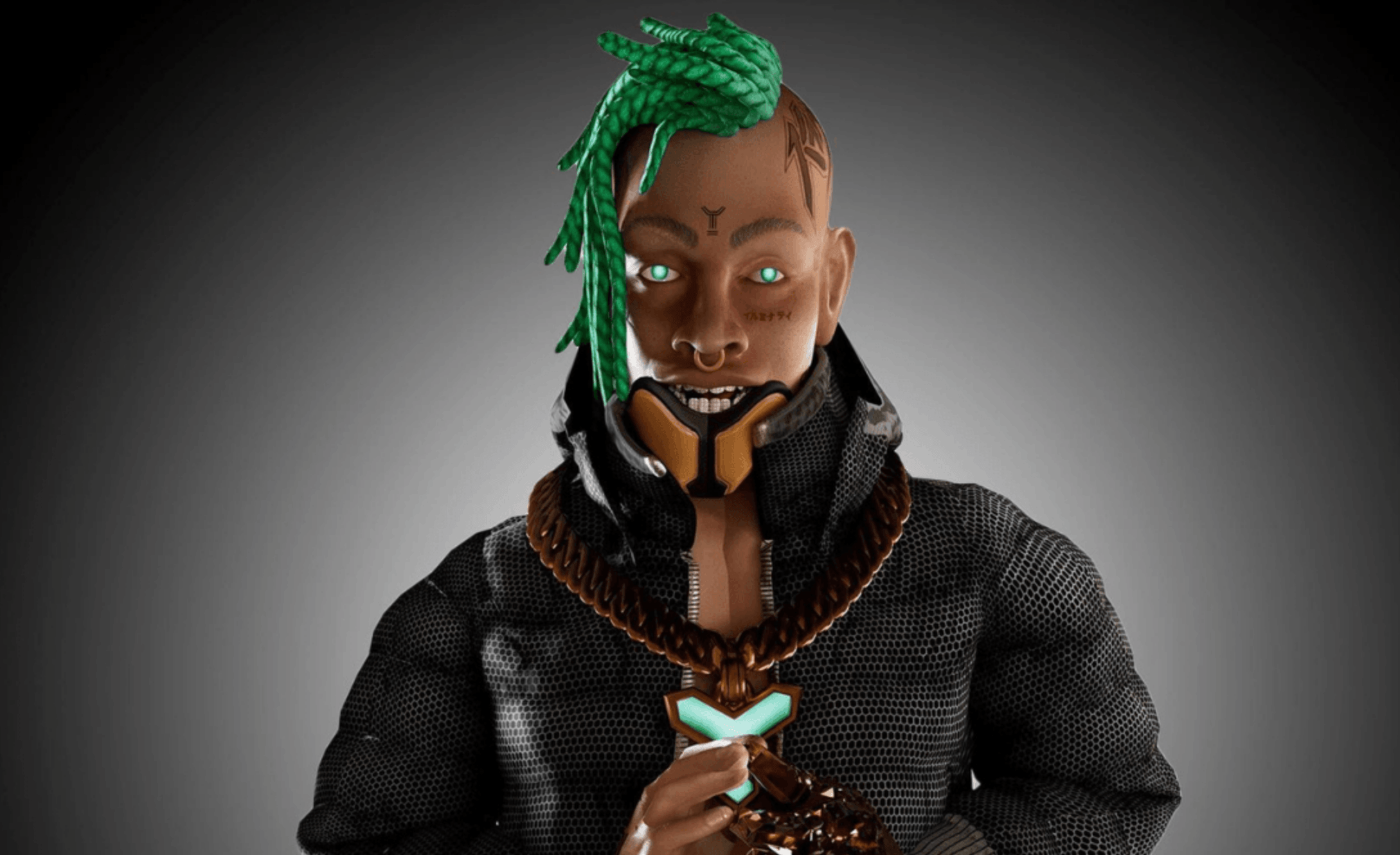
Artificial intelligence can now clone a voice, approximate a flow, manufacture a beat, write a verse, construct an artist and, increasingly, deposit the resulting creation onto the same streaming platforms occupied by people who have endured the considerably more inconvenient business of actually being alive.
Which leaves hip-hop with an unusually existential question.
If a machine can rap, what exactly have we been listening for all this time?
AI has already wandered through hip-hop’s front door. Synthetic voices increasingly resemble recognisable artists closely enough to create the peculiar experience of hearing somebody who sounds uncannily like a rapper you know saying words that rapper never spoke.
The technology is moving faster than the etiquette around it.
And perhaps that matters more in hip-hop than almost anywhere else.
Because rap has always placed enormous weight on the voice not merely as an instrument, but as evidence.
Who said it matters.
Where they came from matters.
Why they said it matters.
The history behind the voice matters.
This is also why hip-hop is perhaps the worst genre from which to mount a simplistic argument that technology corrupts authentic creativity.
This is a culture built, in part, by taking machines designed to do one thing and making them do something they were never intended to do.
Turntables became instruments. Breaks were extended. Records were sampled, chopped, reversed and reassembled. Drum machines produced sounds that initially struck traditional musicians as artificial. Producers learned to bend samplers beyond their supposed limitations until technological restriction itself became an aesthetic.
Hip-hop has never been frightened of artificiality.
What it has traditionally cared about is who is doing the manipulating, and why.
Sampling James Brown is not the same creative act as pretending to be James Brown. Flipping a soul record into something its creators could never have imagined is fundamentally different from manufacturing a synthetic voice and asking it to perform on command.
One transforms a recording.
The other starts interfering with a person.
And hip-hop has always understood that distinction better than outsiders sometimes assume, because the genre’s obsession with authenticity has never really meant every lyric must function as sworn testimony.
Rappers exaggerate. They construct characters. They mythologise themselves.
MF DOOM performed behind a metal mask while building one of hip-hop’s most intricate fictional universes around the persona of a comic-book villain.
Ghostface Killah can move from street reportage to surrealist imagery so quickly that realism almost ceases to be a useful category.
Kool Keith has created enough alternate identities to populate a moderately sized psychiatric waiting room.
Hip-hop has always understood performance.
What audiences want is not necessarily factual truth.
They want human truth.
That is considerably harder to manufacture.
A great rap voice carries information beyond its lyrics: geography, history, insecurity, bravado, humour, class, age, ambition, trauma, absurdity. Sometimes all within four bars.
Consider how much you know before certain rappers have actually said anything.
Nas can make a street corner feel simultaneously like memory and mythology.
Black Thought attacks a verse with the slightly unnerving precision of someone who appears to have misplaced the concept of running out of breath.
Ka could make a line barely louder than conversation feel heavier than another rapper’s entire album.
billy woods often sounds as if somebody has handed you a classified document, removed three pages and refused to explain why.
Amy True can move from introspection to social observation with the unmistakable sense that the politics are not decorative additions to the music but part of the reason the music exists in the first place.
ODB occasionally sounded surprised that recording equipment had been invented.
These are not simply voices.
They are accumulated lives.
That distinction becomes clearer when you listen to artists whose writing is inseparable from specificity.
Take Nas.
Illmatic would be technically impressive even if you removed every biographical detail from it. The internal rhyme, imagery and economy remain extraordinary. But nobody loves that record simply because the syllables are arranged efficiently.
You can hear Queensbridge inside it.
Hallways. Project windows. Stairwells. Friends. Police. Radios. Childhood memories already hardening into adult understanding.
A machine could analyse every rhyme scheme on the album.
It could learn how frequently Nas places internal rhymes, how long his lines tend to be, what vocabulary appears repeatedly and how his cadence sits against a particular drum pattern.
Eventually it could probably produce something that sounds disconcertingly plausible.
But plausibility is not Illmatic.
The streets described on that record existed before somebody converted them into data.
And the same principle travels.
It is there in Ka’s Brownsville. In Little Simz’s North London. In Earl Sweatshirt’s interior landscapes. In the strange, fragmented worlds of MIKE and billy woods.
And it is there in Amy True’s work too.
True has never sounded particularly interested in separating the MC from the citizen. Her music moves through hip-hop, soul and spoken word, but what holds it together is intention: questions of community, power, personal responsibility, resistance and the occasionally unfashionable idea that a rapper might actually have something they would like society to think about.
That matters here.
Because you could train a model to recognise the sonic properties of political rap remarkably quickly.
Feed it enough conscious hip-hop and it will learn the vocabulary.
Oppression.
System.
Freedom.
Power.
Revolution.
Throw in Babylon if the confidence threshold is high enough.
Technically, you might end up with something that resembles protest music.
But politics assembled as vocabulary is not the same thing as conviction.
Amy True’s Question Authority is not interesting because an algorithm could identify a statistically unusual concentration of anti-establishment terminology. Her work exists within years of grassroots culture, performance, collaboration, community work and the wider ecosystem of UK conscious hip-hop from which those ideas emerged. Her debut album Eleven similarly moved between hip-hop, jazz and soul rather than treating “consciousness” as a preset that could simply be applied to a beat.
That is the distinction AI keeps forcing us back towards.
Context.
A machine can reproduce the visible result of belief.
Believing something is rather more inconvenient.
The same is true across the best rap music.
These artists are not interesting because they conform perfectly to the technical definition of rap.
They are interesting because somebody lived long enough to develop a way of seeing.
AI can reproduce the audible characteristics of that worldview extraordinarily well.
What it cannot possess is the history that made the worldview necessary.
At least, not yet.
And that might be the point at which the increasingly tedious debate about whether AI music is “real art” becomes more useful.
Because technical competence was never the scarce resource.
There are thousands of people capable of rapping extremely well.
Plenty can rhyme multisyllabically.
Plenty can stay perfectly in the pocket.
Plenty can construct immaculate sixteen-bar verses which you admire enormously while they are happening and forget completely before the next bus arrives.
Skill matters.
But skill alone has never explained why one rapper becomes indispensable.
The mysterious bit has always been why this person?
Why does Yasiin Bey sound like Yasiin Bey before you’ve even processed the words?
Why can Roc Marciano turn understatement into a worldview?
Why does Earl Sweatshirt sometimes leave more emotional information in the space around a line than another rapper puts into the line itself?
Why can Ghostface start a verse sounding furious, become hilarious halfway through and somehow end somewhere close to heartbreak?
Why does Amy True’s social commentary feel different from simply asking a machine to write “a conscious rap song”?
Because art is not merely information transmitted elegantly.
It is information attached to a human being.
And nowhere is that attachment more obvious than in hip-hop.
Rap has spent half a century turning biography into mythology.
Neighbourhoods matter.
Crews matter.
Accents matter.
Rivalries matter.
Clothes matter.
Interviews matter.
Record shops, pirate stations, housing estates, subway lines and the particular sofa somebody spent six months sleeping on all eventually find their way into the mythology.
We do not encounter a great rapper solely through songs. We build a continuing relationship with a character whose music keeps acquiring meaning as their life unfolds.
Even failure becomes material.
Especially failure.
Which creates an obvious problem for the AI rapper.
What exactly can it have failed at?
It has never been booed.
It has never spent six years making music nobody cared about.
It has never pressed 500 copies of a record and discovered that approximately 487 of them now live permanently underneath somebody’s bed.
It has never fallen out with its producer over £80.
It has never performed to fourteen people above a pub while insisting to its friends afterwards that the crowd was “actually really receptive”.
It has never watched another artist it privately considered less talented become successful first.
It has never become successful itself and discovered that success does not repair whatever it imagined success would repair.
There is no humiliation in its archive.
And humiliation, inconveniently, is one of humanity’s great creative resources.
The technology companies might answer that none of this matters.
Listeners care about the finished product. If an AI-generated song creates the same neurological response as a human-made one, why should its origin diminish the pleasure?
This argument is more persuasive than artists might like.
Most of us already consume culture with surprisingly little concern for how it was assembled. Hip-hop records have long involved producers, engineers, sample sources, featured musicians and collaborative writing processes of various kinds.
The romantic image of one wounded genius translating their soul directly into a microphone has always involved a certain amount of excellent PR.
But AI introduces a more profound separation.
It allows us to remove the inconvenient human entirely.
And once you do that, something strange happens.
Music stops being communication and becomes content.
There is a difference.
Content exists to occupy space.
It accompanies workouts, adverts, shops, scrolling, gaming, commuting. It is perfectly capable of being pleasant. Increasingly, it may be machine-generated.
Music, at its best, creates the disconcerting sensation that another person has felt something you thought belonged only to you.
Hip-hop made an entire global culture out of that recognition.
A teenager thousands of miles from Queensbridge could hear Nas describe the view from his window and somehow recognise their own.
Someone who had never set foot in Brooklyn could hear Yasiin Bey rap about the city and understand that geography can become psychology.
A young listener in Britain could hear an artist like Amy True articulate questions about power, society or personal struggle and recognise that hip-hop did not have to arrive wearing somebody else’s accent, geography or politics.
They could encounter The Roots, Company Flow, Gang Starr or De La Soul and discover an entire cultural family tree leading backwards and sideways into jazz, soul, funk, poetry and resistance.
That transmission requires something more than sonic accuracy.
It requires somebody on the other end.
This does not make AI useless to musicians.
Quite the opposite.
Artists will use it as they have used every previous technological development: irresponsibly at first, brilliantly eventually.
They will build new instruments from it. Producers will create sounds that currently seem impossible. Independent artists will gain capabilities once available only to wealthy studios.
Some genuinely strange record will eventually arrive that could not have existed without AI, and everybody currently composing furious LinkedIn posts about “protecting creativity” will pretend they always knew this was possible.
That is generally how these things work.
The most interesting artists, though, will not ask AI to replace imagination.
They will use it to extend imagination.
And AI may inadvertently make one unfashionable artistic quality considerably more valuable.
Specificity.
If machines can create competent music infinitely, competence becomes almost worthless.
The thing worth listening for becomes the detail a machine would never think to invent because it never happened to it.
The smell of your grandmother’s hallway.
The bus route home.
The particular takeaway everyone went to after the club shut.
The friend who stopped calling when the money arrived.
The jacket somebody stole from you in 2009 that you remain, against all reasonable adult judgement, furious about.
The political argument that changed your mind.
The community that shaped your understanding of the world before anyone was interested in streaming it.
The oddly shaped fragments from which actual identity is made.
Listen to Little Simz and London is not merely a location printed underneath a biography.
Listen to Ka and Brownsville does not function as branding.
Listen to Nas and Queensbridge is not scenery.
Listen to Amy True and consciousness is not an aesthetic.
Place becomes part of the thought process.
Memory determines rhythm.
Experience determines vocabulary.
Belief determines what is worth saying in the first place.
Perhaps the arrival of artificial artists will not make humanity obsolete.
Perhaps it will simply expose how much generic human-made music was behaving like artificial intelligence already.
The interchangeable flexes.
The algorithmically approved vulnerability.
The choruses engineered for twelve seconds of social video.
The production choices copied from whatever performed well last quarter.
The apparently “conscious” song assembled from a shopping list of approved political nouns.
The songs that appear to have been written by somebody who has studied every successful record of the previous six months while somehow failing to have a single original experience during that period.
AI might become extremely good at making that.
In which case, good luck competing with it.
The alternative is to become more inconveniently, embarrassingly and specifically human.
That may ultimately be why artists such as DOOM, Nas, Ka, Black Thought, Little Simz, Amy True, Earl Sweatshirt or billy woods remain such useful reference points in this conversation.
You could feed a machine their entire catalogue.
Teach it the rhyme schemes.
Map the cadences.
Catalogue the vocabulary.
Measure every pause.
Eventually you might generate something that resembles them closely enough to make somebody stop scrolling.
But imitation runs into a problem.
DOOM had to become DOOM.
Nas had to stand at those windows.
Ka had to know Brownsville.
Simz had to live the life from which those observations emerged.
Amy True had to develop the convictions behind the words, not simply the vocabulary in which those convictions are expressed.
billy woods had to acquire whatever collection of experiences has resulted in him sounding permanently as if Western civilisation has disappointed him personally.
A model receives the artefact after the fact.
The artist had to accumulate the life that produced it.
That difference may become increasingly difficult to hear.
It does not therefore become meaningless.
A machine can learn your cadence.
It can study your rhyme patterns.
It can reproduce the rasp in your throat and calculate the tempo at which your audience most reliably nods its head.
It can learn every word Amy True has ever recorded without understanding why somebody might feel compelled to question authority in the first place.
What it cannot do is explain why your voice mattered before somebody taught it how to copy it.
And for a culture built on the radical proposition that an overlooked person with a microphone could make the world listen to their story, that distinction feels worth defending.
AI can rap.
The more interesting question is whether it has anything to say.

Micky Roots
Latest posts by Micky Roots (see all)
- OPINION PIECE | THE MACHINE CAN RAP. SO WHAT MAKES AN ARTIST HUMAN? — October 12, 2026
- TRUE TO THE GAME: WHY AMY TRUE IS THE ARTIST WE NEED — July 11, 2025
- REVIEW | ‘SUNDAY DINNER ON A MONDAY’ — SPEECH DEBELLE’S POWERFUL MESSAGE THROUGH RAP MASTERY — June 19, 2023
