
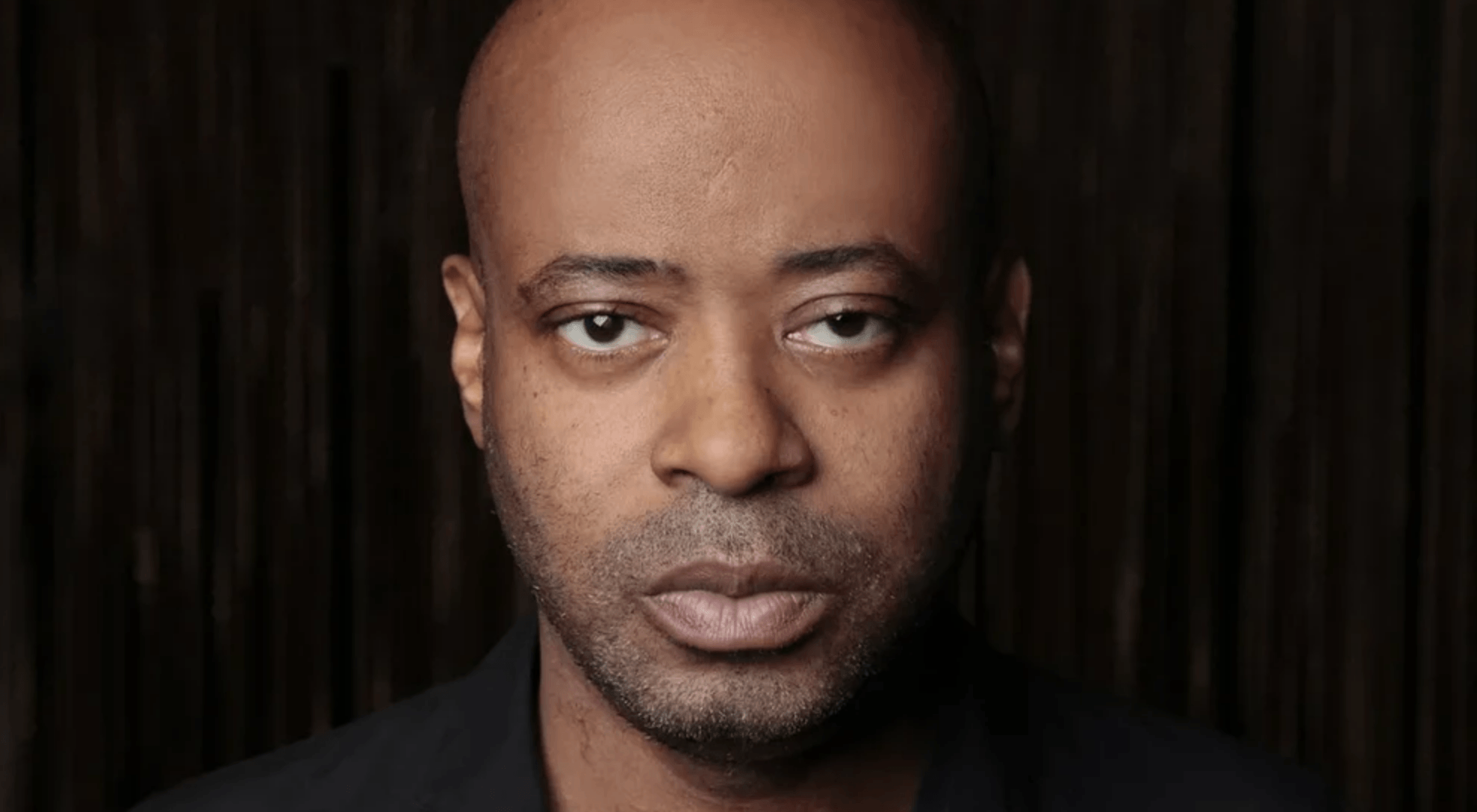
The epithets ‘Godfather of Techno’ and ‘Originator’ have been applied to the musician and producer Juan Atkins who passed away on October 31st 2026 at the age of 64. Atkins was a pioneer of the Detroit techno genre, which has been described as techno with soul and was created in the early 80s by a generation of Detroit locals who were raised on the city’s Motown heritage as well as the Afrofuturism of George Clinton’s Parliament-Funkadelic and science fiction. Their fathers worked in the automobile assembly plants that Detroit was famous for and would tell their children about how they worked with robots.
For my generation, i.e those born in the late 80s to mid 90s, Atkins’ 1983 track “Clear” was better known as the beat for the 2005 track “Lose Control” by Missy Elliot. The worlds of Detroit techno and hip hop rarely coalesce, and whilst electro is acknowledged as one of the roots of hip hop, Detroit techno is treated as somewhat of an outlier which is strange given that hip hop luminaries like Eminem, J Dilla and Royce da 5′9″ came out of Detroit.
Clear was released by Atkins and Richard Davies aka 3070 under the name Cybotron, a name which predates but nevertheless echoes the home planet of the Transformers from the 1984 science fiction franchise.
Juan Atkins was born in Detroit in 1962 and his father was a concert promoter. He moved to Belville when he was around 14 or 15 where met two other future Detroit techno producers Derrick May and Kevin Saunderson at school. They became known as the Belleville Three, Atkins the Originator, May the Innovator and Saunderson the Elevator. Atkins would see the synthesizers in the back of a music shop that his grandmother who played the organ would visit. He persuaded her to buy him one, a Korg MS-10, and he developed an interest in electronic music, making demos in high school. A class in Future Studies would expose him to texts on futurism which would shape the sound an aesthetic of Detroit techno.
Other influences were the music of Kraftwerk and the eclectic selections played on the Electrifying Mojo radio show which would eventually play Atkins’ earliest productions.
Atkins met Richard Davis in community college on a music course. Davis was a Vietnam veteran who was also interested in electronic music and together they formed Cybotron in 1983, a portmanteau of the words cyborg and cyclotron (A particle accelerator.) and they started the label Deep Space where they released their own singles.
The first Cybotron release was “Alleys of Your Mind” in 1981. This was followed by the singles “Cosmic Cars” and “Clear” in 1983. Cybotron’s debut album Enter was also released in 1983 under the Fantasy label. Fantasy started in California in 1949 and had a
history of releasing jazz and funk records. Cybotron’s release on that label suggests that Detroit techno is on the same continuüm.
Atkins moved back to Detroit and started putting on parties with Derrick May under the name Deep Space where they would DJ.
Atkins left Cybotron in 1985 and founded the label Metroplex that year and during this time he would focus on production over DJing. The name Metroplex is shared with a Transformers character but comes from the concept of Metrocomplex a future type of city envisaged in Alvin Toffler’s 1970 book Futureshock, which was influential on Atkins and other Detroit techno producers.
The first release on Metroplex was the iconic “No UFOs” under Atkins’ alias of Model 500. On the debate as to whether Detroit techno or Chicago house came first, Atkins has said; “Well, there wasn’t any house at that time. There was nobody making records in Chicago. When Derrick went down there and gave it [The No UFOs record] to some of the guys like
Jesse Saunders and Chip E., these guys more or less started coming out with records around the same time as Metroplex started. It was like a cultural exchange between Detroit and Chicago.” (The Record Players, Interview, 2010.).
The debut Model 500 album Deep Space was released in 1995 followed by Mind and Body in 1999.
In the 1996 documentary Universal Techo (Dir. Deluze), Atkins reflected on the decline of Detroit’s industry and how it led to his music;
“Detroit probably as you’ve noticed is somewhat of a depressed postindustrial city and I think that the general attitude here with the powers that be… is that industry must die to make way for technology, I think Detroit is a city in North America that’s probably experienced the technological revolution first and I think that it affects all of the occupants of Detroit including the artists and musicians… and we probably wouldn’t have developed this sound in any other city than Detroit…there’s a certain atmosphere here that lends to the technological movement…the biggest shopping store in downtown is boarded up it’s almost like a ghost town but somehow this lends to the creative juices…”
In looking up the links between Detroit techno and hip hop I came across the figure of Amp Fiddler (1958 – 2023). Amp Fiddler was also from Detroit and was the keyboardist in Parliament-Funkadelic. Amp Fiddler would collaborate with Atkins and would also mentor J Dilla, teaching him how to use the Akai MPC 3000. Dilla would sample Atkins’ “Testing 1- 2” for his track “Workingonit” which was released on his album Donuts in 2006, providing a link between Detroit techno and Dilla’s innovations in hip hop.
In a 2024 Guardian interview, Atkins was asked whether he thought Techno was political? “I don’t necessarily…But I make social statements. My lyrics are supposed to make you think about something other than shaking your booty on the dancefloor and falling in love. I feel like artists have an obligation to say something meaningful.”
RIP Juan Atkins (1962–2026)
By DJ Isuru
DJ Isuru is a writer, DJ and concert promoter of the Mishti Dance club night.

Isuru Perera
Latest posts by Isuru Perera (see all)
- JUAN ATKINS OBITUARY WRITTEN BY DJ ISURU — November 4, 2026
