Photo Credit: Poet Curious
It’s been a long time since I’ve been in a room where music made me feel completely inside it, rather than just watching it from the outside. Not analysing it, not picking it apart, just fully present in a space where everything felt connected and alive in a way that’s become quite rare in live music.
SUPERORGANIC’s Ancient Sounds x Future Force at Rich Mix was one of those nights. Not because it was flawless or overly polished, but because it felt like something was genuinely being created in real time. There was a sense that the room, the artists and the audience were all part of the same experience rather than separate from it.
There are some events you leave talking about individual performances, and then there are events you leave talking about how they made you feel. This was definitely the latter.
Before I even get into the night itself, I need to talk about Fusion. Through running I Am Hip-Hop, I’ve met a lot of people across music and culture, but Fusion is someone I’ve always had huge respect for. Long before culture became something constantly documented and discussed online, he was already doing the work in real spaces, championing artists, building connections and creating opportunities for people to actually exist within the industry. Not just reporting on it, but actively shaping it. Producer, presenter, connector, storyteller. Someone who has consistently used his platform to open doors for other people rather than just stepping through them himself. If you’ve been around UK hip-hop culture over the years, you’ll know his name. From pirate radio days through to MTV Base, from championing early UK hip-hop and grime to interviewing and documenting artists like Nas, Lauryn Hill and Dr Dre, he has always been someone who sits at the intersection of culture and community.
He’s also shown consistent love to I Am Hip-Hop over the years, and I don’t take that lightly. Independent platforms rely on people who understand why they exist in the first place, and he’s always been one of those people. So seeing SUPERORGANIC come to life didn’t feel like witnessing something new being launched, it felt more like watching something that’s always been part of him finally take physical shape on stage.
SUPERORGANIC itself, created through the BMT Culture Hub programme, brings together hip-hop, jazz, spoken word, live instrumentation and experimentation in a way that doesn’t feel forced together for the sake of concept. It feels like these worlds naturally belong in the same space. The brand has been bringing the storytelling element back into music for a few years now, through their live shows, their mix tape (yes an actual tape!) and short film.
From the moment I walked into Rich Mix, that energy was already present. DJ Doni Brasco wasn’t simply warming the room up, he was curating the atmosphere in a way that made the space feel like it was already in motion before anything officially began. From blends, to cuts, the scratches — from hearing Dizzee Rascal being mixed with Masego, he brought to life a musical landscape mixed across decades. The music moved across genres and moods in a way that made people settle into the space rather than just arrive in it, and you could feel the room slowly syncing together as more people came in.
Across the night, the energy was shaped by a really strong line-up of artists including AJ, AyHearts, Mizz B Ryan and Apex Zero, each bringing something completely different to the space, from sharp lyricism and spoken word to raw, stripped-back vocal moments that all fed into the wider collective energy of the show.
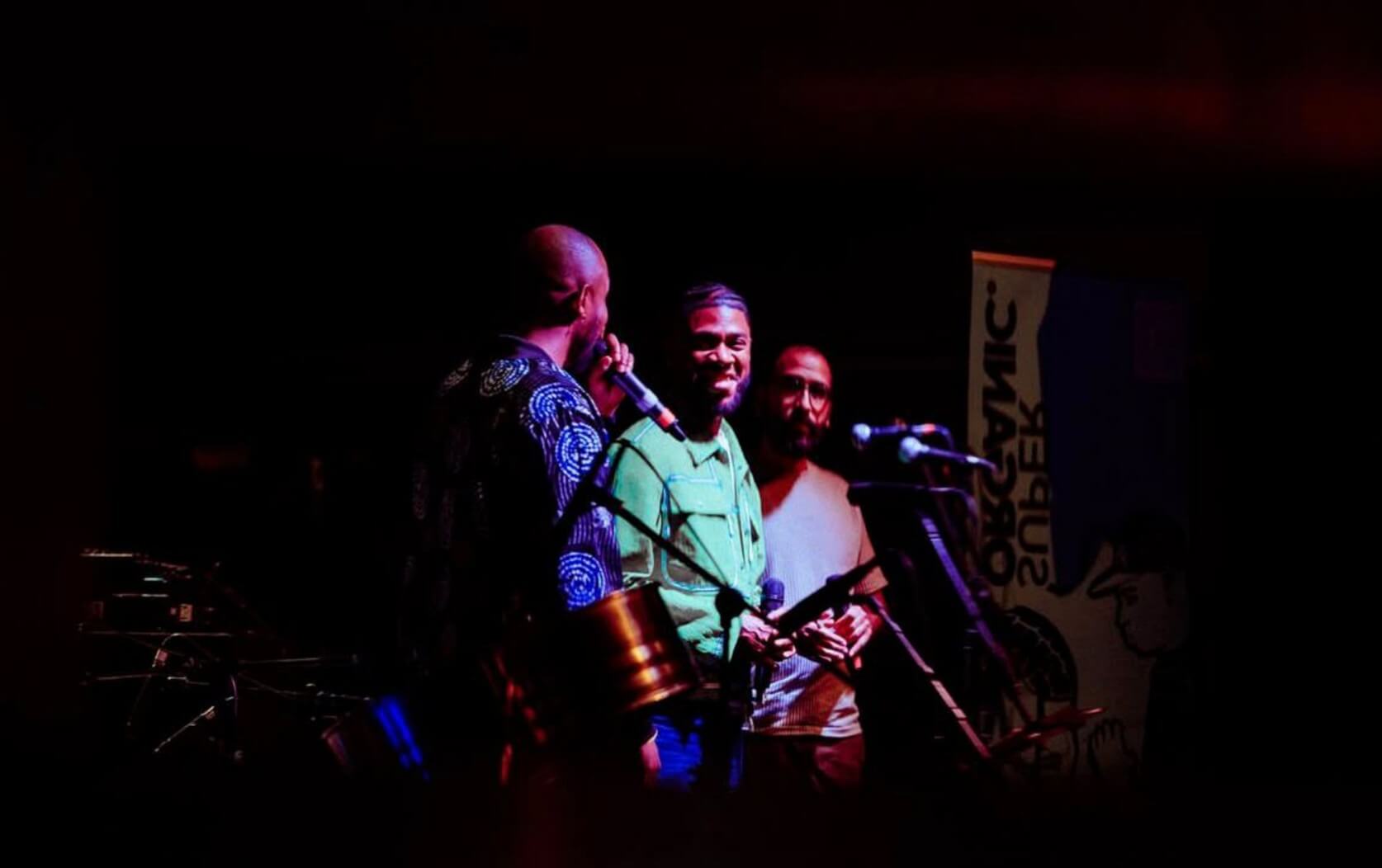
The show began with Fusion stepping forward to welcome everyone into the SUPERORGANIC world and to frame what we were about to experience, speaking about ancient sounds meeting future thinking in a way that felt grounded rather than abstract. It wasn’t delivered like a concept being explained, it felt more like an invitation into the way he hears and understands music.
He then brought Marlon Hibbert onto the stage alongside DJ Doni Brasco, and what followed completely shifted the way familiar tracks were experienced. The steel pan wasn’t treated as an add-on or texture in the background of music, it became the focal point. Hearing tracks like 50 Cent’s P.I.M.P. and Soulja Boy’s Superman broken down and rebuilt live revealed layers that are usually hidden in plain sight. It reminded you how much detail exists in music you think you already know.
From there, Fusion introduced Faris Ishaq and the Ney onto the stage, and this was one of those moments that didn’t need explanation to land. At a time where conversations around culture can often feel divided or overly categorised, seeing a Palestinian instrument sit naturally within a space built on hip-hop, jazz and live improvisation felt completely unforced. It wasn’t presented as a statement. It was just music existing in the same space as other music, and it worked because of that simplicity.
With Fusion moving back into producer mode on the pads and the Ney carrying through the room, the idea of ancient and future stopped being theoretical and instead became something you could actually hear unfolding in real time.
It felt like a reminder that music doesn’t really belong to any one era or place, but is constantly moving and reshaping itself depending on who is in the room.
What became clearer as the night continued was how much control Fusion has over shaping energy without ever overpowering it. The stage functioned less like a lineup of separate performances and more like a shared environment that everyone was contributing to. The band weren’t just accompanying artists, they were responding to them. The DJ wasn’t just transitioning between sets, they were part of the same conversation. Everything felt connected rather than segmented.
The house band brought depth and texture throughout, with JJ on keys, Rory Scott on bass and vocals, Spider J moving between vocals and electronics, Harry Bennett on saxophone, Carmen on trumpet, and Dembis Thioung and Amra on percussion all feeding into a sound that constantly evolved as the night progressed. Nothing felt static or fixed, everything felt responsive to the moment.
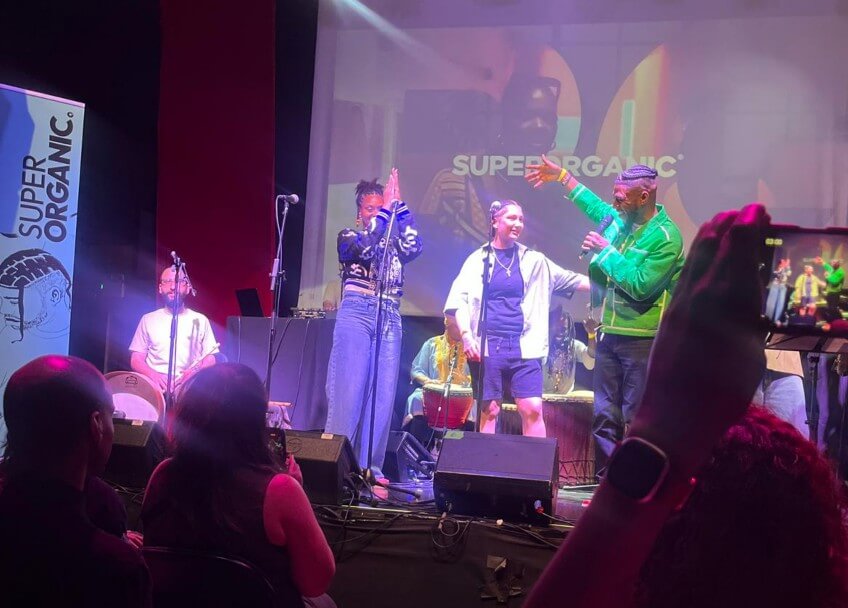
Sheffield based rapper AJ brought a directness and energy that immediately shifted the room, while AyHearts moved everything in the opposite direction with spoken word that pulled the space into stillness. There were moments where the entire room felt completely quiet, not out of politeness, but because people were genuinely absorbed in what they were hearing. That kind of attention is rare.
A conversation between Fusion, Faris and Marlon took place within the flow of the evening rather than outside it. That decision mattered. It gave context to what people were witnessing without breaking the atmosphere that had been built. It acknowledged that culture is not only performance, it is dialogue.
Before Side B, Zak took over during the intermission on the decks, keeping up the high vibrations. People stayed inside the atmosphere of the night, talking, reflecting and connecting while the music carried everything forward rather than breaking it apart.
The second half of the show carried a slightly different emotional weight, beginning with a drum-led introduction that brought everyone’s attention back into focus before Mizz B Ryan stepped forward to perform The Process. Stripped back and completely exposed, it became one of those moments where the room feels fully locked in, with nothing competing for attention other than the performance itself.
Later in the night, Fusion stepped onto the mic himself with a track centred around heartbreak, which added another layer to how the evening was unfolding. After spending so much time holding the space for other artists, it was grounding to see him step into his own creative expression within it, reminding you that he is not just the person curating the experience but also still an artist within it.
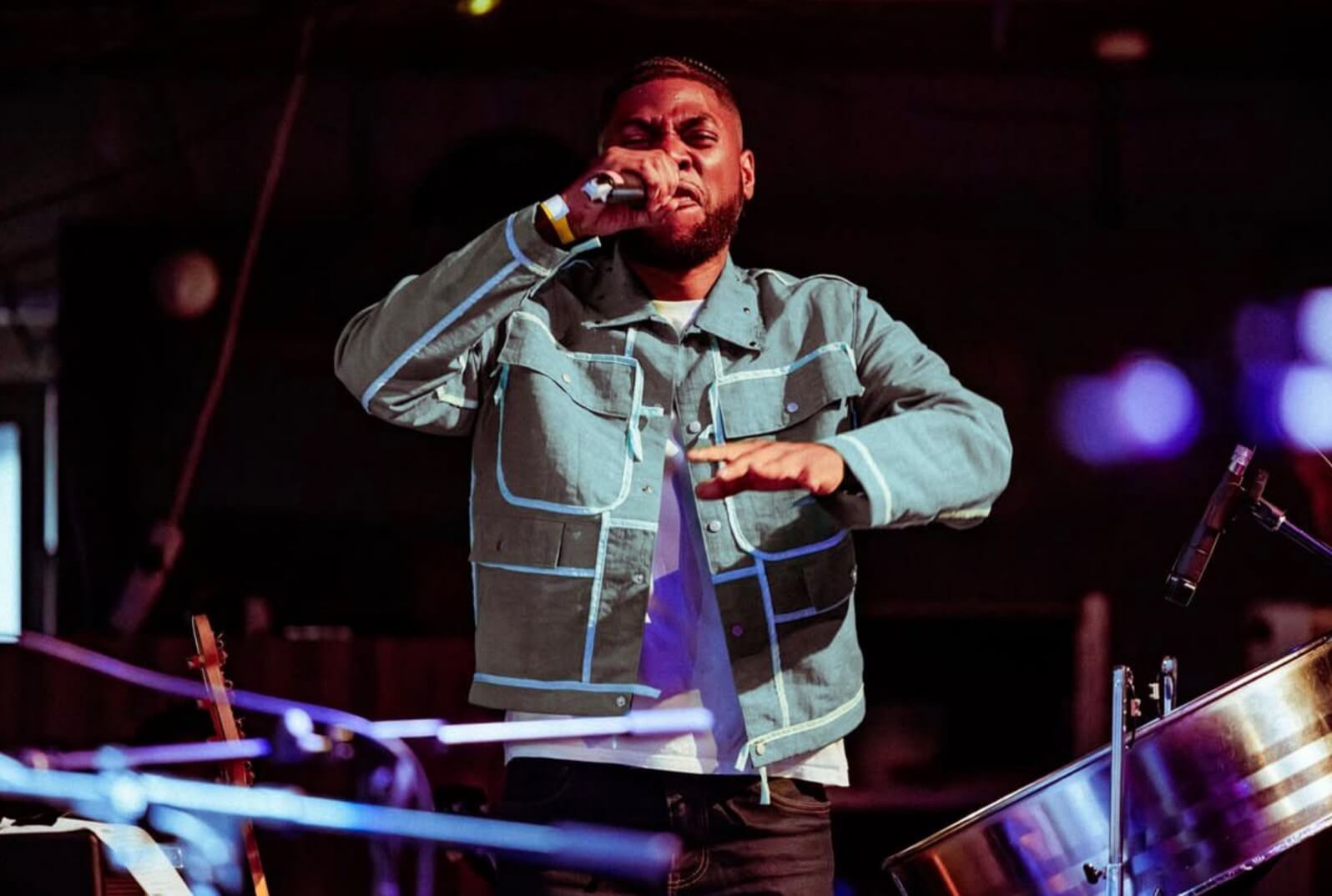
Photo Credit: Poet Curious
From there, Apex Zero, Marlon Hibbert and the wider collective continued to build and reshape the energy on stage, with Spider J consistently adding subtle layers that changed the atmosphere without ever pulling focus away from the core of what was happening. Everything continued to feel like it was being created in real time rather than delivered from a fixed structure.
What stayed with me most wasn’t any one performance, but the overall feeling of the night. Nothing felt forced or overly designed to land as a moment. There was no sense of people trying to outperform each other or chase impact. Instead, there was a genuine sense of listening, responding and building together in a way that felt honest.
The night closed with a drum circle that brought artists and audience into the same space, removing any sense of separation between stage and room. It didn’t feel like an ending so much as a return to something fundamental about why these spaces matter in the first place.
As I left Rich Mix, I kept thinking about how rare it is to be in a room where music doesn’t just sit in front of you, but actually surrounds you and pulls you into it. This wasn’t just a night of performances. It was a reminder of what happens when people who genuinely care about music, culture and community are given space to create together.
The SUPERORGANIC brand is here to continue to tell the stories, attract audiences not by genres but through heart, through the things that connect us most — our relatability. In a world that can feel so heavy, the brand have done a good job at delivering a space needed for live music to thrive, and most importantly its a space you will leave feeling different to when you arrived. Its a space that will move you, and allow you to not just hear music but to feel it, in a collective experience.
Follow: @wearesuperoganic on all platforms to keep up to date with future projects and events.
Visit: www.wearesuperorganic.com to learn more
View this post on Instagram


Rishma
Latest posts by Rishma (see all)
- GIGGS ANNOUNCES ‘THE CHRONICLES OF’ A LANDMARK LIVE CELEBRATION AT OVO ARENA WEMBLEY — October 16, 2026
- NEW MUSIC | PROLIFIC WONE x MANAGE DROP NEW SINGLE “BANDAIDS” FT. APEX ZERO x MAS LAW (EOW ENGLAND) — October 2, 2026
- NEW MUSIC | MANAGE – CODE OF THE STREETS — October 1, 2026
