
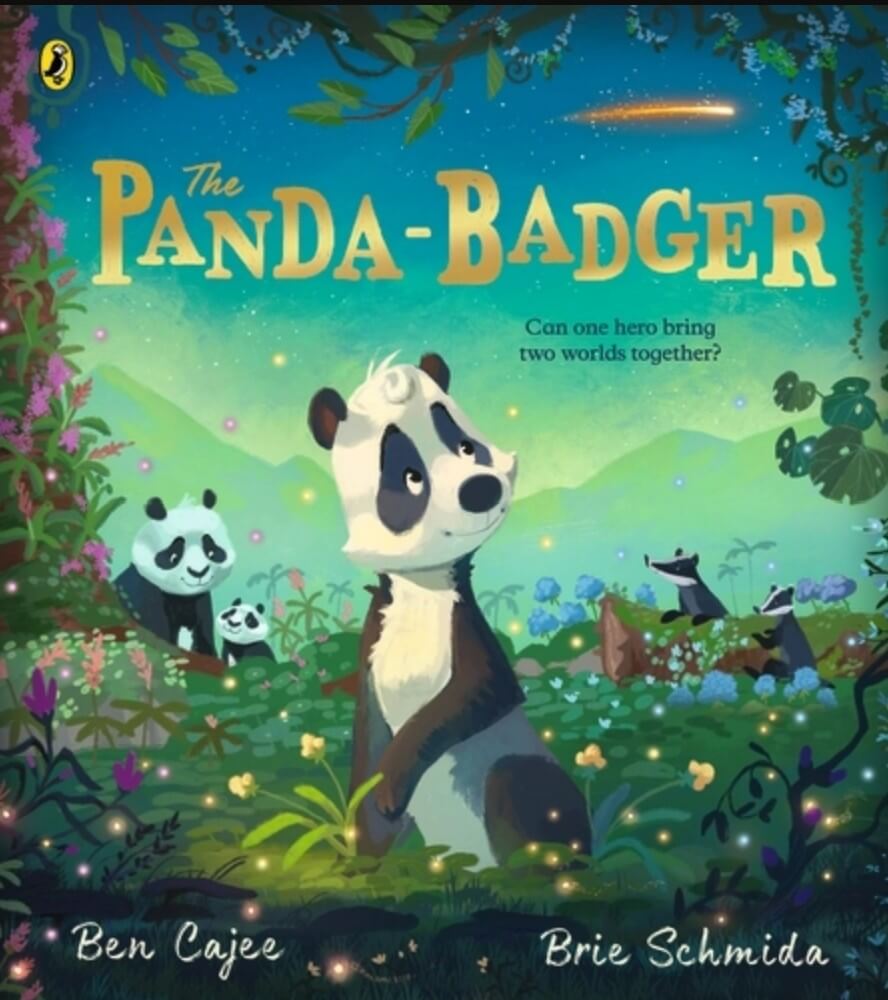
There are some children’s books that entertain, some that educate, and a rare few that quietly heal parts of people people did not realise still needed healing.
Ben Cajee’s The Panda-Badger belongs firmly in that final category.
On the surface, the book follows Pablo, a gentle character navigating life between two different communities. Part panda and part badger, he exists in a space where neither side fully understands him. The pandas believe he is too much like a badger, while the badgers see him as too much like a panda. What begins as a whimsical story about animals slowly unfolds into something far more emotionally layered: a meditation on identity, belonging, loneliness and self-acceptance.
Speaking with I Am Hip Hop, Cajee reflected on how the story first came to him and why creating a character caught between worlds felt so important.
“There’s this little guy,” he says warmly. “And he lives in a world of pandas and badgers, and they’re very distinct and different. The pandas think he’s too much like a badger, and the badgers think he’s too much like a panda. Both sides think, ‘Well, you’ve got the best of both. What’s your problem?’ But he really struggles because he doesn’t feel like he belongs anywhere.”
That emotional conflict sits at the centre of the book. Pablo is not rejected outright, but he is never fully embraced either. It is a subtle but powerful distinction, and one many readers will instantly recognise.
What makes The Panda-Badger particularly refreshing is that it does not just tell children it is okay to be different. It explores the complexity of carrying multiple identities at once and the emotional weight that can come with it. Pablo is never asked to choose one side of himself over another. Instead, the story slowly guides him towards understanding that every part of who he is deserves space.
Cajee explains that Pablo’s journey is not simply about acceptance from others, but about finding confidence within himself.
“It’s a bit fake it till you make it at first,” he admits. “But underneath that, he’s really lonely. There are moments in the book where he feels very lost. He has to dig super deep for his own sense of identity and confidence.”
That emotional honesty is part of what makes the book stand apart from more traditional children’s storytelling. While many stories for younger audiences focus heavily on happy endings and simplified emotions, Panda Badger allows space for uncertainty, sadness and vulnerability.
For Cajee, that realism comes partly from his own experiences working in children’s television for over a decade.
“People sometimes think children’s TV is just happiness all the time,” he says. “But no one’s that happy constantly. Everyone’s got stuff going on. Some days you’re tired, stressed or carrying something heavy, but you still have to show up and perform.”
He laughs while describing the surreal nature of filming children’s television, whether dressing up in costumes or entertaining audiences while dealing with personal pressures behind the scenes, but underneath the humour is a serious point about emotional suppression and resilience.
“There’s no hiding place sometimes,” he explains. “You still have to make everyone smile. That’s a skill, but those emotions have to go somewhere.”
Rather than shielding children entirely from difficult emotions, Cajee believes stories can help young readers understand what they are feeling.
“Life is not always a breeze,” he says. “I didn’t want to sugarcoat everything and pretend life is perfect all the time. Most people at some point struggle with identity or feeling lonely or feeling like they don’t fit somewhere.”
That grounding in emotional reality is exactly what gives The Panda-Badger its power. It trusts children enough to engage with honest emotions while also offering reassurance that those feelings are survivable.
The book’s emotional depth is also strengthened through the presence of a mysterious golden creature that appears throughout Pablo’s journey. Ethereal and symbolic, the creature acts almost like a spiritual guide, though Cajee intentionally leaves its meaning open to interpretation.
“It could be your faith, your soul, spirituality, nature, someone you’ve lost,” he explains. “I wanted people to take their own meaning from it.”
That ambiguity becomes one of the story’s greatest strengths. For some readers, the golden creature may represent faith. For others, intuition, hope, ancestors or simply the feeling that something larger than ourselves exists in difficult moments.
Cajee says he wanted the creature to feel almost mythical within Pablo’s world, something known about but never fully understood.
“There are myths about it in the book,” he says. “Pablo keeps questioning whether it’s real or whether he imagined it. I think people experience things differently. Some people believe in signs. Others think things are coincidence. That’s personal.”
The openness of that interpretation allows the book to connect with readers from many different backgrounds and experiences without ever becoming prescriptive.
Music also plays a surprisingly important role in the story, eventually becoming one of the forces that helps unite Pablo’s divided communities. For Cajee, music symbolises one of the purest forms of human connection.
“I really love music,” he says. “It’s universal. People can be in completely different parts of the world and still feel connected through the same song, even if they don’t speak the same language.”
Reflecting on his own relationship with music, Cajee speaks passionately about the emotional memories songs can hold and how music evolves alongside people’s lives.
“You can listen to the same song at different points in your life and hear something completely different in it,” he says. “Once you’ve experienced love or grief or loss or happiness, songs hit differently.”
That same idea runs quietly through The Panda-Badger. Experiences shape understanding. Emotions deepen perspective. Connection often comes from recognising pieces of ourselves in others.
At a time where conversations around identity can often become divisive or politicised, The Panda-Badger feels remarkably compassionate. It does not try to force simple answers onto complicated feelings. Instead, it gently reminds readers that there is strength in complexity, beauty in difference and power in empathy.
Most importantly, it offers something many adults are still searching for themselves: permission to exist fully as who they are.
For children growing up feeling caught between cultures, identities, communities or expectations, that message could prove invaluable.
And perhaps that is what makes The Panda-Badger resonate far beyond its pages. Beneath the whimsical storytelling and charming world-building is a deeply human reminder that being different does not make you incomplete.
Sometimes, it is exactly what makes you whole.
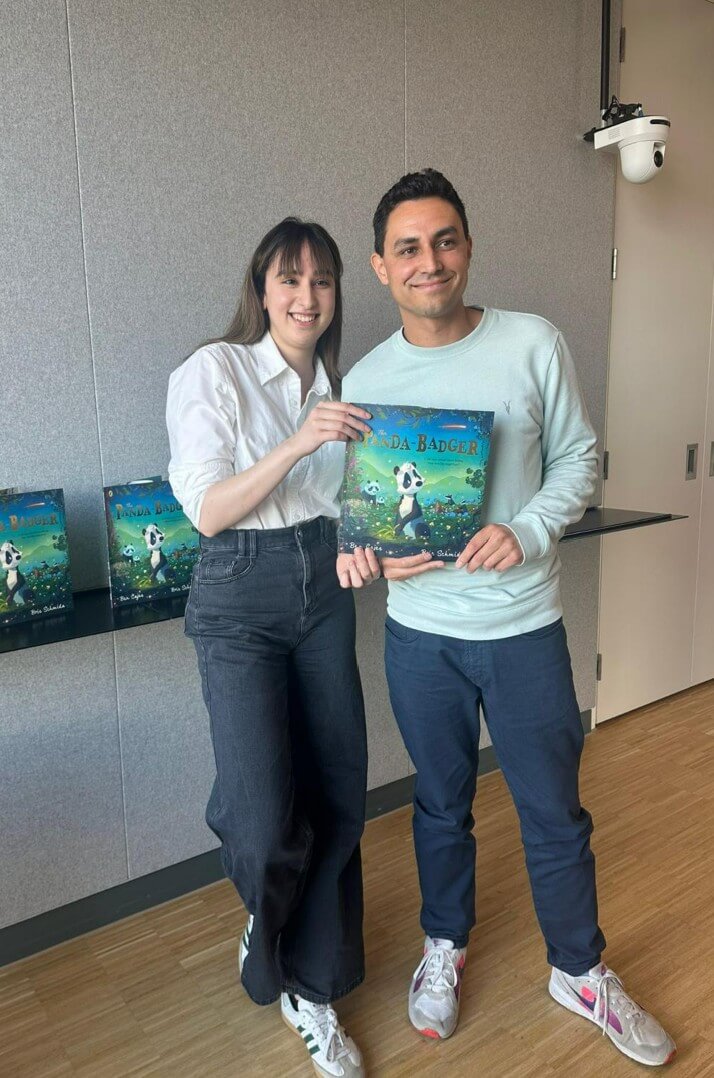
The-Panda Badger by Ben Cajee is out May 7th (Puffin UK)
Purchase your copy HERE

Salina Zaher
Latest posts by Salina Zaher (see all)
- ON STAGE | RETURN OF THE GODZ REVIEW: A WILD BLEND OF MYTHOLOGY, CIRCUS AND COMEDY — June 16, 2026
- BOOK CORNER | FINDING COLOUR AGAIN IN A GREY WORLD: A CONVERSATION WITH ZOULFA KATOUH — June 11, 2026
- I AM HIP-HOP BOOK CORNER | “BEING DIFFERENT DOES NOT MAKE YOU INCOMPLETE” BEN CAJEE OPENS UP ABOUT IDENTITY, LONELINESS AND HOPE IN PANDA BADGER — May 6, 2026
