

 Many of Australia’s tourists and recent migrants from Europe will tell you excitedly about how grateful they are to be in this country. They embrace the laid back ‘Aussie’ attitudes of the people, the bright sun that continually blesses the earth and the iconic beaches that look as perfect as the postcards present them to be. The benefits of living in Australia are undeniable, the wages for many professional jobs are higher than in the US and UK, the minimum wage is relatively high, it is one of the safest countries in the world and any signs of poverty, inequality and unhappiness are not as obvious as in other places. These aspects of the country are continually discussed by the general person who takes a personal pride in being part of such a nation. But these aspects of Australia mask many underlying problems that are incompatible with the mainstream national narrative.
Socially the country is not as welcoming as the media would have you believe. Any international African student will tell you as much. After the wheels of their arriving plane touches the tarmac and they have made it out into the airport, they soon come to realise that the sort of warmth which is extended to the English ‘expatriate’ is not extended to them. Instead, the may come to tangle with feelings of invisibility and marginalisation. Furthermore, if you talk to any Indigenous Australian, they can tell you about the harsh experience of feeling like a foreigner in their own country of birth. The legacy of white supremacy in this country no longer expresses itself in explicit acts of racism but in the fact that minority groups have to create spaces which will provide them with the kind of warmth that is so often withheld from the general public.
The reason for highlighting these issues is not to focus on the problems faced by marginalised groups but to explore the unique perspectives that arise from being a cultural minority. From within the waves of confusion that come with living as a person of colour in Australia, an esoteric understanding of the country can assist in creating a fulfilling, alternative mindset.
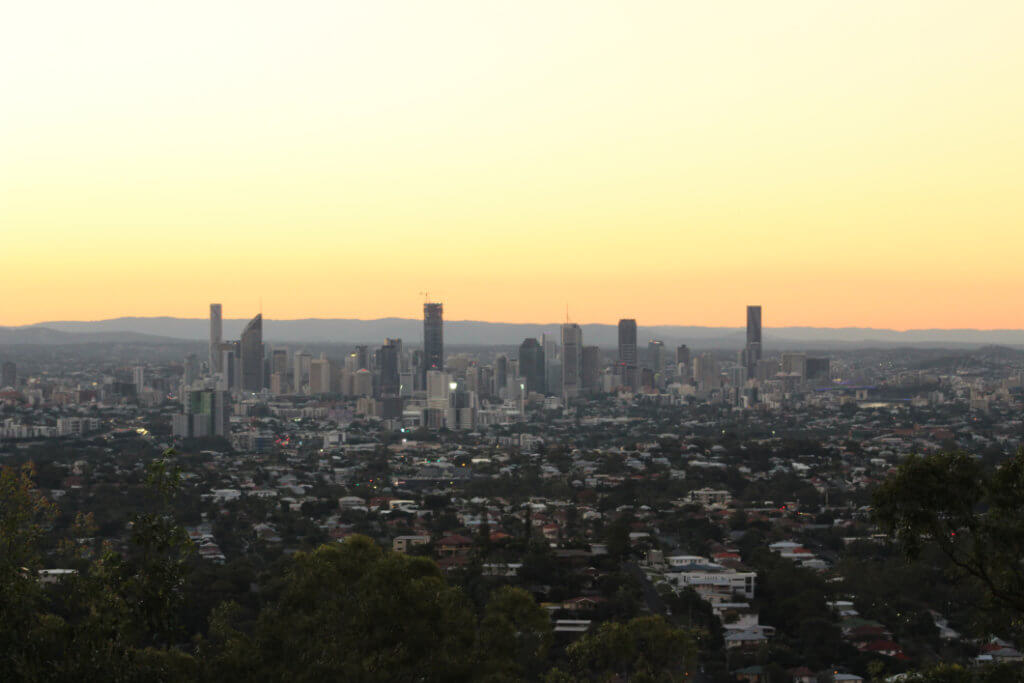
In the first case, it’s important to truly understand (or ‘overstand’ as we Jamaicans say) that this land has been colonised. Despite the undeniable, implicit, European claim to the land, the natural world cannot be contained in such a way. It is far too old and has seen too much. It speaks another language that we can’t truly understand. And in any case, I don’t think it’s voice has an ‘Aussie’ accent. Observed in this way, a connection with the land may bring a sense of peace to those of us who feel alienated by this culture. For example, on one rainy night in the hills of Toowong, I was looking out of my girlfriend’s window and thinking about the pre-colonial world. As I peered out, I imagined how long rain had been touching this land and about how new the present situation must seem to the natural world. Millions of years ago the flora and fauna would have responded to the rain in varying ways, relating to their instincts and natural drives.
Then,with the coming of humans, we can imagine the rain soaked faces and bodies of the indigenous people some tens of thousands of years ago. Back then they would have made sense of such a natural phenomenon by looking to myths and creation stories. For the hundreds of ethnic groups and cultures that made up the indigenous population, the coming of rain would have signified a range of different spiritual and practical ideas. And today, in spite of everything that has happened, the rain continues to fall. It also made me contemplate the far distant future where all these issues like integration, racism and alienation would be the stuff of myths. Even further still, when homo-sapiens have long passed from the scene, the land will continue to be showered by rain.
With regards to the historical aspect of our lives, I’ve found that similarly marginalised groups in Australia can find a sense of consolation in relating their past stories and cultures. Through these interactions, an understanding of the interconnectedness of history and everyday experience may allow for feelings of warmth. For example, the event of European colonisation is a common history for both the indigenous people of the land and the many ethnic minorities that have come to Australia. I remember talking to an indigenous woman once and she referred to a child as a ‘pickaninny’ which reminded me of a similar word in Jamaican patois, ‘pickney’ which has the same meaning. I reasoned that there must have been a similar linguistic, colonial connection. A few years later, my West African friend was speaking pidgin and he also referred to a child with a similar word, ‘pikin’. Looking for further information, I found that the Portuguese ‘pequeno’ (meaning ‘small’) was a possible root for these words. Though this is a small example, it is an indicator of the wider historical similarities between many people of colour in Australia. Many of our collective histories have dealt with displacement, loss of culture and the reconfiguration of post-colonial identities.
On the immediate and personal level though, the understanding smile of a person of colour brings more of a sense of familiarity and connection than any history class can. If you pass through a park in Kuraby in South Brisbane on a Saturday evening, you will find African and Arab families having barbecues as their children play together. The basketball courts and football fields are full of people practising their respective sports. There is a strong sense of community there where the people welcome new faces and are open to talk about their lives. Just listen and you might hear narratives of movement, change and new beginnings. There the youth have become culturally hybrid, mixing their parents culture with American hip-hop influences and Australian vernacular. If you head to Moorooka you can find a number of businesses and restaurants owned by people from a variety of different African backgrounds. Related in their similar experience in Australia, they come to learn about the cultures of one another and work together to build a pan-African atmosphere.

When I go down to Moorooka for my yam and plantain or for my afro hair products, I am reminded of the high roads of Tottenham, Harlesden, Brixton and Hackney in London. I often talk with my friends at the barbers shop about recent events and the word ‘brother’ holds a particular significance in our souls.
A sure way to connect with others with similar struggles is to attend any of the newer creative events in Australia which are concerned with representing hidden voices. In the city centre and surrounding areas, these events allow for a revision of history and help to create spaces for unique expression. At one particular art exhibition, I was able to talk to Aboriginal people of the older generation who talked to me about hope and education. Although we were from different histories, I felt that there was an unspoken connection in culture which placed them as the storytellers and me as a member of the younger generation who could learn from their stories. After speaking with them I felt more connected to the older generations of people of colour in this country. It reminded me of the sorts of relationships that I have with older people in the UK and Jamaica.
Finally, joining groups and societies whose aim is to promote unity is a healthy way to deal with feelings of alienation. Over the course of a semester at the University of Queensland, I have had the pleasure of being part of the African Students Association. We often hold discussions that relate to our lives here and back in our respective homes. We also hold social events which are filled with laughter and music. The society gives us all a sense of belonging as we as African/black students make up one of the smallest demographics of the University. We are often the only African student in our respective classes and therefore have a great feeling of togetherness when we see one another on campus. A simple wave or head nod means all the difference and we find that it seems to wash away those lingering feelings of displacement.

Latest posts by (see all)
- EVENT | PASS THE TORCH FOR TY RETURNS TO BRIXTON FOR ITS SIXTH ANNUAL CELEBRATION — August 13, 2026
- DIASPORA CALLING! REVIEW: LAURYN HILL, ERYKAH BADU AND 35,000 PEOPLE CELEBRATE THE POWER OF BLACK CULTURE — August 13, 2026
- REVIEW | ROOTS PICNIC: A HIP HOP UTOPIA AT CRYSTAL PALACE BOWL — August 13, 2026
