From Harlem’s piano battles to Bronx MCs, Thelonious Monk’s eccentric melodies to MF DOOM’s intricate rhymes, an exploration of the surprising musical kinship between jazz and hip-hop, and the differences that make each an art form in its own right.
There was a time when jazz was considered dangerous music. It encouraged promiscuity, corrupted the young, offended respectable society and was apparently responsible for the impending collapse of civilisation. These days, its devotees are more likely to be accused of owning too many expensive records and boring people at dinner parties. Somewhere along the way, the devil’s music acquired a university degree and a wine subscription. Hip-hop, meanwhile, has spent much of its existence enduring remarkably similar accusations. Too loud, too vulgar, too aggressive, too Black. Apparently, civilisation has been on the verge of collapse for well over a century, and Black musicians keep providing the soundtrack.
As a devoted jazz enthusiast and an equally committed hip-hop obsessive, I’ve long been fascinated by the similarities between these two musical cultures. Not simply their shared musical vocabulary, or the jazz records that have enjoyed second lives through hip-hop sampling, but something more fundamental. The attitude, the swagger, the ingenuity, the competitive spirit and the determination to create something exceptional from circumstances that were often anything but.
Jazz and hip-hop emerged decades apart, in different cities, under different social conditions, yet they seem to speak a remarkably similar cultural language. The more I examine their histories, the more I wonder whether jazz wasn’t, in some respects, hip-hop before hip-hop existed.
Before Jazz Learned to Behave
To understand why, we need to return to a time before jazz became synonymous with sophistication and intellectual refinement. Before it was music to sit quietly and appreciate, it was music to get up and dance to. Emerging around the turn of the twentieth century, particularly in the African American communities of New Orleans, jazz grew from a collision of blues, ragtime, brass-band traditions, spirituals and Caribbean influences. It was music shaped by working musicians, community gatherings, parades, funerals and dance floors, not dreamt up in a conservatoire. Louis Armstrong, Sidney Bechet and Jelly Roll Morton helped transform these traditions into an increasingly sophisticated musical language, one in which personality and improvisation could become as important as the composition itself. The music was joyous, unpredictable and frequently gloriously unruly. It belonged as much to the people dancing as to those performing.
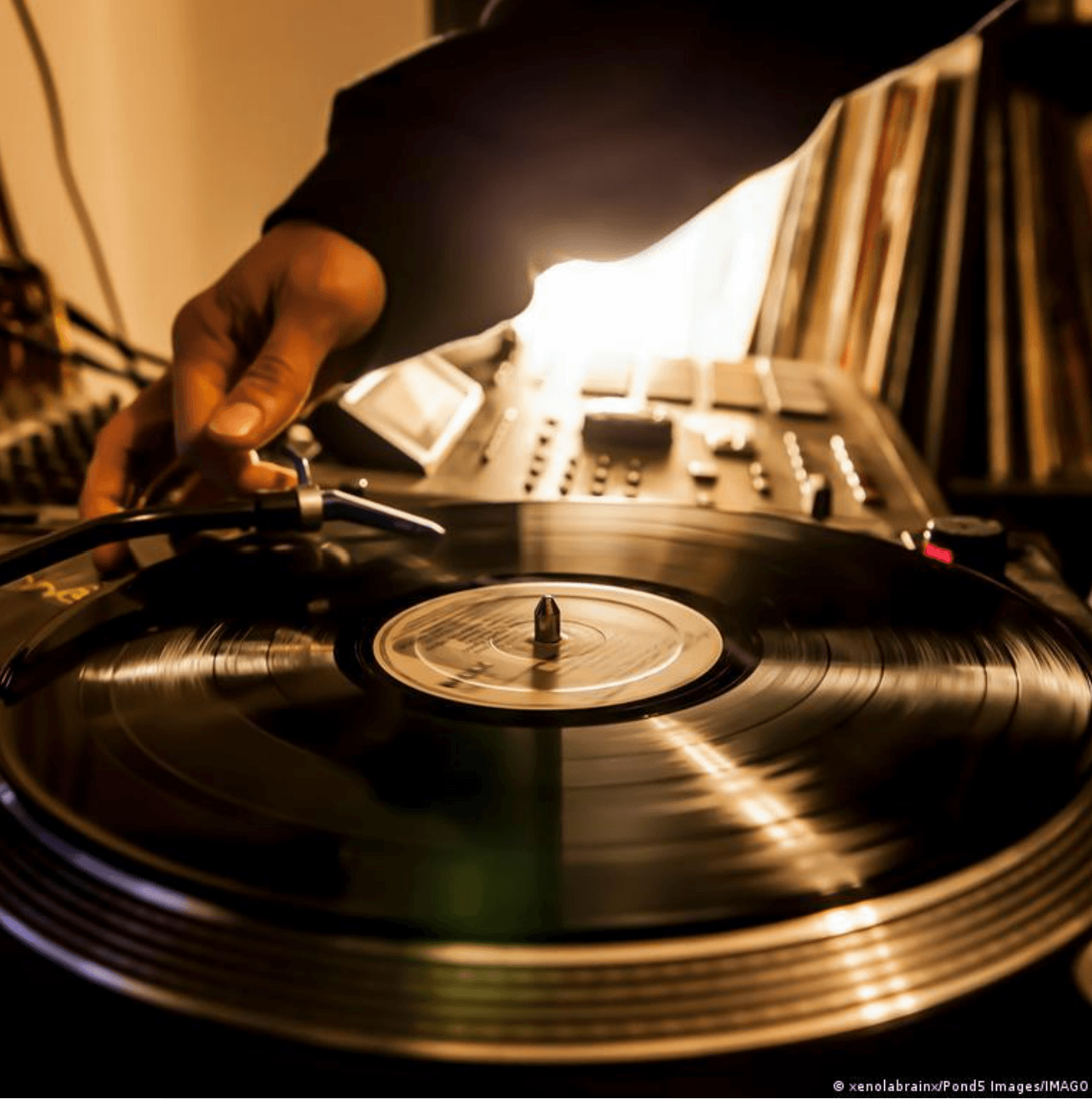
Fast-forward to the Bronx in the 1970s and another musical culture was emerging from its surroundings. Against a backdrop of economic decline, disinvestment and racial inequality, young people developed new artistic possibilities from the resources available to them. DJ Kool Herc extended the instrumental breaks of funk and soul records, allowing dancers to occupy the rhythms for longer. Grandmaster Flash refined turntable techniques, while MCs, dancers and graffiti writers contributed their own disciplines, transforming parties into a wider artistic movement. Like early jazz, hip-hop was fundamentally social music, developed through experimentation, communal participation and a determination to make something original. Nobody needed to explain its cultural significance to the people enjoying it. They were rather busy dancing.
There is, however, an important distinction. Jazz’s foundations involved musicians interacting through instruments, melody, harmony and improvisation. Hip-hop developed around recorded sound, with DJs discovering that existing music could be reconstructed into something new. Its ancestry also extends beyond jazz, through funk, soul, disco, Jamaican sound-system culture and the contributions of Caribbean and Latino communities in New York. It would be historically lazy to suggest that hip-hop simply descended from jazz, as though somebody replaced Charlie Parker’s saxophone with a Technics turntable and called it progress. These were different innovations, responding to different circumstances. But both demonstrated an extraordinary capacity to turn rhythm, personality and imagination into an entirely new musical language.
Naturally, respectable society had opinions. In the 1920s, jazz became the subject of something approaching a moral panic. Religious leaders, educators and social commentators worried about its supposedly corrupting influence on young people, particularly young white people enjoying music associated with Black American culture. Its rhythms were considered provocative, its dances indecent, and its social environment altogether too permissive. The racial anxiety was rarely far beneath the surface. Decades later, hip-hop would find itself confronting comparable hostility.
When N.W.A released Fuck tha Police in 1988, the controversy escalated to the point that the FBI wrote to their record label expressing its objections. By then, jazz had undergone a remarkable transformation in public perception. One generation’s threat to public morality had become another generation’s treasured cultural heritage. Hip-hop, apparently, had inherited the job of frightening the neighbours.
Yet reducing either genre to protest music would be a mistake. Much of early jazz was created for dancing, entertainment and pleasure. Louis Armstrong possessed an infectious sense of humour, while Fats Waller could combine dazzling technical ability with the personality of a man who had arrived at a party determined to enjoy every minute of it. Duke Ellington and Count Basie led orchestras that made sophisticated musical arrangements irresistible to dancers. Similarly, the earliest hip-hop gatherings were not organised as political demonstrations. People wanted to dance, impress one another, enjoy themselves and escape the difficulties of everyday life. The Cold Crush Brothers weren’t delivering policy lectures between verses. The idea that Black music must constantly explain its social importance overlooks something fundamental: joy, celebration and having a good time can be valuable expressions of cultural freedom in their own right.
Cutting Contests and Verbal Combat
There is another striking parallel in the competitive nature of the two cultures. Long before MCs battled for supremacy, Harlem’s stride pianists were participating in fierce musical contests. James P. Johnson, Willie ‘The Lion’ Smith and Fats Waller developed reputations through their technical command, improvisational imagination and ability to outplay their contemporaries. At rent parties, where music helped tenants raise money, a pianist’s reputation could be won or lost at the keyboard. Stride itself required remarkable independence between the hands, the left maintaining a vigorous alternation of bass notes and chords while the right elaborated increasingly ambitious melodic passages. The musical equivalent of rubbing your stomach, patting your head and simultaneously humiliating your opponent. When Kool Moe Dee confronted Busy Bee Starski at Harlem World in 1981, his direct lyrical attack helped redefine battle rap, shifting the emphasis from entertaining a crowd towards demonstrating superiority over another MC. The weapons had changed, but the competitive instinct remained remarkably familiar.
Jazz musicians, it turns out, were boasting long before rappers made braggadocio an art form. Listen to Louis Armstrong’s astonishing opening cadenza on his 1928 recording of West End Blues. Before the ensemble has properly begun, Armstrong announces himself with a technically audacious trumpet passage, its dramatic leaps and cascading phrases demonstrating control, imagination and confidence. Later, he sustains a high note for an almost absurd length of time, as though ordinary human breathing were a limitation he had decided no longer applied to him. Compare that spirit with Rakim’s performances on Follow the Leader, where intricate internal rhymes, controlled pauses and sophisticated rhythmic placement transformed expectations of what an MC could achieve. Armstrong expanded the expressive possibilities of the jazz solo; Rakim helped expand the rhythmic and linguistic possibilities of rap. Neither needed to explicitly announce his genius. The performance made the argument.
Playing Outside the Lines
Perhaps the most fascinating comparison, however, comes with bebop. During the 1940s, musicians including Charlie Parker, Dizzy Gillespie, Thelonious Monk and Kenny Clarke were developing a strikingly different approach to jazz. Parker’s dazzling alto saxophone improvisations featured intricate melodic lines, chromatic passing notes and rapid harmonic movement. Gillespie explored complex harmonies and rhythmic structures, while Monk embraced unusual intervals, unexpected silences and angular compositions that could sound almost deliberately awkward until their internal logic revealed itself. Clarke helped revolutionise jazz drumming by shifting the principal timekeeping responsibility towards the ride cymbal, freeing the bass drum and snare for disruptive accents. Bebop placed enormous emphasis on individual virtuosity, harmonic understanding and the ability to construct sophisticated musical ideas in real time. Listening to these musicians interact, one hears both exceptional individual personalities and a collective understanding of rhythm that allows the music to move with remarkable freedom.
Parker’s 1945 recording of Ko-Ko makes a particularly compelling case for the parallels between jazz virtuosity and lyrical complexity. Built around the harmonic framework of the standard Cherokee, the performance is a breathtaking demonstration of how an artist can take familiar material and radically reimagine it. Parker navigates demanding chord changes at extraordinary speed, decorating melodic lines with chromatic notes, unexpected accents and phrases that seem to tumble over one another before resolving with astonishing precision. A rapper such as Busta Rhymes performs a different kind of rhythmic gymnastics. Listen to Gimme Some More, where rapid-fire syllables and emphatic rhythmic accents create a vocal performance that seems perpetually on the verge of escaping its own momentum. Parker was improvising melodic lines over changing harmonies; Busta’s recorded delivery was carefully constructed around language and rhythm. They weren’t doing the same thing, but both demonstrated how speed becomes interesting only when an artist possesses the control to make every moment count. Anybody can play fast or rap quickly. Making that speed musical is another matter entirely.
Then there is Thelonious Monk, a pianist who seemed to regard the conventional placement of musical notes as a polite suggestion rather than a rule. His melodies stumble, pirouette and occasionally appear to walk straight into the furniture, yet somehow arrive precisely where he intended. I’ve always adored Monk’s refusal to make things unnecessarily comfortable for the listener. His compositions exploit dissonance, silence, displaced accents and melodic shapes that delight in defying expectations. Listen to Brilliant Corners, a composition so structurally and rhythmically demanding that its original recording had to be assembled from multiple incomplete takes after the musicians struggled to complete it satisfactorily. For a hip-hop parallel, I find myself drawn towards MF DOOM, particularly his performance on Accordion from Madvillainy. DOOM’s dense internal rhymes, conversational detours and unusual placement of syllables create the impression of a mind operating according to its own private system. Monk and DOOM approached musical structure through different disciplines, but each possessed an ability to make the unconventional sound utterly natural. Their eccentricities weren’t evidence of technical limitations. They were expressions of artistic control.
It would be a mistake, however, to recount the development of these musical languages exclusively through the accomplishments of men. Mary Lou Williams was a formidable pianist, composer and arranger whose influence extended from the swing era into bebop. Her harmonic imagination helped shape the Kansas City sound, while her New York apartment became a gathering place for younger musicians exploring the possibilities of modern jazz, including Monk, Dizzy Gillespie and Bud Powell. Her 1945 Zodiac Suite, combining jazz improvisation with ambitious compositional structures, provides ample evidence that she was an innovator in her own right, not simply a mentor to more frequently celebrated men. Hip-hop has its own history of women whose contributions were fundamental to the culture’s development. Sha-Rock helped establish the possibilities of early MC performance through the Funky 4 + 1, while Roxanne Shanté’s lyrical combativeness demonstrated that battle rap was hardly an exclusively masculine pursuit. MC Lyte would later bring a distinctive combination of narrative precision, authority and rhythmic command. These women weren’t merely participating in existing musical traditions. They were helping determine what those traditions could become.
The Voice as an Instrument
Of course, instrumentalists do not hold a monopoly on jazz innovation, and this is where I must indulge my considerable weakness for jazz vocalists. I could happily spend an unreasonable amount of time discussing Sarah Vaughan’s harmonic intelligence, Betty Carter’s adventurous phrasing or Dinah Washington’s ability to make a lyric sound like an exquisitely delivered personal insult. Vaughan’s Shulie-a-Bop, recorded in 1954, is an exceptional example of scat improvisation, with the singer treating her voice as an instrument, constructing melodic phrases and navigating a blues framework without conventional lyrics. Ella Fitzgerald achieved similar feats through her formidable scat performances, developing spontaneous musical ideas with the sophistication of a virtuoso instrumentalist. To an untrained ear, scat can sound like somebody making up nonsense words. To a more attentive listener, the rhythmic invention, harmonic awareness and melodic development can be breathtaking. Rather like listening to a technically gifted MC whose internal rhyme schemes and shifting cadences reveal themselves over repeated plays.
The comparison becomes particularly interesting when we consider the difference between improvisation and composition. A jazz vocalist inventing melodic phrases in real time is working within a different creative process from a rapper delivering a carefully written verse. Hip-hop has its own improvisational tradition, from off-the-top cyphers to competitive battles, although the word freestyle does not necessarily mean that every line is invented on the spot. Consider Black Thought’s celebrated ten-minute Funkmaster Flex performance in 2017, a masterclass in sustained rhythmic control, intricate rhyme structures and associative imagery. Thought subsequently explained that he committed written bars to memory, sometimes rearranging them for a particular performance. The distinction matters. Spontaneously constructing a jazz solo and delivering a previously composed rap verse require different kinds of musicianship, even when both demonstrate formidable rhythmic imagination. Understanding those differences makes the comparison more interesting, not less.
There are subtler connections, too. Billie Holiday’s genius frequently lay in what she chose not to sing, or precisely when she chose to sing it. Her phrasing could drift behind the expected beat, allowing a lyric to acquire emotional weight through restraint. Listen to her performance of Fine and Mellow on the 1957 television programme The Sound of Jazz, particularly the conversational intimacy of her delivery and the way it interacts with the instrumentalists around her. Now consider the languid, almost conversational delivery of Snoop Dogg on Gin and Juice. I am not suggesting that Lady Day would have been particularly impressed by Snoop’s recreational activities, nor that the two performances are equivalent in emotional purpose. What interests me is their shared understanding that rhythm need not be attacked head-on. Sometimes the most commanding performer is the one who appears to be in absolutely no hurry whatsoever. Sophistication isn’t always about how many notes or syllables you can squeeze into a bar. Sometimes it is about having the confidence to leave space.
The Beautiful, Dangerous Myth of the Tortured Genius
It is tempting, when discussing musicians whose performances possess such emotional depth, to go searching for explanations in their private lives. Jazz has developed an unfortunate mythology around the suffering genius, a romantic image of extraordinary talent accompanied by personal destruction. Charlie Parker died aged just 34 after years of serious health problems and struggles with heroin and alcohol. Dinah Washington, whose extraordinary ability to locate the emotional centre of a song remains one of the great pleasures of jazz singing, died at 39 from an accidental overdose involving the barbiturates secobarbital and amobarbital. Hip-hop has experienced its own devastating losses, including Mac Miller, who died aged 26 from accidental mixed drug toxicity. It is easy to construct a narrative in which suffering becomes some necessary ingredient of musical brilliance, but I find that idea both troubling and rather insulting to the artists themselves. Washington’s ability to make heartbreak sound almost tangible did not originate in a prescription bottle, any more than Parker’s harmonic imagination was a gift from heroin. Their musicianship came from talent, discipline, experience and an extraordinary understanding of their craft. Pain may influence what an artist chooses to express, but it should never become the price we expect them to pay for expressing it.
Borrowed Sounds, New Conversations
And speaking of the relationship between feeling and musical expression, we cannot discuss rhythm without arriving at J Dilla, one of the most compelling bridges between jazz sensibility and hip-hop production. Traditional drum programming often encourages mathematical precision, with individual sounds aligned neatly to an electronic grid. Dilla understood that rhythm could be manipulated far more imaginatively. His 1995 production of The Pharcyde’s Runnin’ also offers a wonderful example of his ear for unexpected source material. The track draws its distinctive guitar figure from Saudade Vem Correndo, a 1963 recording by saxophonist Stan Getz and Brazilian guitarist Luiz Bonfá, while incorporating elements of Woody Herman and Run-DMC. It’s an ingenious musical collage, assembled from recordings that might otherwise have remained comfortably separated by genre and generation. Elsewhere in Dilla’s work, drums could sit deliberately ahead of or behind expected positions, with straight and swung rhythmic feels pulling against one another to create a groove that was loose without being careless. His approach is sometimes simplified to the idea that he merely switched off quantisation, but that misunderstands the care and sophistication of his programming. Like the great jazz drummers who preceded him, Dilla understood that a beat isn’t simply somewhere to place a sound. It’s somewhere to create a conversation. I suspect Thelonious Monk would have found him rather interesting.
When the Music Speaks for Itself
Both traditions also developed considerable capacities for political expression, although neither should be reduced exclusively to that function. In 1939, Billie Holiday’s performance of Strange Fruit, written by Abel Meeropol in response to the lynching of African Americans, demonstrated the devastating power of musical protest. Charles Mingus’s Fables of Faubus attacked Arkansas governor Orval Faubus for his opposition to school integration, while John Coltrane’s Alabama, inspired by the 1963 Birmingham church bombing, communicated grief and outrage without requiring a single spoken word. Nina Simone, whose formidable musical vocabulary extended across jazz, blues, classical and other traditions, took a strikingly different approach with Mississippi Goddam. Its almost jaunty, show-tune-like accompaniment provides a deliberately unsettling contrast to the fury of its subject matter.
There is something wickedly effective about delivering an indictment of American racism through music that initially sounds suitable for a Broadway revue. The audience might have arrived expecting entertainment, but Simone had other plans.
Hip-hop would develop its own political vocabulary through Public Enemy, N.W.A, Queen Latifah, Kendrick Lamar and countless others. Public Enemy’s Fight the Power is particularly interesting alongside Simone’s work, not simply because of the political content but because of the way the music reinforces its message. Where Simone employed the tension between upbeat musical form and furious lyrical content, the Bomb Squad’s dense production surrounded Chuck D with interlocking samples, abrasive textures, vocal interruptions and rhythmic aggression. Coltrane could express collective mourning through instrumental form; Public Enemy could confront listeners with explicit political argument and make the production itself sound confrontational. Different artistic languages, different methods, and sometimes similar moral urgency.
When Jazz Met Hip-Hop
The relationship between jazz and hip-hop eventually became more than philosophical.
A Tribe Called Quest understood the connection particularly well. On 1991’s Excursions, Q‑Tip recalls his father’s observation that hip-hop reminded him of bebop, before acknowledging the cyclical nature of musical culture.
The production reinforces the idea, reshaping material from Art Blakey and the Jazz Messengers’ A Chant for Bu into a hip-hop groove. Elsewhere on The Low End Theory, legendary bassist Ron Carter appears on Verses from the Abstract, bringing the sensibility of a musician who had worked with Miles Davis into an entirely different musical environment. Gang Starr collaborated with Branford Marsalis on Jazz Thing, while Guru’s Jazzmatazz project brought hip-hop into direct conversation with musicians including Donald Byrd and Roy Ayers. Nas’s relationship with jazz was even more personal: his father, the cornetist Olu Dara, contributes the haunting instrumental outro to Life’s a Bitch on Illmatic. These weren’t simply opportunistic encounters with fashionable musical textures. They demonstrated a living conversation between generations.
And jazz musicians weren’t necessarily passive participants in this exchange. In the final years of his life, Miles Davis developed an interest in hip-hop and worked with producer Easy Mo Bee on what became the posthumously released Doo-Bop in 1992. The results divided critics, some hearing an exciting extension of Davis’s restless experimentation and others finding the marriage of trumpet improvisation and programmed beats less convincing. Personally, I find the willingness to experiment almost as interesting as the finished record. Davis had already helped reshape jazz through cool jazz, hard bop, modal experimentation and electric fusion. By the time hip-hop arrived, the man had spent decades demonstrating a profound lack of interest in remaining musically stationary. Whatever one’s opinion of Doo-Bop, it is difficult to accuse Miles Davis of believing that artistic credibility required behaving as though the calendar had stopped in 1959.
Genius Without the Halo
Admiring musical innovators, of course, becomes considerably more complicated when we examine the people behind their achievements. Davis’s extraordinary musical legacy exists alongside a history of violence towards his former wife, the dancer Frances Taylor. Charles Mingus, another towering figure in jazz history, assaulted trombonist Jimmy Knepper in 1962, breaking a tooth and damaging the musician’s ability to play. Hip-hop has its own difficult reckonings, not least with Kanye West, whose influence on modern production remains substantial despite his repeated antisemitic statements and promotion of Nazi imagery, for which he publicly apologised in January 2026. There is a particularly uncomfortable irony in West’s 2013 track Blood on the Leaves, which samples Nina Simone’s recording of Strange Fruit, originally a protest against the lynching of Black Americans, and transforms it into part of a song concerned with fame and a troubled relationship. Its audacity is undeniable, but whether the recontextualisation enriches or diminishes the original meaning is another matter.
These musicians’ actions were not equivalent, and musical accomplishment does not grant anybody exemption from moral scrutiny. But both genres leave us confronting an awkward truth: artistic brilliance and personal virtue are not necessarily travelling companions. Acknowledging one need not require excusing the absence of the other.
Fortunately, the conversation between jazz and hip-hop is not confined to the records gathering dust in an enthusiast’s collection. Kendrick Lamar’s To Pimp a Butterfly brought together musicians including Terrace Martin, Kamasi Washington and Robert Glasper, creating an ambitious work drawing upon jazz, funk, soul and hip-hop without treating any one tradition as a decorative accessory. More recently, Little Simz’s 2025 album Lotus moved confidently between jazz, funk, punk and soul, with musicians including Yussef Dayes contributing to its expansive musical landscape. The title track, featuring Dayes and Michael Kiwanuka, is a particularly satisfying example of contemporary rap engaging with the rhythmic and instrumental possibilities of live musicianship. Simz’s measured but assured delivery sits within an arrangement that seems to expand and contract around her, demonstrating that sophisticated musical accompaniment need not diminish a rapper’s individuality.
Across the Atlantic, Doechii’s December 2024 NPR Tiny Desk performance offered a rather glorious demonstration of what happens when contemporary rap encounters a live jazz ensemble. Backed by an all-female band, complete with horns and a rhythm section, she reimagined BOOM BAP through a jazz arrangement while retaining the original’s lyrical confidence and rhythmic dexterity. There is an infectious pleasure in watching a rapper command musicians whose playing responds to the shifting energy of the performance. The result feels less like an exercise in genre fusion than a reminder of how naturally these musical languages can communicate. One suspects that the great jazz improvisers would have recognised the pleasure of watching an artist take complete command of a room.
Back in Britain, jazz has developed its own relationship with hip-hop, grime, broken beat and the wider musical culture of Black Britain. Artists such as Yussef Dayes, Moses Boyd and Ezra Collective have demonstrated how jazz’s rhythmic and improvisational traditions can flourish through contemporary influences without surrendering their identities. Perhaps nobody embodies the relationship more directly than Birmingham’s Soweto Kinch, an accomplished alto saxophonist and MC who operates comfortably within both disciplines. In a 2016 interview with I Am Hip-Hop, Kinch described his two biggest musical influences as jazz and hip-hop, explaining that “you can find me hitting jazz jam sessions one day, and in a Dont Flop Battle the next!” There is something wonderfully appropriate about a musician moving from improvising over chord changes to testing his lyrical abilities against another MC. In the same interview, Kinch acknowledged the influence of The Pharcyde, A Tribe Called Quest and De La Soul, alongside British figures including Linton Kwesi Johnson, Steve Williamson and Courtney Pine. He also discussed his Flyover Show in Birmingham, which celebrated artistic communities in areas frequently overlooked by the mainstream music industry. Kinch’s career is a useful reminder that jazz and hip-hop are not simply historical relatives whose relationship ended with a few samples in the 1990s. For some musicians, the connection is part of their everyday artistic vocabulary. They don’t have to choose a side.
Who Gets to Call It Art?
The growing institutional recognition of both genres offers another interesting point of comparison. Jazz, now firmly established within music education, is taught in universities, preserved in archives and celebrated in concert halls. Wynton Marsalis won the Pulitzer Prize for Music in 1997 for Blood on the Fields, while in 2018 Kendrick Lamar received the same honour for DAMN., becoming the first hip-hop artist to win the prize. Such recognition matters, particularly for musical cultures whose creative contributions have not always been afforded the seriousness they deserve. But it also creates an interesting tension between preserving a musical tradition and allowing it to develop. A museum can explain why a particular recording matters; it cannot determine what the next great record should sound like.
There is an uncomfortable irony in the way some listeners use jazz as a benchmark of sophistication against which hip-hop is judged. The suggestion that an MC somehow becomes more artistically legitimate by performing over a double bass and a few extended chords rather than a brutally effective drum machine betrays a peculiar misunderstanding of both genres. Jazz does not possess a monopoly on musical intelligence, and hip-hop does not require a saxophone to become sophisticated. Rakim’s rhythmic phrasing, DOOM’s intricate rhyme patterns and Dilla’s manipulation of time all demonstrate musical imagination of a particularly high order. I say this as somebody who is perfectly capable of becoming insufferable on the subject of Sarah Vaughan’s vocal control. Musical snobbery is an entertaining indulgence until it starts convincing us that our preferences constitute a universal measure of artistic merit.
Of course, neither genre can be reduced to one particular philosophy or sound. Jazz contains the exuberance of Armstrong, the orchestral sophistication of Ellington, the harmonic adventures of Parker, the spirituality of Coltrane and the rhythmic experimentation of contemporary artists.
Hip-hop’s landscape is equally varied, accommodating the intricate lyricism of Rakim, the storytelling of Nas, the abstract constructions of DOOM and the ambitious musical arrangements of Kendrick Lamar. Their histories are not identical, nor should they be. Jazz’s emphasis on spontaneous interaction between musicians differs from hip-hop’s extraordinary capacity to manipulate recorded sound, although neither tradition is confined to a single method. The most interesting artistic possibilities often emerge where these approaches meet.
Perhaps, then, the more interesting question is not whether jazz was yesterday’s hip-hop, but whether hip-hop is becoming tomorrow’s jazz. Will future generations study Rakim’s rhythmic complexity with the reverence currently reserved for Charlie Parker? Will Kendrick’s recordings become essential listening in conservatoires? Will somebody eventually pay an offensive amount of money for an original pressing of Illmatic, then spend an entire dinner party explaining why it sounds better than the reissue?
Actually, that last one probably already happens.
So was jazz really hip-hop before hip-hop existed? Not literally, and it would do both cultures a disservice to pretend otherwise. Their histories are too complex, their musical traditions too distinctive, and the people responsible for creating them deserve better than an overly convenient comparison. But listen to Armstrong announcing himself on West End Blues, Monk rearranging our expectations on Brilliant Corners, Rakim finding previously unexplored spaces within a bar, or DOOM constructing rhymes that appear to obey an entirely private set of rules. They are not making the same music. They are demonstrating a similar understanding of what musical individuality can achieve.
And if that isn’t a family resemblance, I’m not entirely sure what is.

Micky Roots
Latest posts by Micky Roots (see all)
- OPINION PIECE | BEEF — November 17, 2026
- OPINION PIECE | FROM BEBOP TO BOOM BAP: JAZZ AND HIP-HOP’S FAMILY RESEMBLANCE — November 17, 2026
- OPINION PIECE | KEEPING HIP-HOP REAL, KEEPING HIP-HOP STILL — November 13, 2026
