Sampling is more than borrowing somebody else’s melody. It’s musical resurrection, cultural rebellion and an extraordinary act of artistic alchemy. But when an old recording finds a new life, who owns its soul?
Somewhere in a second-hand record shop, buried between a scratched Bessie Smith compilation and an album by a jazz-funk collective whose members appear to have dressed exclusively in curtains, there’s a sound that could change somebody’s life. Perhaps it’s three seconds of piano. A drum break halfway through an otherwise unremarkable soul record. A singer catching her breath between phrases. Something the original musicians barely considered worth noticing. To most people, it’s an insignificant moment in a forgotten recording. To the right hip-hop producer, it’s the beginning of a masterpiece.
This, to me, is the peculiar genius of sampling. It takes something that already exists and asks an almost mischievous question: what else could this be? A romantic ballad becomes the soundtrack to urban paranoia. A piece of polite jazz becomes threatening. A melancholy soul vocal becomes euphoric. A perfectly respectable seventies recording suddenly finds itself accompanying a man explaining why he is considerably better at rapping than everybody else.
It’s cultural vandalism of the most magnificent kind. Or, depending on your perspective, theft with a drum machine.
But there’s something else happening here, something considerably more mysterious than the rearrangement of musical notes. When a musician creates a piece of music, an intimate transaction begins between the artist and whoever eventually hears it. The artist has an intention, an emotion, perhaps a particular memory or experience they hope to communicate. The listener arrives carrying an entirely different collection of experiences and interprets the music through those. Somewhere between the two, meaning is created.
But what happens when a third person enters that relationship, takes the original recording apart and presents it to an entirely new audience? Is the resulting work a conversation between artists? An interruption? A collaboration conducted without one participant’s knowledge? And if a sample can completely alter the emotional meaning of a recording, where did that meaning reside in the first place?
Before the sampler, there was the break
To understand sampling, we need to return to the Bronx in the 1970s, when hip-hop was something experienced at parties rather than purchased on records. DJs noticed that certain instrumental passages generated particularly enthusiastic responses from dancers. Not necessarily the chorus. Not the singer’s grand emotional climax. Often it was the break, when the arrangement stripped back and the rhythm took centre stage. DJ Kool Herc developed the practice of extending those breaks using two turntables, keeping the most exciting sections playing for longer.
Think about the audacity of that. Here was a young DJ essentially informing the original musicians that they’d arranged their music incorrectly. You might have intended that drum break to last eight seconds, but the people on this dancefloor would prefer another five minutes, thank you very much.
This was not yet digital sampling. But the underlying philosophy was there: a recording didn’t have to remain obedient to the intentions of its creator. The Incredible Bongo Band’s Apache became an essential breakbeat. James Brown’s Funky Drummer, propelled by Clyde Stubblefield’s extraordinary drumming, would become one of recorded music’s most extensively borrowed rhythmic resources. And when rap began finding commercial success, this instinct for musical repurposing followed it into the studio.
The Sugarhill Gang’s Rapper’s Delight famously built upon Chic’s Good Times. Technically, studio musicians replayed the groove rather than sampling the original recording, but the principle was unmistakable. Take something that already exists. Change its function. Give it a new audience. The musical equivalent of discovering that the bricks from an old church could be used to build a nightclub.
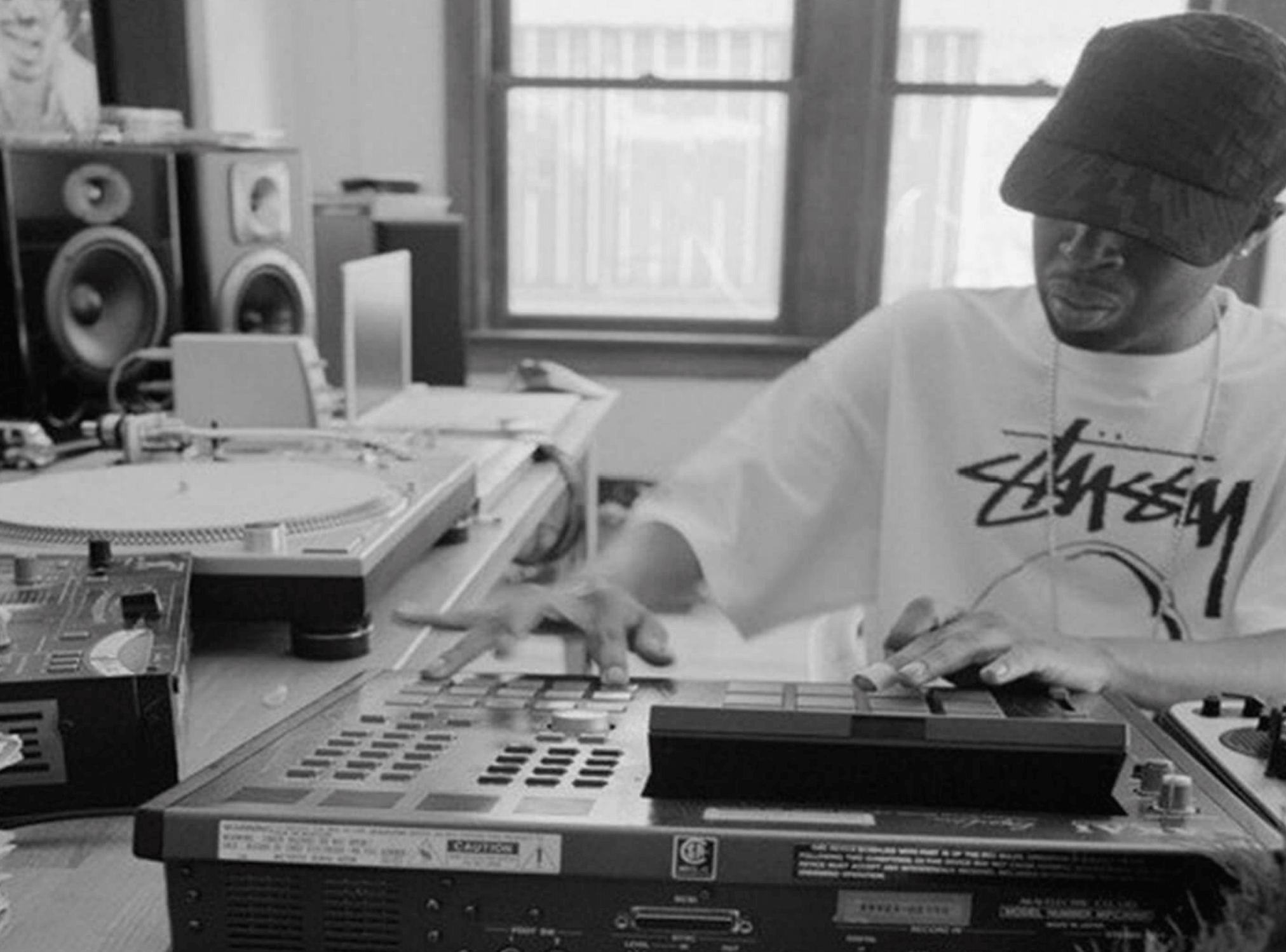
As samplers such as the E‑mu SP-1200 and Akai MPC became central to production, the possibilities multiplied. Producers could capture fragments, alter their pitch, isolate syllables and reconstruct entire arrangements from existing recordings. Imagine handing somebody the entire history of recorded music, a very sharp pair of scissors and absolutely no obligation to put anything back where they found it.
Naturally, hip-hop went completely berserk.
The magnificent art of musical mischief
By the late eighties, sampling had become something far more sophisticated than looping a familiar groove. De La Soul’s 3 Feet High and Rising treated recorded music as an enormous playground, constructing strange, psychedelic environments from disparate musical fragments. The Beastie Boys and the Dust Brothers took the approach to glorious extremes on Paul’s Boutique. Funk, rock, soul, disco and fragments of other recordings collided in arrangements so densely populated they sounded like several decades of musical history having an argument in a lift.
Public Enemy’s production team, the Bomb Squad, used sampling to create something far more confrontational. Their layers of abrasive sound, rhythm and musical quotation produced a sense of urgency that conventional instrumentation might have struggled to replicate. Where De La Soul were rearranging the furniture, Public Enemy sounded as though they were demolishing the building.
These producers weren’t simply borrowing music. They were creating new relationships between sounds that had never previously occupied the same space. And those relationships produced meanings that couldn’t have existed in either source independently. Which brings us to something I find endlessly fascinating about sampling. The same musical phrase can express entirely different emotions depending on where it appears.
When a love song becomes a threat
Listen to the Charmels’ 1967 recording As Long as I’ve Got You. It’s a beautiful piece of soul music. The piano carries a delicate, almost vulnerable quality, surrounded by an arrangement that gives it warmth and emotional intimacy. Then listen to Wu-Tang Clan’s C.R.E.A.M. RZA takes that piano figure and places it inside an entirely different musical universe.
Suddenly, the tenderness sounds haunted.
The melody hasn’t acquired a new set of notes. The original musicians haven’t travelled through time and reconsidered their performance. Yet something fundamental has changed. The notes that once accompanied a romantic declaration now underpin stories of hardship, money, imprisonment and survival.
Here’s where the philosophical implications become irresistible. Did RZA change the meaning of that music, or reveal an emotional possibility that had always existed within it? Was the darkness present in the original recording, waiting for somebody to recognise it? And what would a member of the Charmels hear if they encountered their own performance through Wu-Tang’s interpretation?
There’s another layer to this. For somebody discovering the Charmels through their love of Wu-Tang, the experience happens in reverse. They already know the piano as something ominous. They associate it with Raekwon, Inspectah Deck, Method Man and the grimy atmosphere of early nineties New York. Then they hear the original. Suddenly, a recording made in 1967 can sound like a reference to something that wouldn’t exist until 1993.
The past appears to be borrowing from the future. What does that do to our understanding of musical history? And when we hear the original after knowing the sample, are we even capable of hearing it as its first audience did?
J Dilla and the ghost inside the machine
If RZA demonstrated how sampling could change a piece of music’s emotional atmosphere, J Dilla showed how completely it could alter its physical identity. Take Don’t Cry, from his extraordinary instrumental album Donuts. Its central material comes from the Escorts’ I Can’t Stand (To See You Cry). Dilla begins by letting us hear something of the original recording’s soulful character. Then he dismantles it.
Tiny fragments are isolated and rearranged into a rhythm that seems to stumble, hesitate, recover and propel itself forward. The resulting groove has a strangely human quality. It breathes. It falters. It appears almost to possess a nervous system.
This is the kind of production that makes the accusation that sampling isn’t real musicianship sound spectacularly unimaginative. The achievement isn’t finding a record that already sounds good. It’s hearing within that record an entirely different composition.
And Donuts adds another dimension to the experience because Dilla created much of the album while seriously ill and died shortly after its release. Knowing that history inevitably changes the way many listeners encounter its music. Passages that might otherwise sound playful become melancholy. Repetition can acquire the quality of reflection. Musical fragments can feel like memories being examined, dismantled and briefly brought back to life.
But how much of that meaning is actually contained within the music? How much are we bringing to it because we know what happened to its creator? And does the distinction matter when the emotional response is entirely real?
When the sample becomes another character
There’s a particularly ingenious example of this in British rapper Bashy’s 4 O’Clock, produced by Naughty Boy. The track samples Beverley Craven’s 1990 ballad Promise Me, originally a tender, melancholy reflection on romantic intimacy and separation. Bashy takes its late-night imagery and gives it a rather less romantic interpretation: a chaotic, alcohol-fuelled evening followed by the dawning realisation that he’s woken up somewhere he probably shouldn’t be.
On first listen, the construction sounds almost clumsy. Bashy’s delivery is conversational, frequently interrupted by digressions, half-finished thoughts and moments of apparent confusion. His words seem to tumble over the borrowed vocal rather than settle comfortably around it. But listen more closely. What initially resembles rhythmic disorder reveals itself as something considerably more deliberate.
Bashy’s vocal performance operates in counterpoint to Craven’s, with his spoken observations, interruptions and additions weaving around the existing phrases. The sampled vocal becomes more than a melodic hook: it functions almost as a second narrator, providing temporal markers and emotional commentary on Bashy’s increasingly disastrous recollection.
The apparent awkwardness serves the storytelling. His fragmented delivery mirrors the disorientation of the character, while the recurring sample provides continuity and structure. What sounds spontaneous is held together by a carefully managed relationship between two distinct voices. There’s a wonderfully theatrical quality to it. Craven’s wistful romanticism is repeatedly interrupted by the considerably less poetic realities of a hungover North West Londoner.
The same four o’clock that signifies intimacy and reluctant separation in one recording becomes the hour of embarrassment, regret and logistical panic in another. And perhaps the most interesting transformation isn’t musical at all. By interweaving his own words with Craven’s performance, Bashy makes her voice seem to participate in a story she never intended to tell.
It’s not simply sampling as accompaniment. It’s sampling as dialogue, with a performer from 1990 becoming an unwitting character in a narrative created nearly two decades later. The voices inhabit the same recording, apparently responding to the same events, despite originating in entirely different artistic worlds. Which raises a rather lovely question. When a producer makes somebody else’s voice appear to respond to a new story, who is actually doing the storytelling?
The listener is the third artist
We tend to describe music as a transaction between two people. The musician creates something. The audience receives it. But that seems a rather simplistic description of what actually happens.
Consider a song you associate with somebody you loved. Perhaps you heard it repeatedly in childhood. Perhaps it played during a particular relationship. Perhaps it was simply present during a moment that subsequently acquired enormous significance. To its creator, the song might have been about something entirely different. To another listener, it might be entirely meaningless. To you, it contains a piece of your life.
The musician didn’t put that memory there. You did. And yet the music now carries it.
Sampling makes this strange process of meaning-making even more complicated. Imagine a soul record that originally accompanied somebody’s first dance at their wedding. Decades later, a producer samples the same recording and transforms it into the foundation of a song about betrayal. A teenager hears the new version and associates it with a difficult period of their life. Years later, that teenager hears the original at a family gathering.
Three different emotional histories now occupy the same piece of music. The original performers had no knowledge of the future producer. The producer had no knowledge of the teenager. The teenager might never discover the original recording at all. Yet they are connected through a sequence of sounds.
Who, then, is responsible for the emotional meaning of the music? The person who composed it? The person who transformed it? Or the person whose life gave it significance?
Perhaps there’s a fourth participant: time itself. A recording that once sounded celebratory can become unbearably sad after the death of somebody associated with it. A song you hated at fifteen might become comforting at forty. When we revisit music, are we actually hearing the same thing? Or are we listening to ourselves, as we used to be?
The politics of musical resurrection
Of course, it would be rather indulgent to spend the entire discussion contemplating the metaphysical properties of a drum loop while ignoring the very real people who created it. Because sampling’s extraordinary artistic achievements exist alongside some uncomfortable economic realities.
Hip-hop emerged from communities that were frequently denied access to the resources and institutions that shaped the commercial music industry. Its pioneers developed new creative practices using available technology, existing records and extraordinary ingenuity. There is something profoundly powerful about that history. Communities excluded from traditional forms of cultural production found ways to create their own. Turntables became instruments. Records became raw materials. An existing musical catalogue became a foundation for entirely new forms of expression.
But there’s an uncomfortable complication. Much of the soul, funk and jazz that supplied hip-hop’s early vocabulary had itself been created by Black musicians navigating an industry with a long history of unequal power and financial exploitation. And the people whose recordings provided the raw material weren’t necessarily the people who owned the rights.
Clyde Stubblefield offers perhaps the most painful example. His iconic drum break on James Brown’s Funky Drummer became a foundational element of countless recordings. But Stubblefield wasn’t the credited songwriter or copyright owner, and he didn’t receive the sampling royalties that someone unfamiliar with the music business might reasonably assume were due to him.
Think about that. A musician performs something so extraordinary that it helps shape the sound of an entirely different generation. His playing becomes immortal. His bank account remains rather less transformed.
There is something unsettling about the idea that a piece of somebody’s creative identity can circulate endlessly while the person responsible receives relatively little financial benefit. And yet the situation becomes even more complicated when we examine the other side of the sampling relationship.
A Tribe Called Quest built Can I Kick It? around elements of Lou Reed’s Walk on the Wild Side. The bassline, originally performed by Herbie Flowers, becomes part of something entirely different in Tribe’s hands: warm, conversational, relaxed and full of communal optimism. Yet Phife Dawg later explained that the group’s arrangement with Reed meant they received no royalties from the track.
So here is another strange musical economy. A group creates a record that becomes a defining part of hip-hop history, yet the financial rights to its success are dominated by the owner of the earlier composition. And even within the original recording, the distinction between the person who wrote the song and the musician who performed its most recognisable element complicates the picture further.
Who owns a sound? Is ownership a question of composition, performance, legal contract or cultural significance? And when those things belong to different people, whose claim should matter most?
When homage becomes extraction
Sampling is frequently celebrated for introducing audiences to artists they might otherwise never have discovered. And there is genuine beauty in that. A forgotten soul recording finds a new generation of listeners. An obscure jazz instrumental becomes an object of fascination. Musicians who might have disappeared into the footnotes of popular culture find their work celebrated decades later.
But celebration and compensation are not the same thing. Nor are rediscovery and restitution.
There’s a racial dimension here that deserves more attention than it often receives. Popular music has repeatedly seen Black creative innovations transformed into enormous commercial opportunities, with the resulting rewards distributed unevenly. Sampling can be a beautiful act of cultural continuity within Black music. It can also raise uncomfortable questions about who has the power to borrow, profit and claim ownership.
But the relationship between cultural preservation and exploitation is rarely straightforward. Hip-hop has long drawn upon the extraordinary musical inheritance of soul, funk, jazz and reggae, often introducing forgotten recordings to audiences who might never otherwise have encountered them. Yet those recordings exist within an industry whose history of unequal ownership and compensation cannot simply be ignored.
The artist who created a recording may not own its rights. The musician responsible for its most recognisable passage may have no financial claim over its subsequent success. And the producer who transforms it into something entirely new may find themselves negotiating with a corporation rather than the person whose creativity inspired them.
A sample can be an act of admiration, an extraordinary artistic reinvention and a commercially lucrative transaction, sometimes all at once. But when the people who create the music and the people who profit from it aren’t necessarily the same, whose interests does the system really serve? And when an artist’s work becomes part of another generation’s cultural identity, who gets to claim its legacy?
Then the lawyers arrived
In 1991, Gilbert O’Sullivan’s successful lawsuit over Biz Markie’s unauthorised sampling of Alone Again (Naturally) became a landmark moment in hip-hop’s relationship with copyright law. The case didn’t invent music copyright, nor did it single-handedly end creative sampling. But it helped establish a legal and commercial climate in which unauthorised borrowing carried increasingly serious risks.
The elaborate sample collages of the late eighties became more difficult and expensive to reproduce. A producer might hear extraordinary possibilities in an obscure recording, only to discover that obtaining permission would cost more than the entire budget of the new album. Or that permission simply wouldn’t be granted.
The sampler remained capable of practically limitless artistic imagination. The legal paperwork was rather less adventurous.
But consider the strange philosophical implication of requiring permission to reinterpret somebody else’s work. A novelist can describe the emotional effect of listening to a song. A painter can create work influenced by another painter. Musicians can draw upon established musical conventions. Yet reproducing a few seconds of an actual recording can involve an entirely different set of legal obligations.
What makes the recorded sound itself such a powerful object of ownership? And if a sample has been altered beyond recognition, is the new artist borrowing an existing work or creating a fundamentally different one from its remains? How many masterpieces have never existed because the necessary clearance proved impossible? And how many exploitative uses of other people’s work have been prevented by precisely those same legal protections?
The difference between genius and daylight robbery
Of course, there’s another side to this debate, and it’s considerably less philosophical. Sometimes a sample is just lazy.
MC Hammer’s U Can’t Touch This leans so heavily on Rick James’s Super Freak that the original groove deserves its own dressing room. Vanilla Ice’s Ice Ice Baby built its identity around the unmistakable bassline from Queen and David Bowie’s Under Pressure. And Puff Daddy and Faith Evans’s I’ll Be Missing You repurposed the Police’s Every Breath You Take into a tribute to the Notorious B.I.G.
Now, the latter offers an interesting contradiction. The original Police song describes a deeply possessive relationship. Its musical identity is reused in a recording about grief, remembrance and loss. The emotional purpose changes dramatically, even though much of the recognisable musical material remains familiar.
So is this an example of unimaginative sampling or a brilliant transformation of context? Does a new emotional meaning require a substantial musical transformation? Could a song built almost entirely around another artist’s recording still possess an artistic identity of its own? And if millions of listeners develop a profound emotional relationship with the new recording, does the relative simplicity of its production diminish that experience?
Jack Harlow’s First Class, borrowing the instantly recognisable hook from Fergie’s Glamorous, offers a more contemporary example of how existing nostalgia can be deployed for immediate appeal. I’ll confess that this kind of sampling occasionally feels less like artistic excavation and more like finding a winning lottery ticket in somebody else’s coat.
But even that objection raises a question. Am I judging the music itself, or am I judging how much visible effort I believe the producer has invested? Would I regard precisely the same composition as more impressive if the source were an obscure Ethiopian jazz recording rather than a pop hit everybody remembers? And if so, what exactly am I rewarding? Creativity? Difficulty? Or simply the flattering sensation of knowing something other people don’t?
The peculiar immortality of recorded music
There is something haunting about the idea that recordings can outlive the people who made them and continue entering relationships those musicians could never have imagined.
A singer records a song in 1967. A producer samples it in 1993. A listener discovers the new recording in 2006. Another artist samples that recording decades later. The original performance continues travelling through time, acquiring new associations, interpretations and emotional histories. At what point does it stop being the same work?
Consider Pete Rock and CL Smooth’s They Reminisce Over You (T.R.O.Y.), with its magnificent saxophone figure drawn from Tom Scott’s Today. The sample becomes inseparable from the new song’s meditation on memory and loss. But what happens when a listener, having loved T.R.O.Y. for thirty years, finally discovers the original recording? Does the original acquire the emotional history of the song that sampled it?
Can a musician unknowingly create the soundtrack to experiences that won’t happen until decades after they’ve left the recording studio? And what does it mean for artistic intention if a fragment of music can move so effortlessly between different lives?
Perhaps that is the strangest thing about recorded sound. A musician performs something once, in a particular room, at a particular moment, surrounded by people who will never occupy that exact configuration again. Technology preserves the performance. Sampling takes that preserved moment and introduces it into circumstances that did not exist when the sound was created.
The moment remains fixed. Everything surrounding it changes. And so does the listener.
Who does a song belong to when we remember it?
I keep returning to the idea of the listener as an active participant in all this. Music criticism often discusses artistic intention as though discovering what the creator meant will finally explain what a piece of music is. But our emotional relationships with music are rarely so obedient.
A song becomes associated with a lost friendship, an old flat, an embarrassing relationship, a parent, a city, a particular version of ourselves. Sometimes we return to a recording not because we want to hear the artist, but because we want to encounter the person we were when we first heard it. And sometimes we avoid a song for precisely the same reason.
Now imagine that music being sampled. A sound carrying one listener’s most intimate memories is removed from its original surroundings and made to express something new. For somebody else, this new version becomes equally personal. Neither listener knows the other exists. The original artist may know nothing about either of them.
The producer has acted as an intermediary, altering an emotional object whose significance was never entirely theirs to determine. Where, in this process, does the artwork actually exist? In the recording? In the intentions of the people who made it? In the producer’s reinterpretation? Or in the private experiences of the people who listen? And what happens when those different meanings contradict one another?
The last great musical illusion
Sampling has given hip-hop some of its most spectacular artistic achievements. It has allowed musicians to dismantle history, argue with their influences, resurrect forgotten performances and create extraordinary new works from existing material. It has also produced lazy hits, complicated copyright disputes, uncomfortable questions about exploitation and financial arrangements that sometimes seem to reward ownership more generously than imagination.
But beneath all of that lies something I find much more mysterious.
The sound itself never knows what it means. A piano note has no memory of the musician who played it. A drum break doesn’t understand the economic circumstances of the neighbourhood where it was first recorded. A singer’s voice cannot anticipate the emotional significance it might acquire in another person’s life.
We supply those meanings.
And then, through sampling, somebody comes along and changes the surroundings in which those meanings were formed. Maybe that’s why discovering an original sample can feel so extraordinary.
It’s like finding an old photograph of somebody you know, taken years before you met them. You recognise them immediately. But they’re not quite the person you know. And there’s something strangely moving about discovering that they existed in another life, surrounded by people and possibilities you never encountered.
I wonder whether music functions in much the same way. When RZA discovered that Charmels piano recording, did he hear something that was already there, or did his imagination create something that had never previously existed? When J Dilla rearranged the Escorts into Don’t Cry, where did the original recording end and his composition begin? When a listener hears one of these records and finds something intensely personal inside it, whose creation are they experiencing?
And when the musicians, the producers and eventually the listeners themselves are all gone, what remains? A collection of vibrations preserved by technology? A series of artistic intentions, each overwriting the last? Or something stranger: a piece of human experience that can be endlessly dismantled, reassembled and made to feel alive again?
If every listener hears a different song, and every sample gives that song another life, was there ever a single, original work to begin with?
The Sample Has Entered the Chat
Fifteen Borrowed Sounds. Fifteen New Lives.
1. Method Man & Redman feat. Toni Braxton — Part II (2001)
Original sample: Toni Braxton — You’re Makin’ Me High (1996)
Braxton’s sensual metaphor for attraction becomes a decidedly more herbal kind of high. A familiar vocal acquires an entirely new meaning simply by changing the company it keeps.
2. MIST feat. Fredo — So High (2019)
Original sample: Toni Braxton — You’re Makin’ Me High (1996)
The same Braxton recording resurfaces in British rap, accompanying MIST and Fredo’s tales of pleasure and status. One original recording, two hip-hop reinterpretations and another meaning for the word high.
3. Little Simz — Gorilla (2022)
Original sample: Ramsey Lewis — Summer Breeze (1974)
A brief rhythmic passage from Lewis’s relaxed jazz-funk recording becomes the foundation of Simz’s commanding beat. A few seconds of percussion, an entirely different attitude.
4. Loyle Carner — The Isle of Arran (2016)
Original sample: S.C.I. Youth Choir — The Lord Will Make a Way (1969)
The gospel choir’s expression of collective faith underpins Carner’s intimate reflections on family, loss and belonging. Decades apart, the voices seem to comfort one another, as though the sample has become a reply.
5. Wu-Tang Clan — C.R.E.A.M. (1993)
Original sample: The Charmels — As Long as I’ve Got You (1967)
RZA transforms a delicate piano figure from a romantic soul recording into something cold and ominous. The same notes that once accompanied tenderness now soundtrack hardship, money and survival.
6. J Dilla — Don’t Cry (2006)
Original sample: The Escorts — I Can’t Stand (To See You Cry) (1974)
Dilla dismantles the soul recording and reconstructs tiny fragments into a rhythm that stumbles, hesitates and recovers. Sampling as genuine composition, with a strangely human pulse emerging from the machinery.
7. Pete Rock & CL Smooth — They Reminisce Over You (T.R.O.Y.) (1992)
Original sample: Tom Scott and the California Dreamers — Today (1967)
Pete Rock transforms a soaring saxophone phrase into the emotional centre of a masterpiece about memory and loss. The borrowed melody acquires a poignancy inseparable from its new surroundings.
8. Mos Def — Ms. Fat Booty (1999)
Original sample: Aretha Franklin — One Step Ahead (1965)
Producer Ayatollah places Aretha’s melancholy soul recording beneath Mos Def’s wonderfully observed romantic misadventure. Her original vulnerability survives, becoming an unwitting participant in somebody else’s complicated love life.
9. MF DOOM feat. Mr. Fantastik — Rapp Snitch Knishes (2004)
Original sample: David Matthews — Space Oddity (1977)
DOOM borrows a hypnotic guitar passage from Matthews’s jazz-funk interpretation of David Bowie. A song about an astronaut eventually becomes a record mocking criminals who incriminate themselves. Musical evolution takes some wonderfully peculiar turns.
10. Brother Ali — Palm the Joker (2009)
Original samples: Eddie Kendricks — This Used to Be the Home of Johnnie Mae (1971); Taj Mahal — The Cuckoo (1968)
Producer Ant combines Motown soul and blues into a restless, buoyant arrangement that contrasts sharply with Brother Ali’s darker reflections on isolation and self-destruction. Sampling as emotional contradiction, where the music and lyrics seem to inhabit different psychological worlds.
11. Jedi Mind Tricks — Heavenly Divine (Remix) (2000)
Original sample: Alanis Morissette — Uninvited (1998)
Stoupe transforms Morissette’s dramatic, emotionally charged recording into something aggressive and ominous. The original’s vulnerability becomes part of Jedi Mind Tricks’ confrontational underground sound. Be sure to find the remix.
12. Lil’ Kim — Queen Bitch (1996)
Original sample: Roberta Flack — Hey, That’s No Way to Say Goodbye (1969)
Flack’s delicate interpretation of Leonard Cohen becomes the foundation of Kim’s unapologetic swagger. Tenderness turns into dominance, with the same beat later resurfacing in Mary J. Blige’s I Can Love You.
13. Bashy — 4 O’Clock (2007)
Original sample: Beverley Craven — Promise Me (1990)
Naughty Boy transforms Craven’s romantic ballad into the soundtrack to Bashy’s chaotic night out. His seemingly clumsy, fragmented delivery cleverly intertwines with her vocal, making Craven an unwitting second narrator.
14. The Loyalists — This Is for Hip-Hop (2004)
Original samples: Linda Ronstadt — Long Long Time (1970); Redman — Funkorama (1995)
Producer E‑Train transforms Linda Ronstadt’s aching country-rock ballad into the foundation of an underground hip-hop tribute, incorporating a sample from Redman’s Funkorama. An unlikely marriage of heartbreak and hip-hop heritage, demonstrating how the most unexpected musical sources can find extraordinary new lives.
15. Shystie — Make It Easy (2004)
Original sample: The Walker Brothers — Make It Easy on Yourself (1965)
Producer Menta retains the original chorus and loops its instrumentation throughout Shystie’s verses. If you’re paying to clear a sample, you may as well rinse the hell out of it. Better still, Shystie reverses the original’s heartbroken perspective, becoming the woman who’s walking away.
When Hip-Hop Gets Sampled Back
1. Mariah Carey — The Roof (1997)
Original sample: Mobb Deep — Shook Ones, Pt. II (1995)
Mariah transforms Mobb Deep’s menacing New York production into a sensual, atmospheric R&B ballad. The familiar beat trades street paranoia for romantic longing, demonstrating how dramatically musical context can alter emotion.
2. Madonna — Justify My Love (1990)
Original sample: Public Enemy — Security of the First World (1988)
A rhythm from Public Enemy’s politically charged hip-hop universe becomes the hypnotic foundation of Madonna’s provocative pop classic. The same beat, now serving an entirely different kind of rebellion.
3. Moby — Bodyrock (1999)
Original sample: Spoonie Gee & The Treacherous Three — Love Rap (1980)
Moby takes the energy and vocal swagger of early hip-hop and throws it into a pounding electronic dance track. Old-school rap becomes big beat, carrying hip-hop’s party-starting spirit onto an entirely different dancefloor.

Micky Roots
Latest posts by Micky Roots (see all)
- OPINION PIECE | SAMPLING: THE BEAUTIFUL ART OF MUSICAL RESURRECTION — November 2, 2026
- OPINION PIECE | AMY WINEHOUSE HAD BARS. IT’S TIME HIP-HOP CLAIMED HER. — October 27, 2026
- OPINION PIECE | THE MACHINE CAN RAP. SO WHAT MAKES AN ARTIST HUMAN? — October 12, 2026
