Twenty years after Back to Black, it’s time to recognise that Amy Winehouse didn’t just borrow hip-hop’s sound. She used its techniques.
Amy Winehouse could turn a breakup into a scene, a confession into a punchline and a single line into a character study. That is not merely the craft of a great soul songwriter. It is hip-hop technique.
Twenty years on, the conversation around Back to Black still frames the album through its 1960s references: beehives, eyeliner, heartbreak, handclaps. Motown, the Ronettes, the Shangri-Las. All perfectly reasonable, and all entirely correct.
But those references tell only half the story. Beneath the vintage production and jazz-soaked vocals was a writer working like an MC: building scenes from precise details, bending syllables around the beat, using internal rhythm, cultural name-drops and devastating punchlines to make personal chaos feel cinematic.
Amy herself made the connection explicit. In a 2005 interview with musicOMH, she declared: “I take a lot from jazz musically and a lot from hip-hop lyrically.”
That sentence should change how we hear her.
Amy didn’t need to rap over a boom-bap beat to be shaped by hip-hop. She understood that hip-hop is not only a sound or a flow. It is a way of writing: specific rather than sentimental, conversational rather than polished, funny in the middle of pain, and always alert to the power of rhythm and detail.
As Back to Black celebrates its twentieth anniversary, having first arrived on 30 October 2006, it’s time to stop treating Amy’s relationship with hip-hop as an intriguing footnote. It was fundamental to her songwriting.
Because Amy Winehouse didn’t merely like hip-hop.
She wrote with its instincts.
Before the Beehive, There Were Bars
Long before the eyeliner became architectural and the beehive practically required planning permission, a young Amy Winehouse was making music with her childhood friend Juliette Ashby.
Their group was called Sweet ‘n’ Sour, inspired by Salt-N-Pepa. Amy, naturally, was Sour.
It’s a wonderful detail, partly because it’s difficult to imagine a more appropriately named first musical venture, but mostly because it dismantles the notion that Winehouse’s relationship with hip-hop was something acquired later, perhaps through fashionable producers or convenient collaborations.
Hip-hop was there at the beginning.
Speaking to The Guardian in 2004, Amy recalled discovering Salt-N-Pepa and TLC, remembering the excitement of recognising music that felt entirely her own. She and Ashby started rapping together, with Amy assuming the less-than-sweet half of the partnership.
And there’s something rather lovely about the continuity. The girl inspired by Salt-N-Pepa to form a rap duo would grow into a woman whose records displayed that same refusal to make herself more agreeable for public consumption.
By the time she released Frank in 2003, her musical world encompassed Nas, Mos Def, Missy Elliott and the Wu-Tang Clan, alongside the jazz musicians who shaped her extraordinary vocal instincts.
That combination was never contradictory. Jazz and hip-hop share a longstanding fascination with improvisation, rhythmic experimentation and the creative possibilities of working around the beat. Amy understood that relationship instinctively.
She wasn’t interested in choosing a side.
And on Frank, she didn’t have to.
Take In My Bed, produced by Salaam Remi. The song uses a reworking of the same Apache break that Remi had previously employed on Nas’s Made You Look, drawn from the Incredible Bongo Band’s recording that had already become part of hip-hop’s shared musical vocabulary.
Nas’s Made You Look arrived in 2002; Winehouse’s In My Bed followed on Frank in 2003.
Listen to the two recordings consecutively and the connection is unmistakable. Nas uses the beat to announce himself with the swagger of a heavyweight MC. Amy takes that rhythmic foundation and turns it into something sly, sensual and conversational.
Different stories. Shared rhythmic DNA.
It wasn’t a singer being dressed up in hip-hop clothing. It was a singer who already understood exactly what to do with the beat.
The Art of the Punchline
Here’s where things get particularly interesting.
Strip away the lavish arrangements of Back to Black and look at the writing. Not merely the emotional content, but the construction of the lyrics themselves.
Amy wrote with an economy, specificity and rhythmic intelligence that feels remarkably close to the techniques employed by great rappers.
She could establish a scene in a handful of words, introduce a character through one devastating observation, then deliver a punchline that completely altered the emotional temperature.
Consider You Know I’m No Good.
A lesser songwriter might have produced three minutes of remorseful declarations about infidelity and regret. Amy gives us an unfolding narrative, full of domestic detail, awkward encounters and barely disguised self-loathing.
The song moves from scene to scene like a miniature film. Its narrator is both perpetrator and prosecutor, delivering the evidence against herself with a distinctly British sense of humour.
There’s the Stella, the Tanqueray, the chips and pitta, the kitchen floor. Even her reference to Roger Moore feels like the sort of unexpected cultural name-drop an inventive MC would deploy. It’s funny, oddly specific, and much more memorable than another generic reference to a broken heart.
Her language is rarely polished into blandness. Sentences tumble across the beat, syllables are stretched or compressed, and the conversational phrasing creates an impression of spontaneity that disguises just how carefully the song is constructed.
She understood the value of placing an unexpected word where another singer might have settled for something predictable. And she knew that the most memorable lyrics often sound less like poetry being recited than somebody telling you something they probably shouldn’t.
That’s a fundamental distinction. Amy wasn’t necessarily writing rap verses, but she was frequently employing a rapper’s instincts.
In Rehab, she builds an entire narrative around a repeated refusal, turning a deeply personal confrontation into a defiant, darkly comic anthem. Each verse advances the argument, adding another character, another justification, another memorable line.
The chorus is a hook, certainly. But the verses do the heavy lifting.
Then there’s Tears Dry on Their Own, where the buoyancy of the music almost seems to challenge the narrator to keep pace. Amy negotiates that tension with remarkable rhythmic control, delivering lines that shift between resignation, self-reproach and reluctant empowerment.
And perhaps one of her most sophisticated lyrical achievements is Wake Up Alone. Beginning with mundane domestic distractions, the song gradually descends into an extraordinary extended metaphor in which longing becomes water: flooding, swimming, pouring and drowning. Even the moonlight appears to turn liquid. The imagery accumulates until desire feels simultaneously sensual and suffocating, before the entire fantasy collapses into the brutal simplicity of the title. It’s the sort of intricately constructed storytelling, complete with a devastating final turn, that any great MC would recognise.
Even the album’s title track demonstrates a quality shared by the most effective hip-hop writers: knowing when not to waste a word.
Back to Black is devastating precisely because it doesn’t attempt to explain every feeling. Its imagery is direct, its language comparatively spare, and its emotional conclusions arrive with the force of a particularly brutal closing bar.
Like a great MC, Amy understood that sometimes the most powerful line is the one you leave hanging.
Me, Mr Jones and a Missed Slick Rick Gig
If there’s one recording that should be compulsory listening for anyone examining Amy’s relationship with hip-hop, it’s Me & Mr Jones.
For starters, how many supposedly retro-soul albums contain a song that opens with a profane complaint about missing a Slick Rick concert?
The answer, I suspect, is not many.
The song’s reference points are gloriously unfiltered, and its conversational cadence comes remarkably close to rapping in places. Amy seems to be arguing directly with somebody, using rhythm as much as melody to convey her exasperation.
That somebody is widely understood to be Nas, born Nasir Jones.
The clues are hardly subtle. Amy references their shared birthday, 14 September, and Nas’s daughter Destiny, while the title itself plays on his surname.
It’s a wonderfully personal piece of musical correspondence, affectionate one moment and thoroughly irritated the next.
There’s something especially appealing about a songwriter making a record that sounds as though it belongs in a Motown archive while casually weaving Nas and Slick Rick into the proceedings.
No awkward genre crossover. No desperate attempt at credibility.
These were simply the people and records that existed in Amy’s world.
In a 2007 interview with the Los Angeles Times, Amy revealed precisely what she admired about Nas’s lyricism: his extraordinary ability to transport listeners into a scene, making them feel as though they were standing in the room alongside his characters.
Perhaps that was the real connection between them. Neither needed to tell you how to feel. They simply showed you what happened and trusted you to work out the rest.
Hip-Hop Loved Her Back
Of course, admiration is one thing. Acceptance by the artists you admire is another.
And Amy’s affection for hip-hop was very much reciprocated.
One of the most compelling remixes from the Back to Black era paired You Know I’m No Good with Wu-Tang Clan’s Ghostface Killah.
It’s a collaboration that makes perfect sense once you hear it. Ghostface has always been a rapper with a gift for vividly eccentric storytelling, emotional excess and unexpectedly tender moments. Amy’s own writing operates with a similarly fascinating mixture of bravado and vulnerability.
Neither artist seems especially concerned with appearing respectable.
Then there was Jay‑Z, who lent his voice to a remix of Rehab, bringing his own characteristically sharp perspective to a song already overflowing with dark humour.
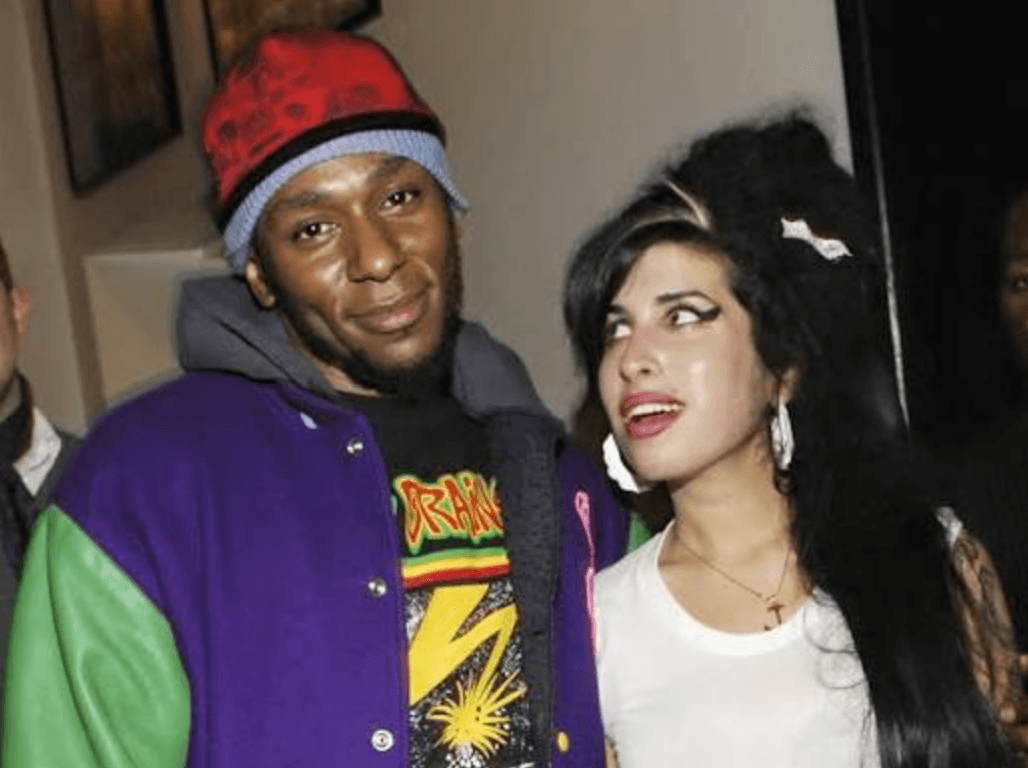
And Mos Def, now known as Yasiin Bey, was another artist Amy held in enormous esteem. The pair shared the stage for a rendition of Love Is a Losing Game during MTV’s 2007 45th at Night concert series.
There’s an important distinction here. These weren’t simply rappers recruited to modernise an old-fashioned singer’s image.
Amy already inhabited their musical world.
In a 2007 MTV interview, she talked enthusiastically about wanting to work with Nas, Mos Def, Busta Rhymes and Rah Digga.
That last name is particularly revealing. Rah Digga was hardly the obvious choice for a singer seeking a commercially convenient rap feature.
It suggests somebody who listened beyond the singles, beyond the chart positions and beyond whichever MC happened to be fashionable that month.
Amy was a hip-hop fan in the proper sense of the term.
The sort who would probably have enjoyed arguing about records with you.
Nas, Salaam Remi and the Music That Followed
Her relationship with Nas eventually became one of the most poignant connections in her musical life.
The two developed a genuine friendship, aided by their shared musical tastes and their mutual connection to producer Salaam Remi.
Remi deserves considerable credit in this story. Having worked with Nas and the Fugees, he was uniquely equipped to understand how Amy’s jazz sensibilities and hip-hop instincts could coexist.
His contribution to both Frank and Back to Black helped create a musical space where neither influence needed to be compromised.
Years later, Remi would reflect on how much Amy had challenged him creatively, describing their working relationship as one that made him a better producer.
It’s a lovely reversal of the traditional mentor narrative. Here was a producer with a substantial hip-hop pedigree discovering that the young jazz singer from north London had plenty to teach him too.
The musical relationship between Amy and Nas eventually produced recordings that would be released after her death.
Like Smoke, released on Lioness: Hidden Treasures in 2011, paired an earlier Amy recording with verses Nas contributed later.
The following year, Cherry Wine appeared on Nas’s album Life Is Good.
It’s a gorgeous recording, warm and unhurried, in which Amy’s voice moves effortlessly alongside Nas’s verses. Nobody is straining to bridge a stylistic divide because there isn’t one.
It’s also difficult to hear without imagining the records they might have made together had circumstances been different.
But perhaps the most appealing thing about their friendship is how ordinary it sounds in Nas’s recollections.
They shared a birthday, a producer, a musical vocabulary and, by his account, a considerable amount of laughter.
For all the understandable seriousness with which we now approach Winehouse’s life and legacy, those who knew her frequently describe a remarkably funny woman.
That sharp tongue and gift for an outrageous observation weren’t incidental to her songwriting. They were among its defining characteristics.
But there’s another way to consider Amy’s hip-hop legacy.
Not simply through the musicians she worked with, but through those who continue to find inspiration in her.
The Samurai We Never Got to Hear
In 2024, Lupe Fiasco released Samurai, a concept album inspired by an extraordinary moment in the 2015 documentary Amy.
In a voicemail left for Salaam Remi, Winehouse excitedly describes writing little battle raps, delighting in their alliteration and comparing herself to a samurai.
It’s a fleeting moment, easily overshadowed by the documentary’s more devastating material, but for anyone interested in Amy as a writer rather than a tabloid character, it’s priceless.
Here is one of the most celebrated singers of her generation, privately delighting in the idea of writing battle raps.
Not as a marketing exercise. Not because a label executive had commissioned a crossover single.
Because she loved writing rhymes.
Lupe found the idea so compelling that he imagined an alternative artistic life for Winehouse, constructing an album around the possibility of Amy as an MC.
There’s something beautifully circular about it.
A little girl inspired by Salt-N-Pepa forms a rap duo. She grows into a songwriter whose records borrow the linguistic instincts of Nas and Mos Def. She earns the admiration of the hip-hop community, collaborates with its leading figures, and years after her death inspires one of its most thoughtful lyricists to imagine the rapper she might have become.
If that’s not a hip-hop story, I’m not entirely sure what is.
Twenty years after Back to Black, Amy Winehouse’s musical achievements hardly require defending. Her voice was remarkable, her songwriting extraordinary, and her influence across contemporary music remains enormous.
But anniversaries should invite reconsideration, not merely repetition.
We have spent two decades admiring the jazz phrasing, celebrating the soul influences and photographing the beehive. Perhaps it’s time to spend a little more time listening to the bars.
Because underneath all that glorious retro styling was an artist who understood something essential about hip-hop: that storytelling is an act of rhythm, personality and truth.
Amy Winehouse didn’t need to become a rapper to belong in hip-hop’s history.
She’d been speaking its language all along.
THE OTHER SIDE OF THE 45: AMY’S HIP-HOP DNA
Ten essential needle drops tracing Amy Winehouse’s rap influences, lyrical genius and musical friendships.
1. Amy Winehouse – In My Bed (2003)
The hip-hop connection hiding in plain sight. Salaam Remi reworks the Apache break used on Nas’s Made You Look, creating a swaggering, head-nodding backdrop for Amy’s effortlessly conversational delivery. Her phrasing slips around the beat with the confidence of an MC, proving she was comfortable in hip-hop territory long before Back to Black.
2. Nas – Made You Look (2002)
The essential companion to In My Bed. Produced by Salaam Remi using the Incredible Bongo Band’s Apache, this Queensbridge classic demonstrates just how closely connected Amy’s musical world was to hip-hop. Two artists, the same producer and related rhythmic foundations, but wildly different stories. Play them consecutively.
3. Amy Winehouse – Me & Mr Jones (2006)
A missed Slick Rick concert, a thinly disguised Nas reference and enough attitude to fill a Wu-Tang skit. Amy’s rhythmic phrasing, witty insults and effortlessly deployed cultural references make this one of her most overtly hip-hop compositions, despite its vintage soul arrangement.
4. Amy Winehouse – Wake Up Alone (2006)
Perhaps the finest illustration of Amy’s poetic sophistication.
The song begins with mundane domestic details before gradually dissolving into an extraordinary extended metaphor involving water, drowning and moonlight. The phrase about not wanting to think about thinking captures the exhausting circularity of obsession, while the accumulating liquid imagery transforms desire into something simultaneously sensual and suffocating.
There’s a sophistication to the way Amy moves from the everyday to the surreal. Cleaning the house becomes a desperate act of emotional self-preservation. Darkness invites fantasies that are both seductive and threatening. The water imagery gathers momentum until even the room itself seems to be dissolving around her.
Then comes the devastating reversal: an elaborate romantic dreamscape collapses into the simplest possible reality. She wakes up alone.
It’s a masterclass in imagery, narrative economy and the emotional power of a perfectly positioned final line. Listen to the construction of the lyrics as carefully as the extraordinary vocal.
5. Amy Winehouse featuring Ghostface Killah – You Know I’m No Good (Remix, 2007)
Two masters of wonderfully messy storytelling. Ghostface brings his characteristic emotional intensity, but Amy’s lyrical detail is just as sharp. A meeting of artists who understand that uncomfortable truths often make the most compelling music.
6. Amy Winehouse featuring Jay‑Z – Rehab (Remix, 2007)
A hip-hop heavyweight enters Amy’s world. Jay‑Z adds his own commentary to a song that already operates like a rap narrative, using repetition, character development and increasingly revealing excuses to construct its story.
7. Amy Winehouse & Mos Def – Love Is a Losing Game (Live, 2007)
Recorded for MTV’s 45th at Night, this intimate meeting brings together two artists whose instincts bridge jazz, soul and hip-hop. A reminder that musical kinship doesn’t always require a rap verse or a sampled drum break.
8. Amy Winehouse featuring Nas – Like Smoke (2011)
A posthumous release bringing Amy’s earlier vocals together with Nas’s verses. The connection between their musical personalities is unmistakable: understated, conversational and full of character. A glimpse of what their creative friendship could produce.
9. Nas featuring Amy Winehouse – Cherry Wine (2012)
From Nas’s Life Is Good. Smooth, intimate and beautifully unhurried. Amy and Nas sound like two old friends exchanging observations across a table. Their voices complement each other so naturally that the supposed boundary between rap and soul feels entirely irrelevant.
10. Lupe Fiasco – Samurai (2024)
The perfect epilogue. Inspired by Amy’s fascination with writing battle raps, Lupe imagines an alternative artistic identity for her, exploring the possibility of Winehouse as an MC. A poignant reminder that her relationship with hip-hop continues to inspire its most imaginative voices.

Micky Roots
Latest posts by Micky Roots (see all)
- OPINION PIECE | AMY WINEHOUSE HAD BARS. IT’S TIME HIP-HOP CLAIMED HER. — October 27, 2026
- OPINION PIECE | THE MACHINE CAN RAP. SO WHAT MAKES AN ARTIST HUMAN? — October 12, 2026
- TRUE TO THE GAME: WHY AMY TRUE IS THE ARTIST WE NEED — July 11, 2025
