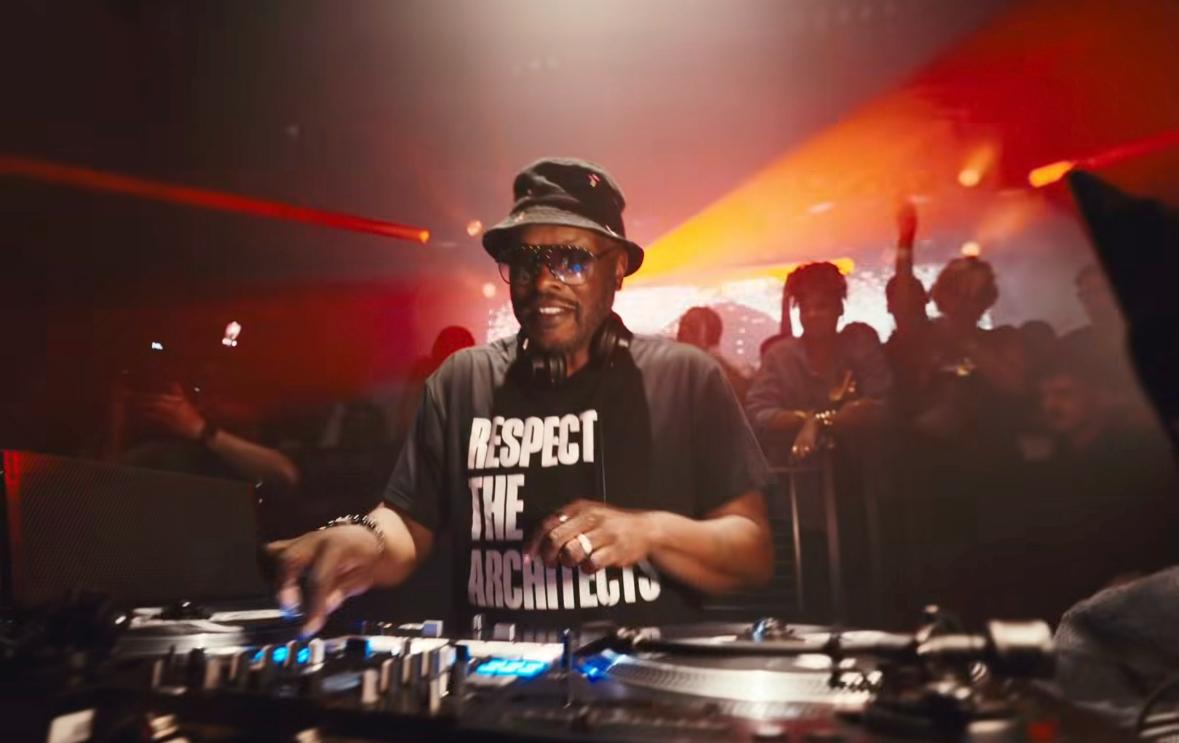
DJ Jazzy Jeff brought decades of hip-hop knowledge and turntablist craft to KOKO London, moving effortlessly through hip-hop, funk, jungle, amapiano and UK sounds. For I Am Hip Hop, Doni Brasco watches one of the greats at work and gets some characteristically direct advice backstage.
There is a temptation, when writing about DJ Jazzy Jeff, to begin with the word legend. It is accurate, but it is also lazy. His place in hip-hop history was secured decades ago. The Grammys, DJ Jazzy Jeff & The Fresh Prince and those routines generations of DJs have paused, rewound and studied have already taken care of that.
What interested me at KOKO wasn’t his history. It was how good he is now.
As a DJ myself, the first thing that struck me was his musicality. At a time when sets can feel like a race through transitions, edits and increasingly higher tempos, Jazzy Jeff is completely comfortable letting a record breathe. He keeps the swing of hip-hop without allowing the genre to restrict where he can go, and his use of the mixer is as important as the records he selects.
The echoes, cuts, scratches and flares are precise rather than constant. He might introduce a sample before bringing in the full track, tease something familiar or recognise that sometimes a great record doesn’t need the DJ interfering with it. There are technically extraordinary DJs who can make you feel as though you’re watching a demonstration. Jazzy Jeff never forgets that he is there to move a room.
What makes that even more impressive is how relaxed he appears doing it. There is none of the frantic performance that can sometimes accompany modern DJ sets, where the person behind the decks seems to be telling the audience when they should be excited. Jazzy Jeff doesn’t need to race through records to prove the depth of his library or keep pushing the BPM to manufacture energy. He trusts his selection, his timing and the crowd.
Maybe ten minutes into the set came the first moment that properly caught me off guard. I heard those unmistakable words: “31 seconds.”
Origin Unknown’s Valley of the Shadows.
Jungle. That early. In a Jazzy Jeff set.
I wasn’t expecting it, but somehow it made complete sense. It also told me where the night could go. This wasn’t an American hip-hop DJ throwing in a few British records because he happened to be in London. James Brown dubs could sit alongside hip-hop, jungle could lead somewhere completely different, amapiano could enter the set and UK bangers could appear without any of it feeling forced. The connections came through samples, drums, basslines and, sometimes, simply understanding what the room needed next.
From memory, Kendrick Lamar was one of the few genuinely newer-generation rappers he reached for. There was no attempt to pack the set with current records simply to prove relevance. Jazzy Jeff can move across decades because his selection isn’t dictated by when something was released, but whether it belongs in that moment.
Anyone with enough music can play multiple genres. Making those changes feel natural is another skill entirely. However far he moved musically, the hip-hop swing remained.
His control of KOKO was ridiculous. At points, the audience seemed to be hanging on every click, flare, echo and drop. It’s a level of musical control Jacob Collier would probably salute, yet Jazzy Jeff rarely seemed to be forcing a reaction. He knew when to build, when to change direction and when to leave the music alone.
Technology has made plenty of elements of DJing easier. Software can sync records, analyse keys, remember cue points and increasingly suggest what might work next. What it can’t tell you is whether a room is ready for Valley of the Shadows ten minutes into your set. That comes from instinct, experience and years spent understanding people as much as music.
The rest of the bill deserves its flowers too. As a DJ, I know the strange combination of honour and pressure that comes with seeing your name alongside somebody you respect. You know you’ve earned your place on the flyer, but you’re also very aware of who is playing next.
I arrived at KOKO at around 1am, which unfortunately meant I missed CARISTA. I’m not going to pretend to review a set I didn’t hear, but I Am Hip Hop will catch her properly one day. That’s a promise.
What I did walk into was Chris P Cuts, and damn, he was tight. Warming up is an underrated art. Go too hard and you spend the room’s energy too early; play too cautiously and you disappear. Chris got the balance right. His selection was confident, the set had its own identity and he built the room without trying to turn a warm-up slot into a headline performance. There must be pressure knowing Jazzy Jeff is following you, but Chris showed exactly why he deserved to be on that bill.
And however intimidating it might be to play before Jazzy Jeff, I can’t imagine many DJs volunteering to go on after him.
Dayne Jordan is another important part of why Jazzy Jeff’s set works so well. Their years of touring together are obvious in how naturally they work. Dayne knows when to lift the crowd, when to add something and, importantly, when to give him room. There’s none of the constant shouting that can turn an MC into competition for the music. They work seamlessly, and the mic complements the set rather than dominating it.
By the latter part of the night, I’d stopped analysing individual transitions and was simply enjoying where he was taking us. In some ways, that’s the biggest compliment I can give the technical side of his performance. The scratches were there, the mixer work was exceptional and the selection was broad, but none of it interrupted the party to demand applause.
I’ve watched technically brilliant DJs. I’ve heard incredible selectors and seen turntablists perform routines that still make absolutely no sense to my hands. But combining that level of technique with musical knowledge, selection, crowd control and the ability to throw a proper party is much rarer.
As a complete hip-hop DJ set, Jazzy Jeff at KOKO may genuinely be the best I’ve ever heard.
Afterwards, I was lucky enough to get backstage and ask Jazzy Jeff a quick question. I wanted to ask him something that feels particularly relevant to turntablists now. There are incredibly talented DJs who have spent years developing their craft but struggle to break through all the noise on social media. When being good at DJing and being good at getting an algorithm’s attention can feel like two completely different skills, what advice would he give them?
His answer was immediate.
“Everything is hard. If you’re worried about it being hard, then don’t do it.”
That was it. No algorithm hack, no secret formula and no long motivational speech.
And maybe that’s why the answer landed.
Turntablism is hard. Building an audience is hard. Making a career from music is hard. Staying relevant across generations is harder still. Coming from somebody who has spent decades doing exactly that, there wasn’t much else that needed saying.
I could listen to the KOKO set again from beginning to end. As a DJ, I’d probably watch it again too, studying his hands and mixer and trying to understand why certain choices worked as well as they did.
But the greatest compliment I can give Jazzy Jeff is much simpler.
I left KOKO wanting to go home and touch my decks.
Sometimes another DJ reminds you why you started doing this in the first place.
Jazzy Jeff did exactly that.
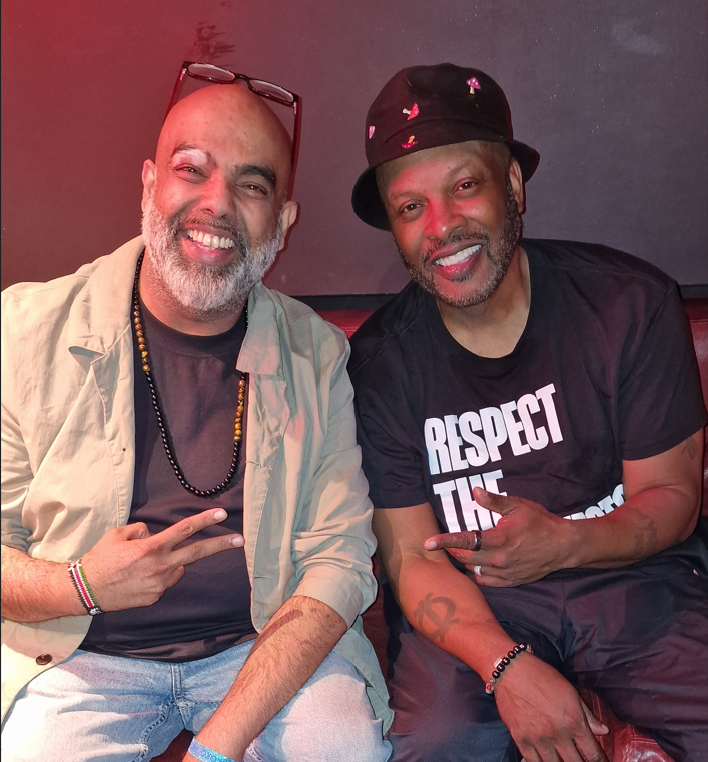
Doni Brasco
I Am Hip Hop Magazine

Doni Brasco
